8. BRITANNIA
WEBLINKS
IMAGE GALLERY
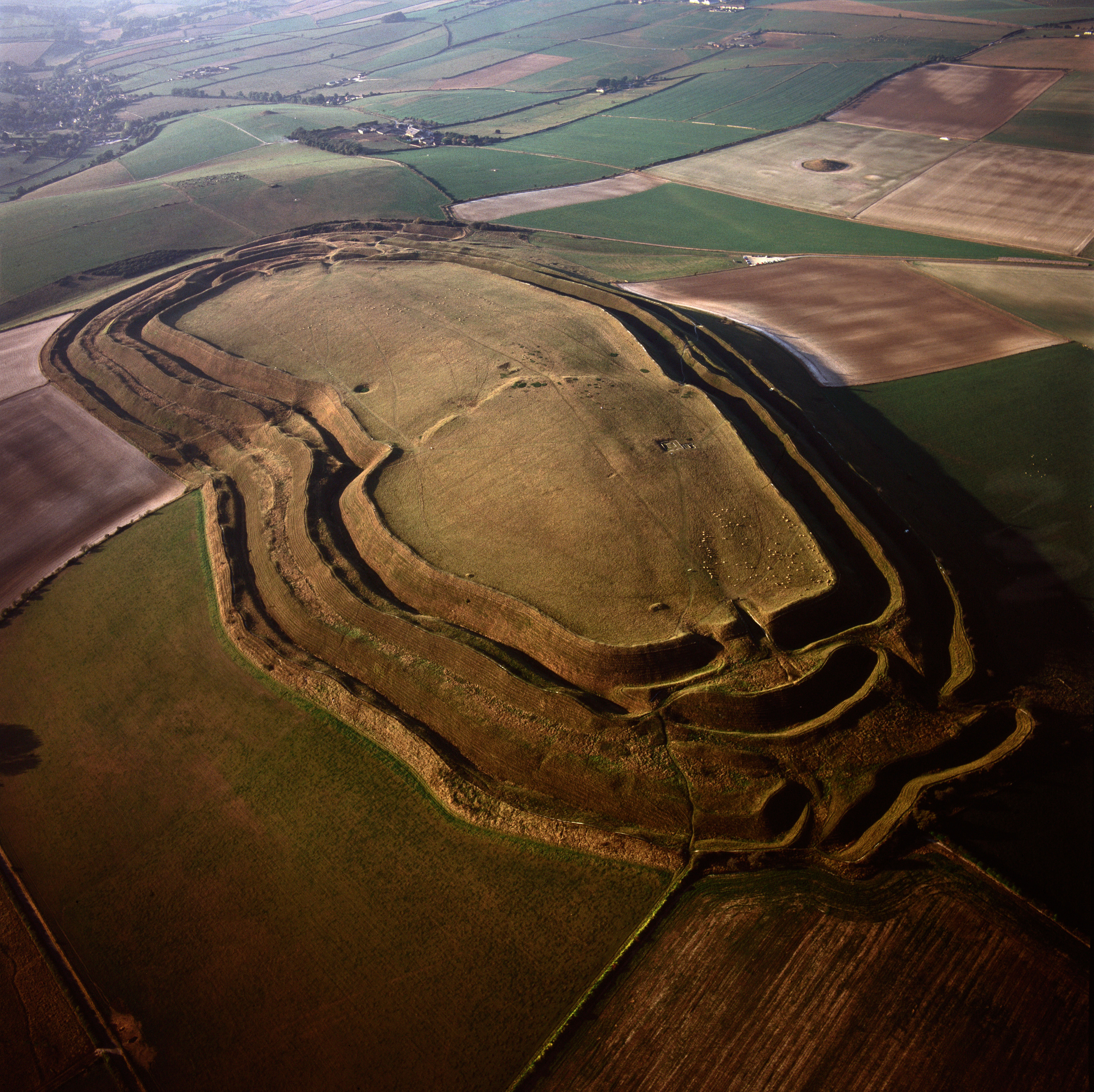
Some British tribes lived in hill forts, settlements of round huts surrounded by ditches and high banks, like this one at Maiden Castle in Dorset.
 This Iron Age sword and scabbard were found in the River Thames. The sword is made of iron and the scabbard of bronze. Most British warriors would not have been able to afford a sword.

The Great Torc from Snettisham, an Iceni settlement. This gold collar weighs more than a kilogram. Who do you think might have owned it? Why do you think it was buried along with other valuable objects?
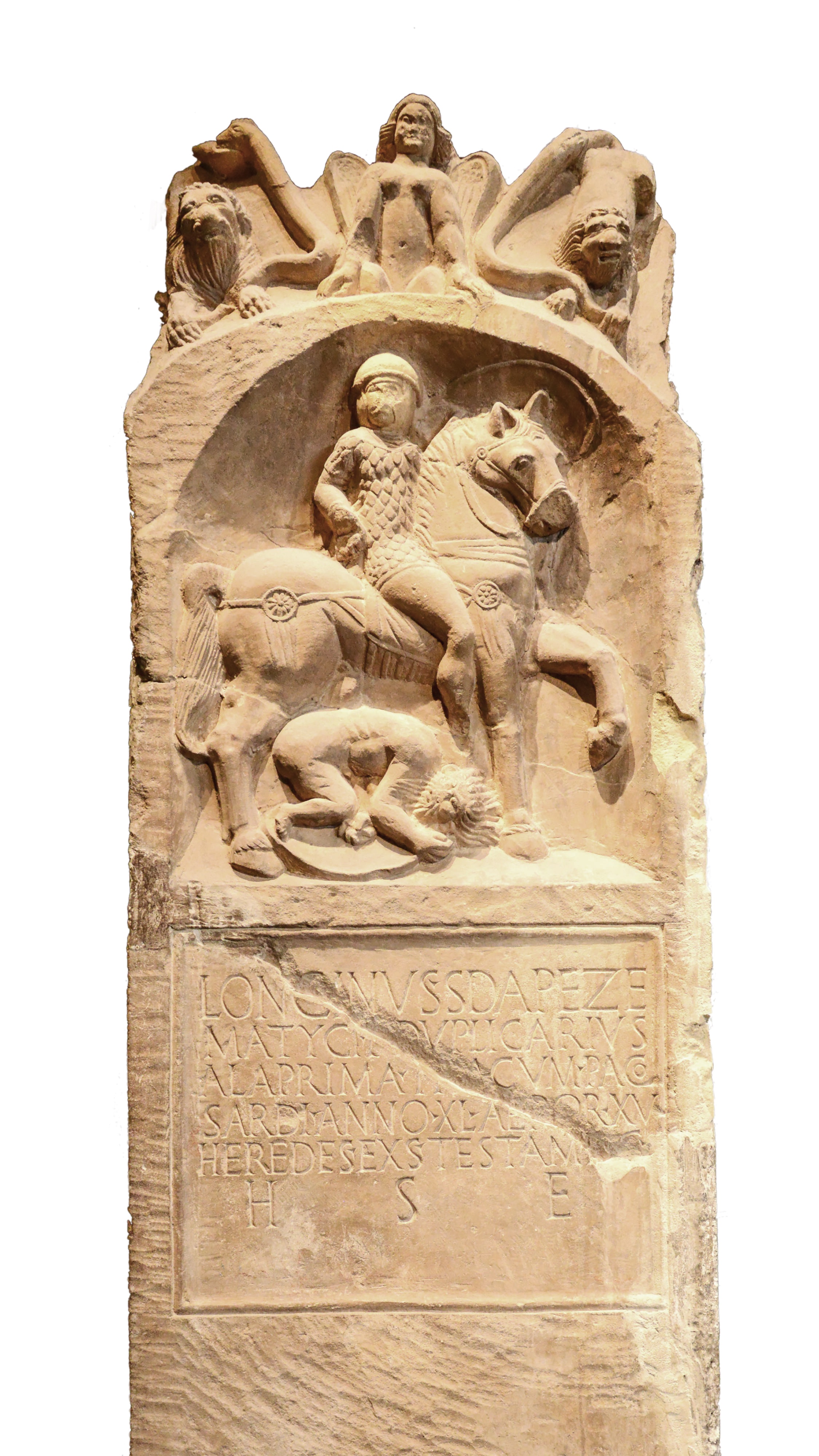
This tombstone, from Camulodunum, commemorates a Roman cavalry officer called Longinus Sdapeze, who was originally from Bulgaria. It shows the soldier’s horse trampling a naked enemy, who is crouching over his shield. Sdapeze would have held a metal weapon (now lost) in his hand.

This headdress or crown made of bronze was found on the skull of a man in an Iron Age grave. He was buried with his sword and shield. Some priests in Roman Britain more than two hundred years later wore similar crowns. This has given rise to the theory that the man may have been a Druid priest.

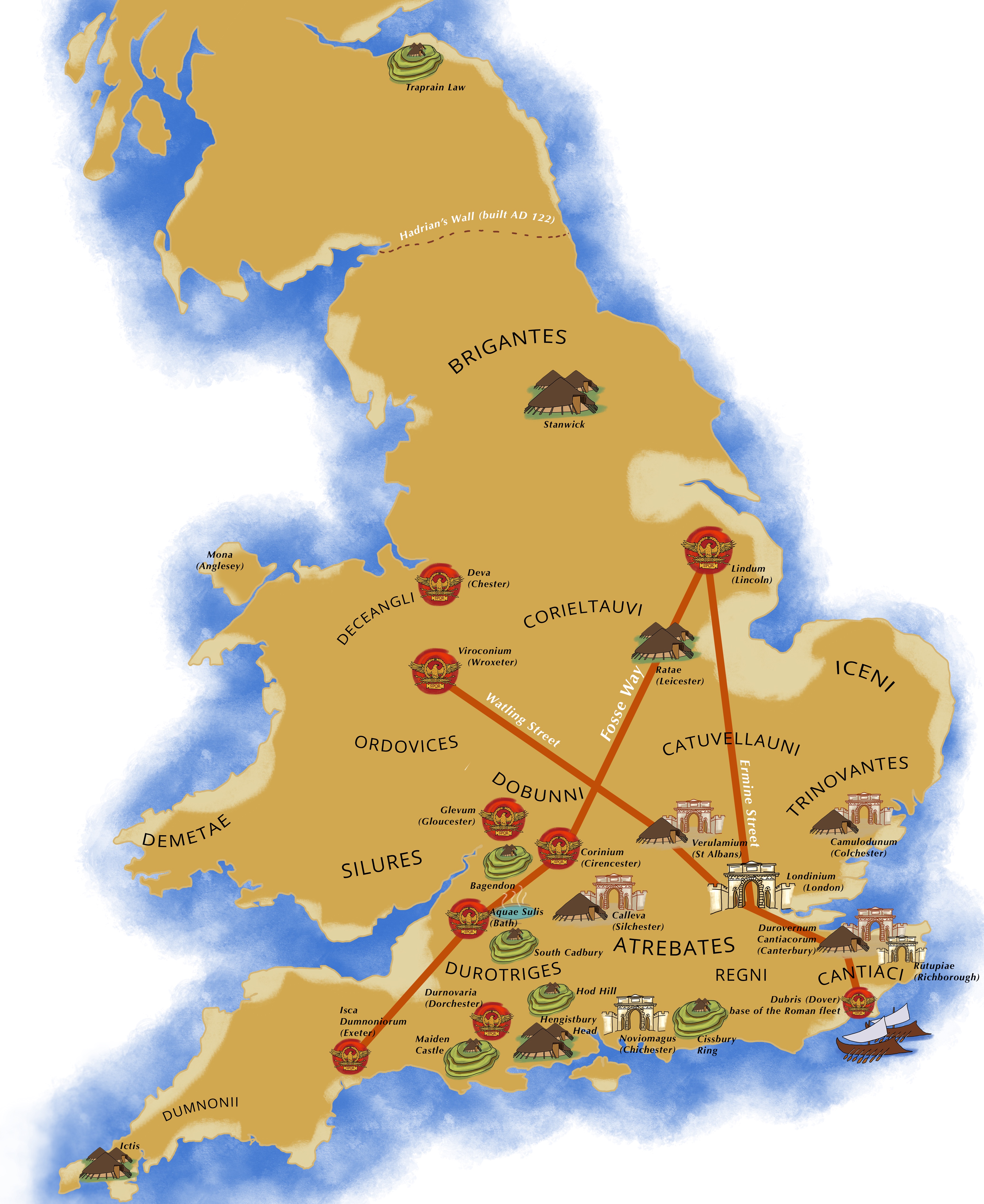
For several years the Fosse Way marked the limit of the Roman advance. But gradually the Roman army marched north into Caledonia (Scotland). Although the Romans defeated the Caledonian tribes at the Battle of Mons Graupius in ad 83, they withdrew without securing their victory.
Forty years later, in ad 122, Emperor Hadrian decided to put an end to the expansion of the Empire and to consolidate its frontiers. He ordered the construction of a wall. Parts of Hadrian’s Wall can still be seen, stretching 74 miles across the north of England.
Although there is evidence that the Romans visited Ireland, which they called Hibernia, it never became part of the Empire.
Forty years later, in ad 122, Emperor Hadrian decided to put an end to the expansion of the Empire and to consolidate its frontiers. He ordered the construction of a wall. Parts of Hadrian’s Wall can still be seen, stretching 74 miles across the north of England.
Although there is evidence that the Romans visited Ireland, which they called Hibernia, it never became part of the Empire.

The Greek hero Hercules, recognizable from his lionskin cape, overpowers three Amazons. The Amazon on the left wears the tunic and leather cap associated with Persian dress.

Statue of Achilles and the Amazon Penthesilea, by Bertel Thorvaldsen, 1801.
ACTIVITIES AND GAMES (TRACKED)
Autograded translations

Autograded translation:
Language Practice
Chpt 8, Ex. 1 (8.1)
Autograded translation:
Language Practice
Chpt 8, Ex. 2 (8.2)