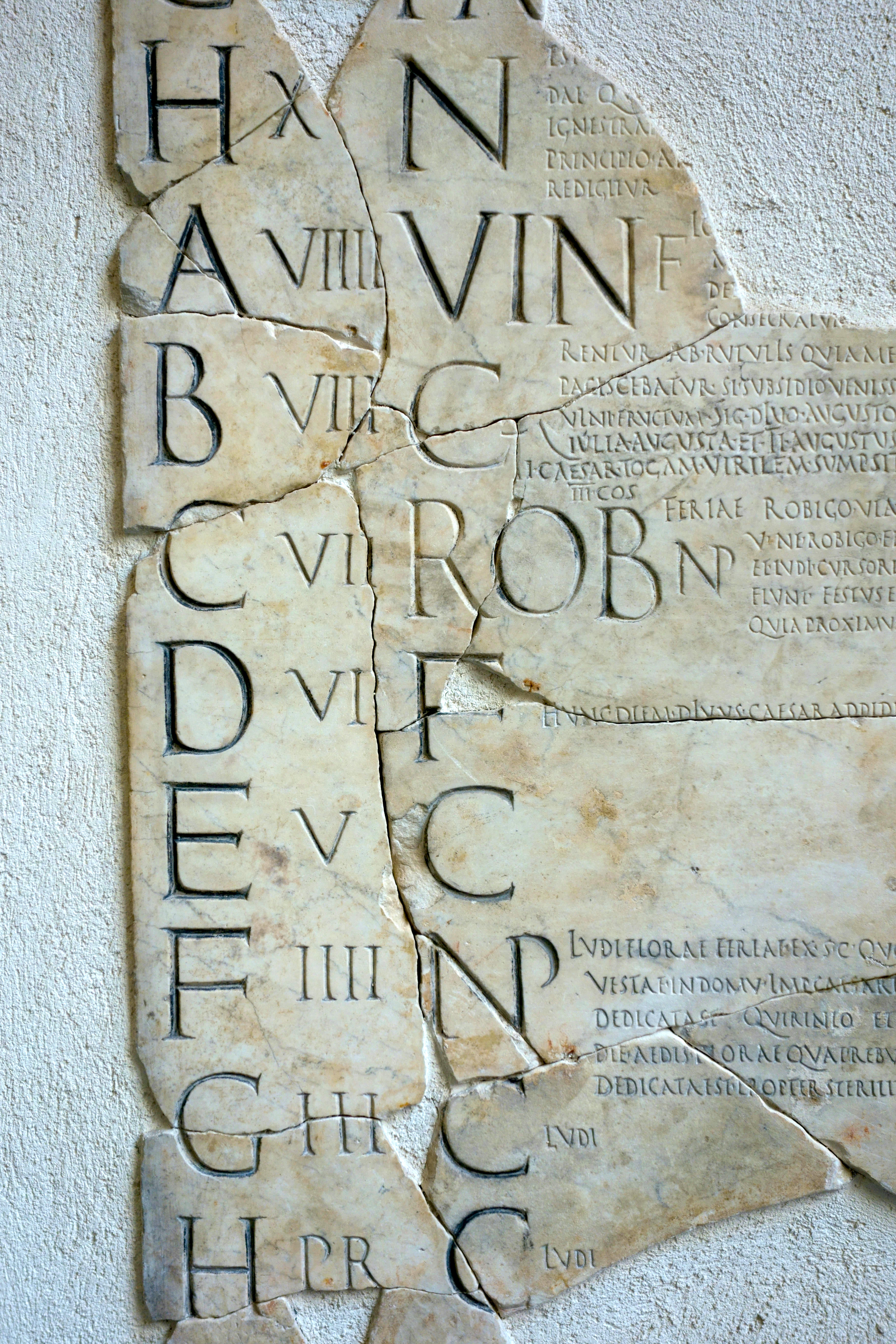
We have several surviving examples of Roman calendars, called fāstī, on which the year’s business days, political events, and festival days were shown. Some festival days were on the same date each year, others were held on different dates, while some were one-off events.
This fragment of a calendar is inscribed on stone. The left-hand letters and numbers indicate the date. The letters NP in the second row indicate the day was a public holiday and its note explains that the Ludi Florae, the games of Flora, were held.

3. LUDI
WEBLINKS
IMAGE GALLERY

Mosaic from Lugdunum (Lyon in modern France), showing a chariot race in a circus. Eight quadrigae are competing, two from each team. The central barrier is a eurīpus (channel filled with water), divided into two parts.
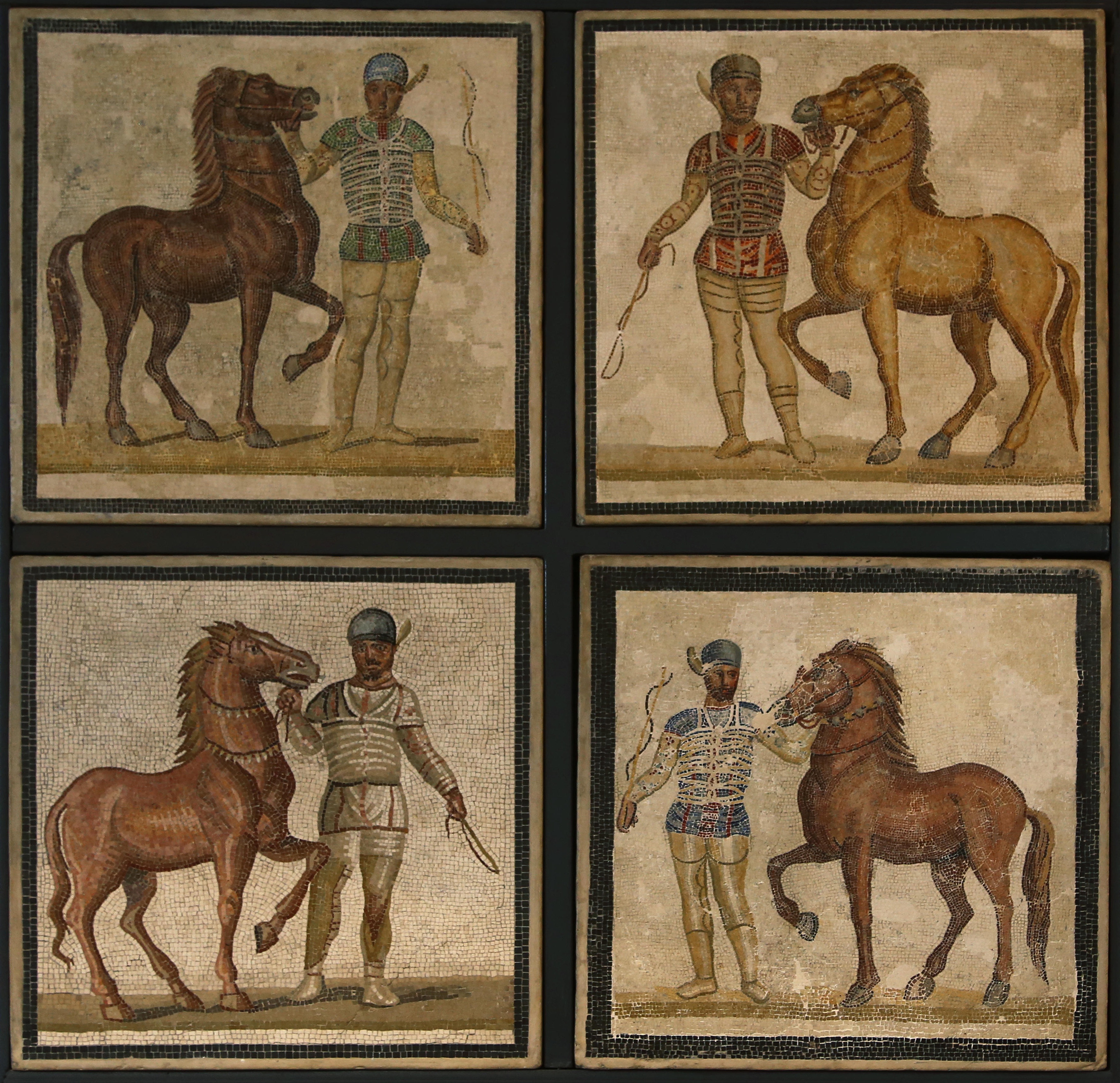
This mosaic shows four charioteers, one from each of the four teams or factions (factiōnēs). They wear tunics in the colour of the team they represent, just like a modern football strip or a jockey’s shirt. Their chests are bound with leather straps for protection and they wear helmets, possibly of leather, in their team colours. Each charioteer is holding a whip. Four teams of charioteers competed regularly in Rome: green, blue, red, and white.
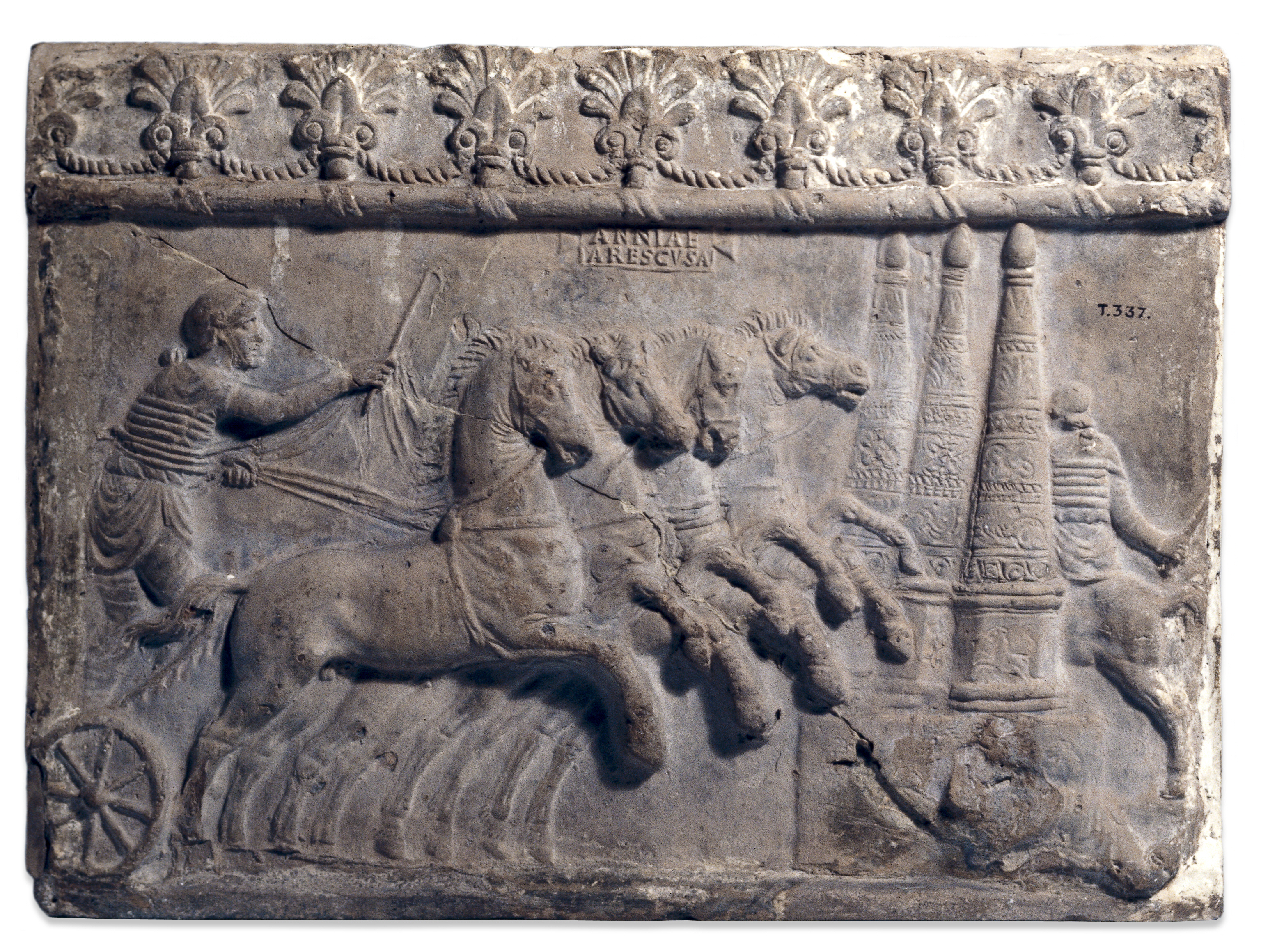
A terracotta plaque showing a four-horse chariot approaching the metae (the turning posts). The charioteer is wearing leggings, a cap, and a short tunic, with leather straps wrapped round his body for protection. The reins are tied tightly round his waist. A fallen charioteer can be seen at the base of the meta.
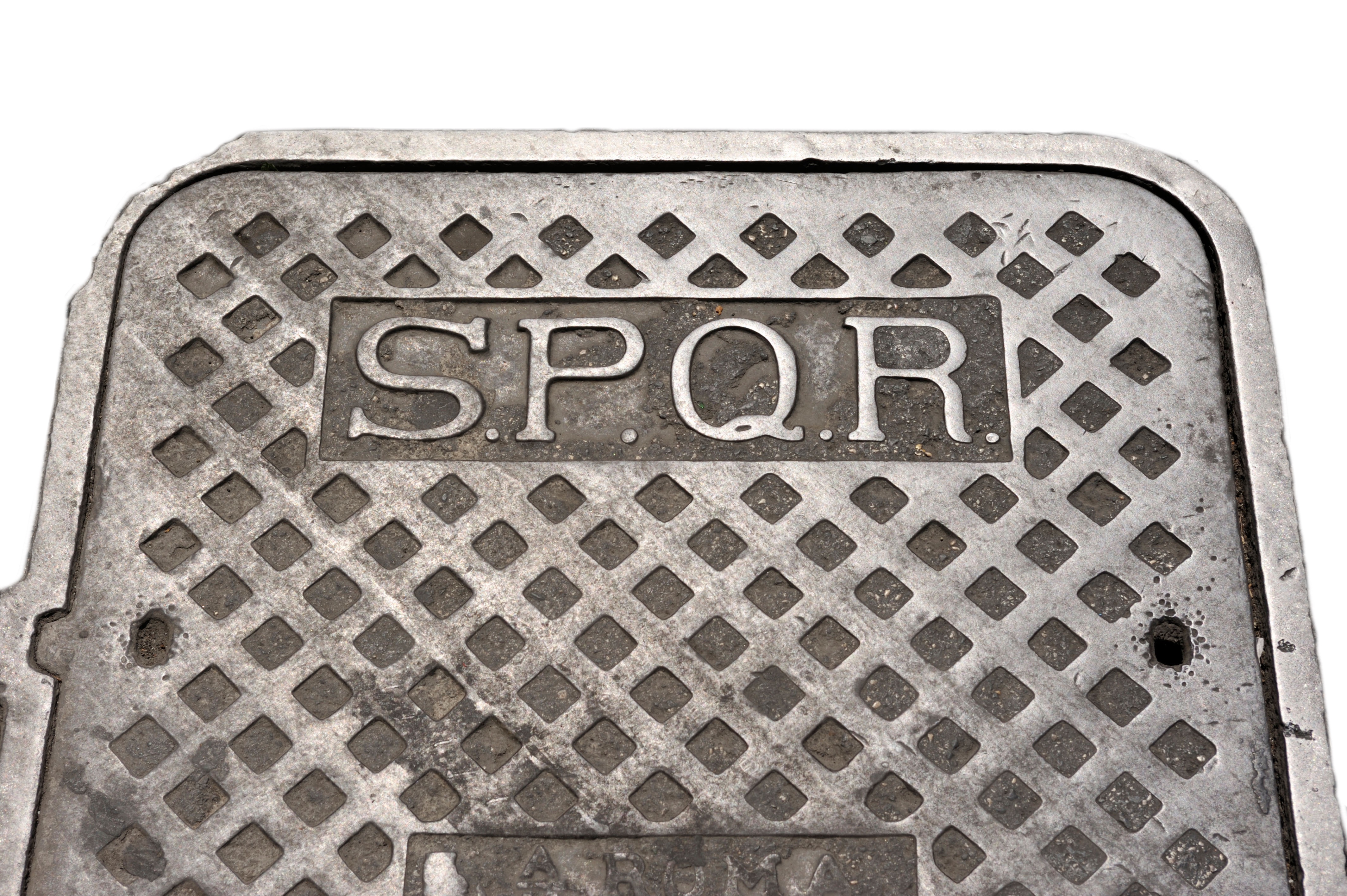
A drain cover from modern Rome. Rome still celebrates the Republic. SPQR stands for Senātus PopulusQue Rōmānus – the Senate and the People of Rome.
ACTIVITIES AND GAMES (TRACKED)
Autograded translations

Autograded translation:
Language Practice
Chpt 3, Ex. 1 (3.1)
Autograded translation:
Language Practice
Chpt 3, Ex. 2 (3.2)