12. INCENDIUM
WEBLINKS
IMAGE GALLERY
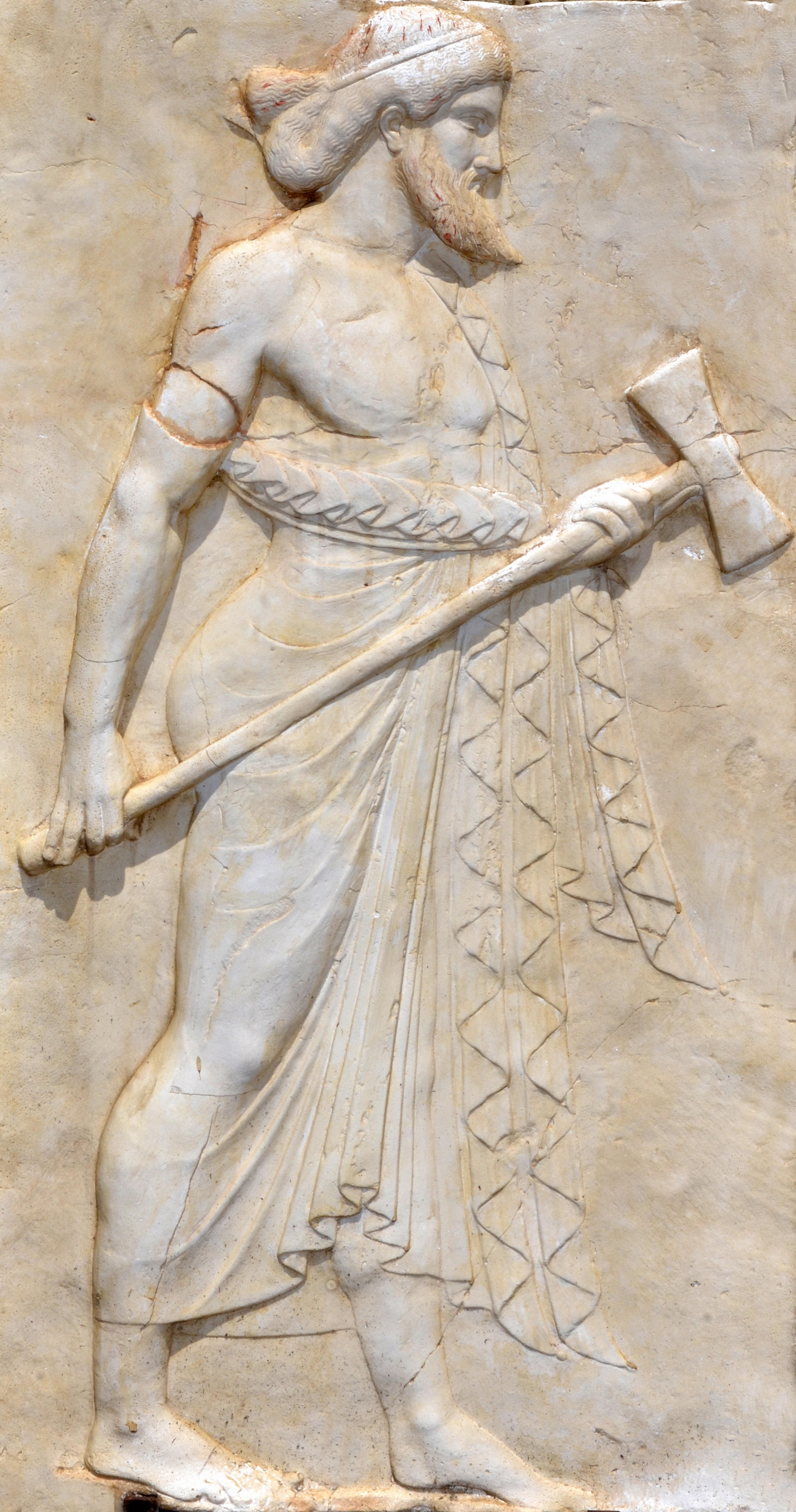
A marble relief of the god Vulcan, from Herculaneum.
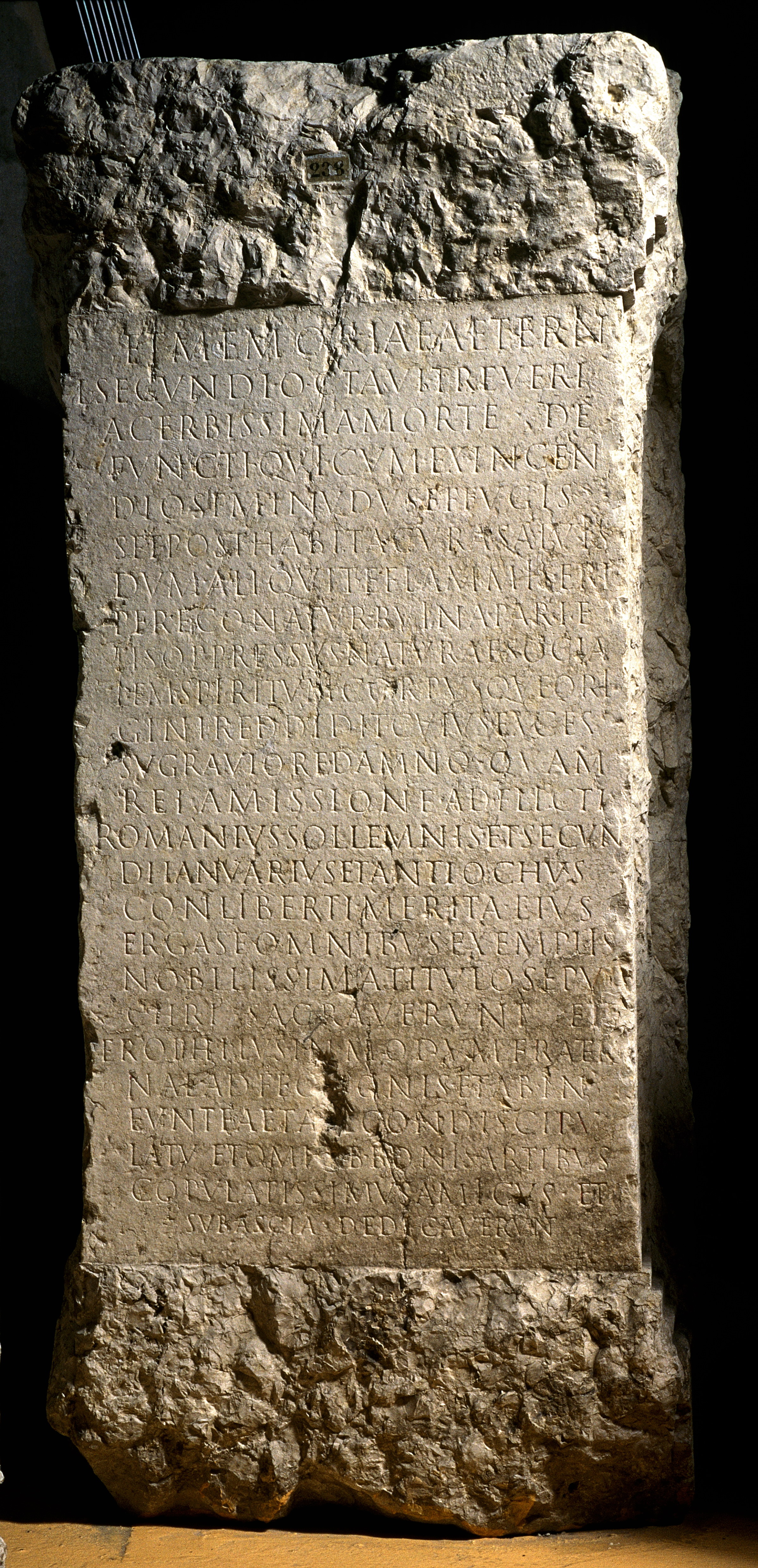 This tombstone is from Trier in Gaul. It was set up by a group of friends in memory of Lucius Secundus Octavius, who died in a fire. The inscription reads:
To the Gods of the Dead, and to the eternal memory of Lucius Secundus Octavius of Trier, who has suffered a most cruel death. He escaped half-naked from a fire, then, putting aside concern for his own safety, he was trying to save something from the flames when he was crushed by a falling wall and returned his friendly spirit and his body to the earth. Affected more greatly by his death than by the loss of their property, Romanius, Sollemnis, Januarius, and Antiochus, Secundus’ fellow freedmen, have memorialized on the inscription of this tomb his most noble qualities, which he displayed towards them with all kinds of proof.
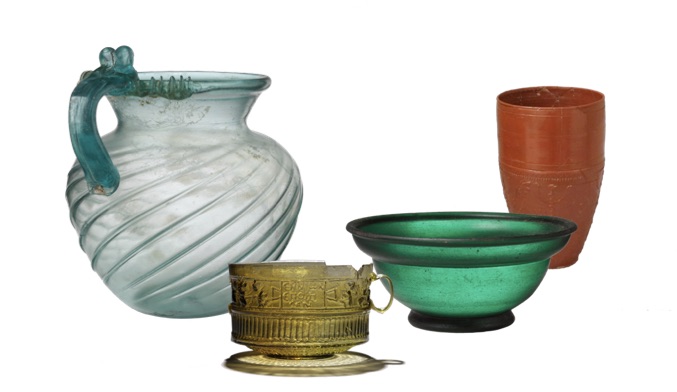
Left to right: a glass jug; a glass drinking cup made using a mould-blowing technique – the cup is signed in Greek ‘by Ennion’; a green glass bowl; a terracotta beaker.
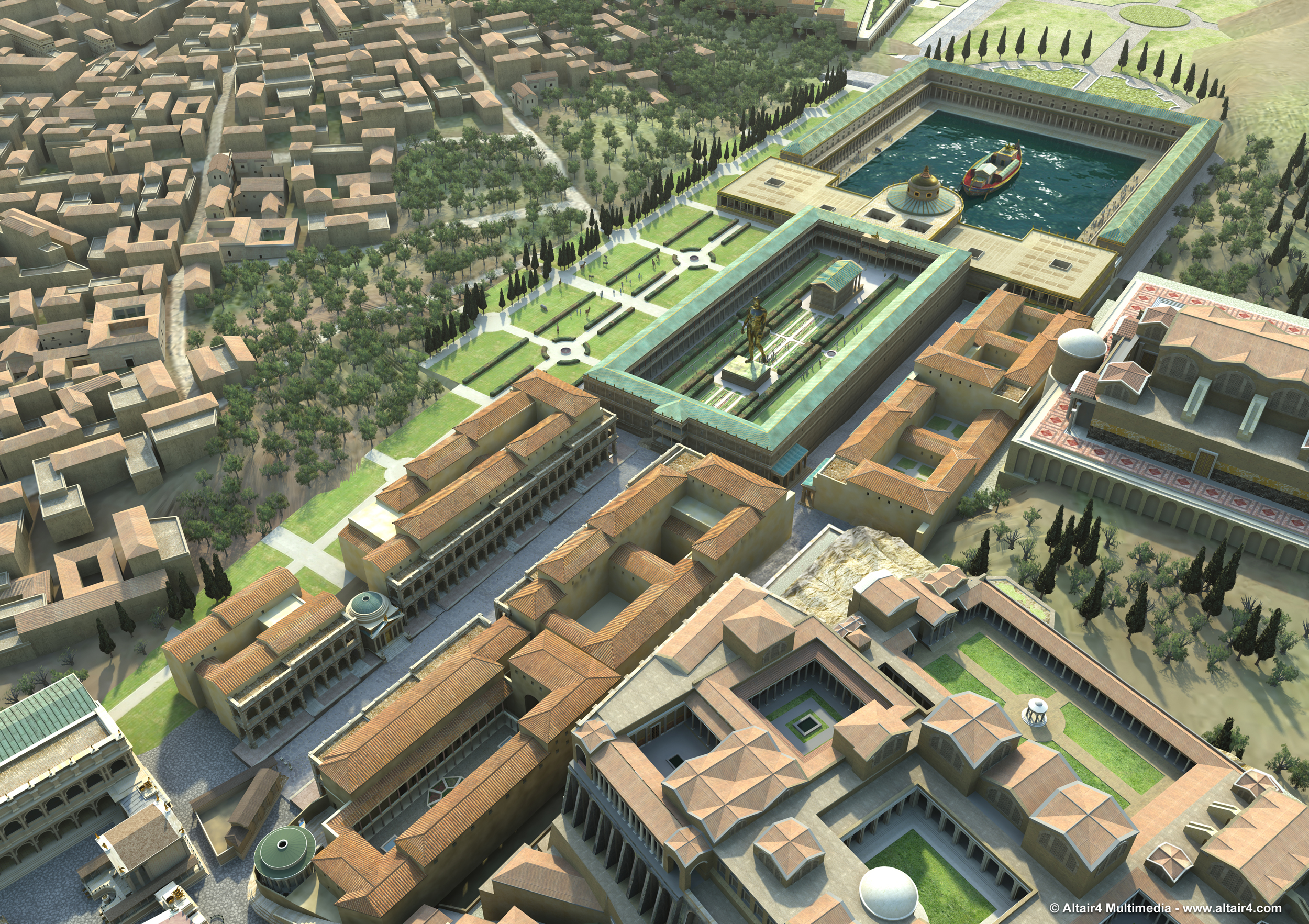
A digital reconstruction of Nero’s Domus Aurea, complete with the lake and an enormous statue of the Emperor.
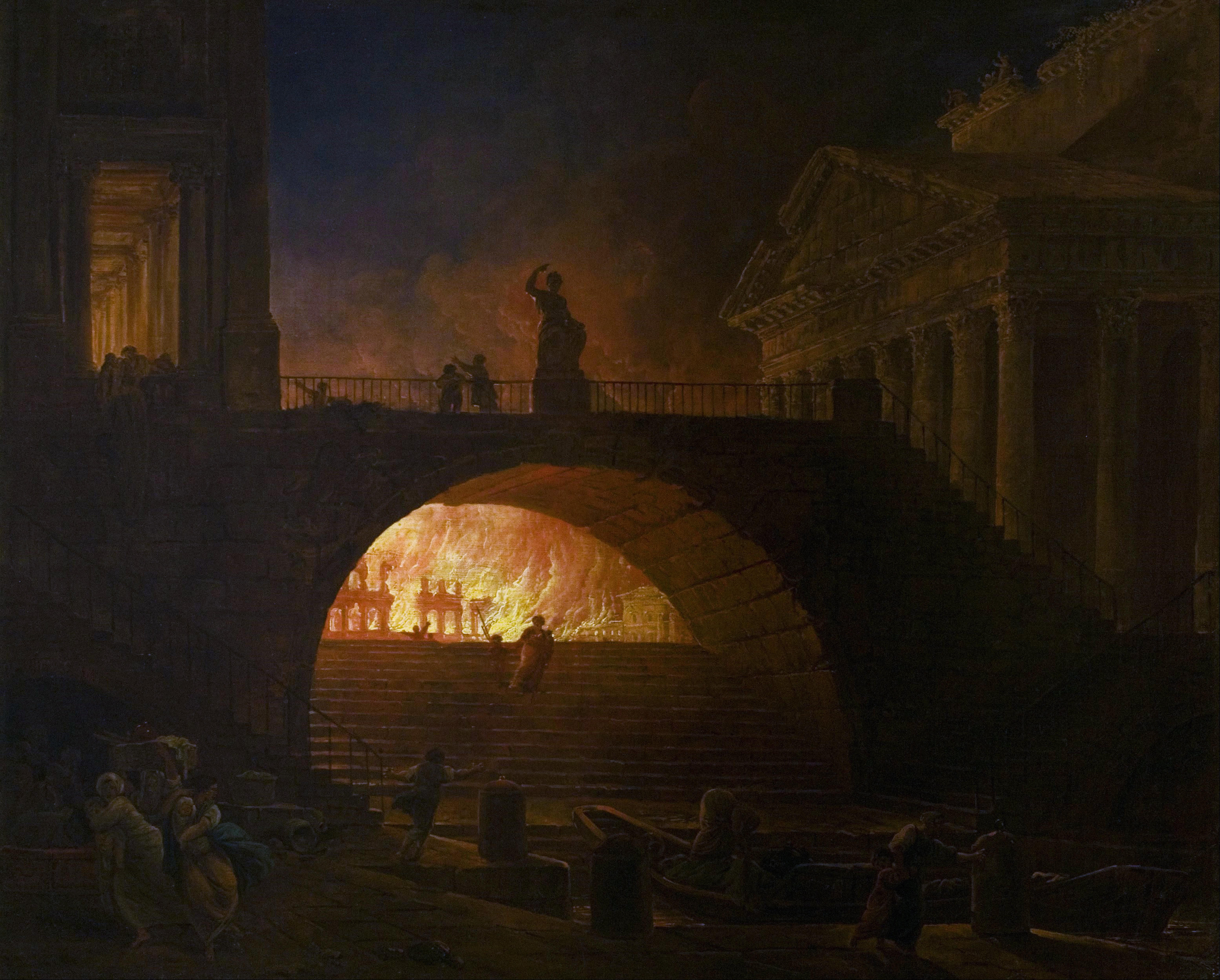
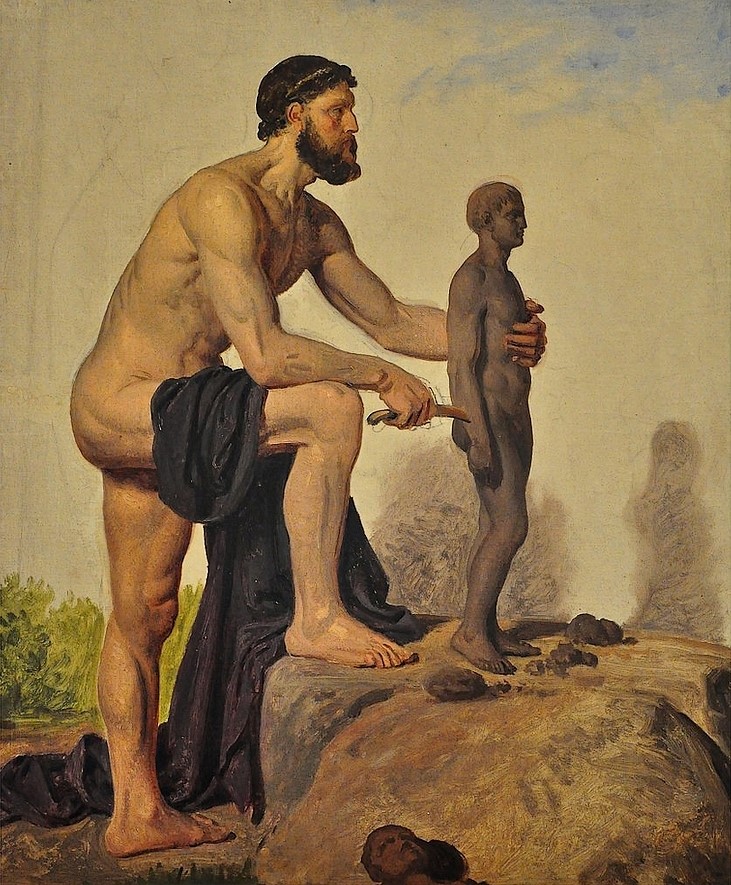
A nineteenth-century painting showing Prometheus moulding one of his creations.
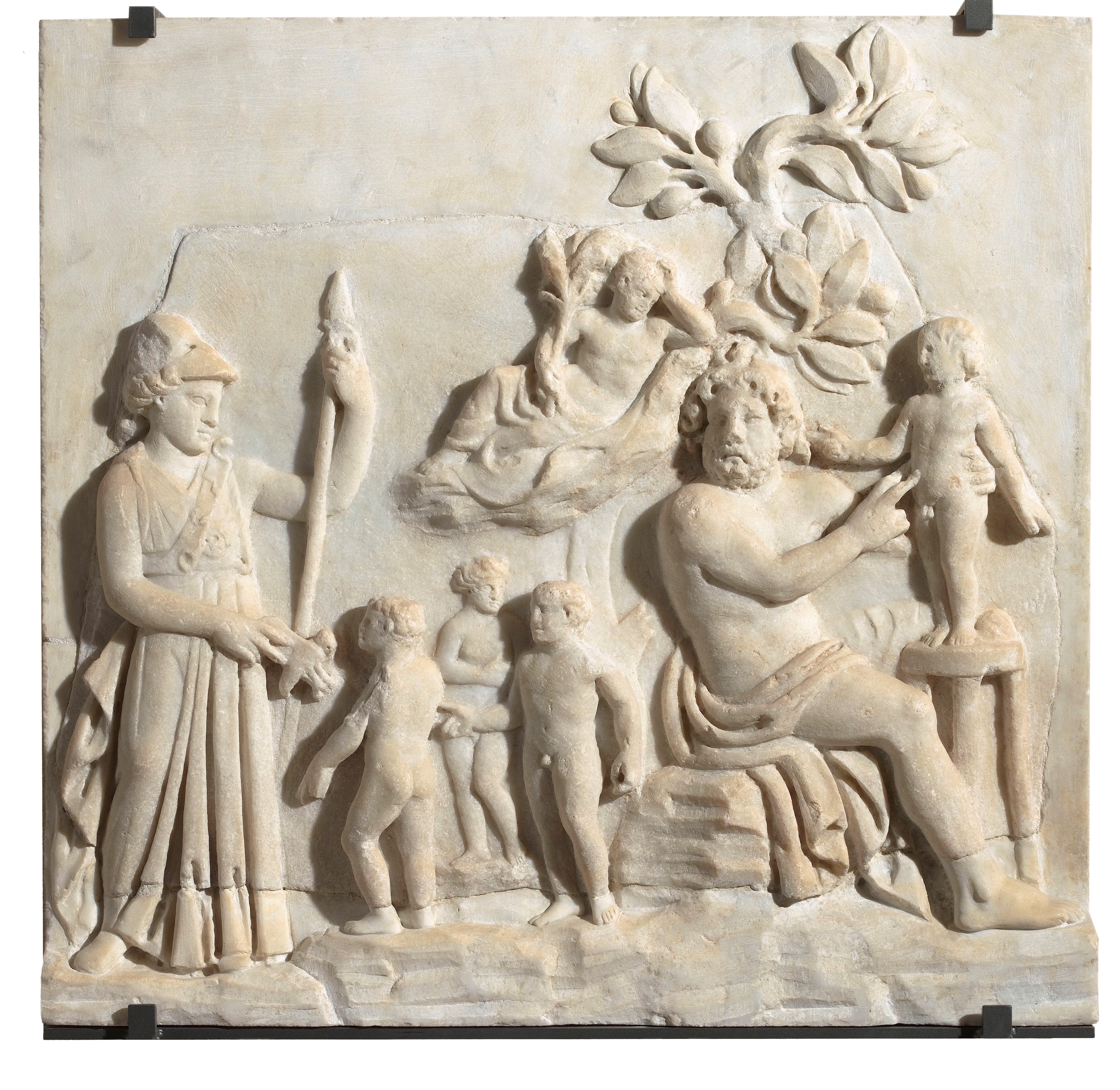
Roman third-century ad stone carving.
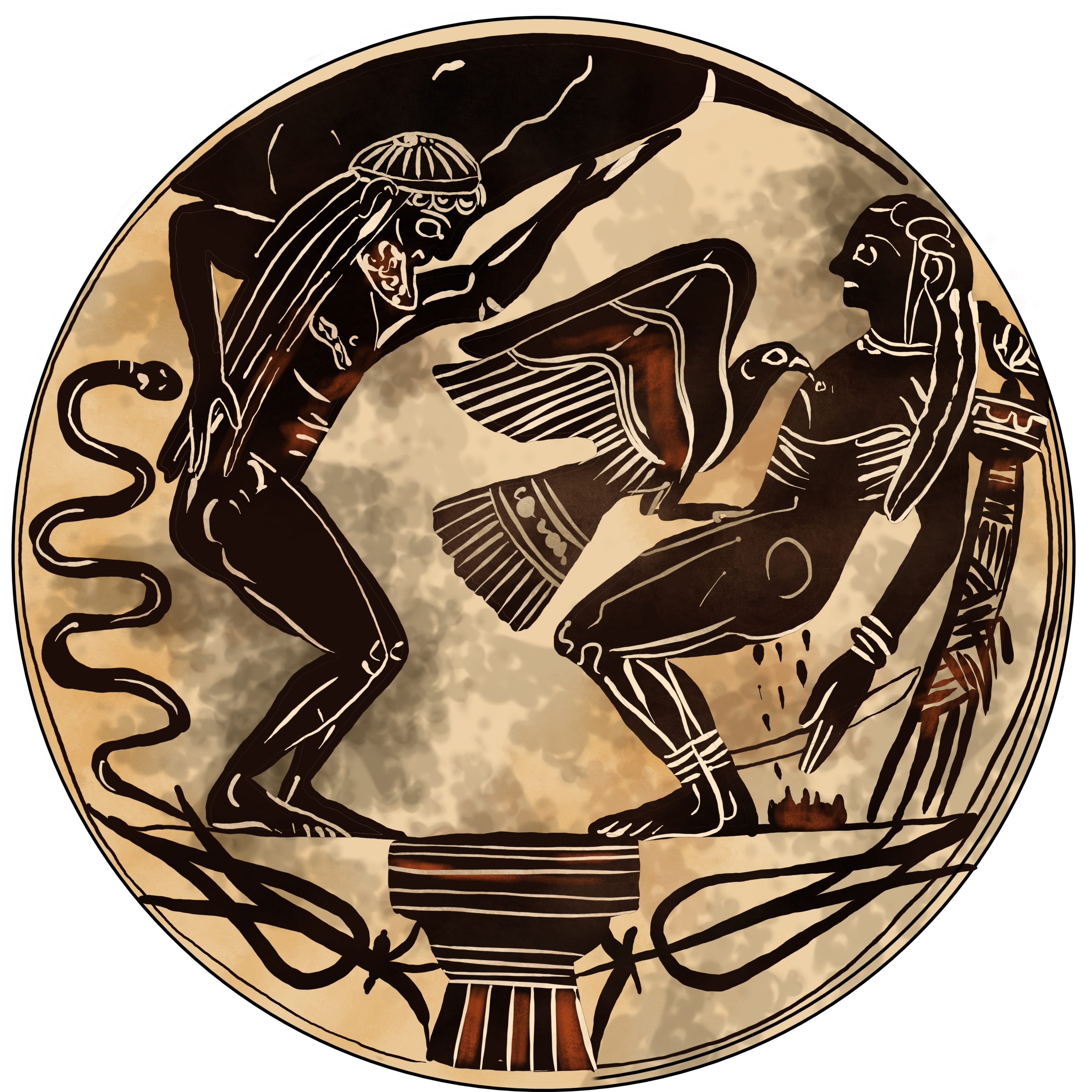
A drawing of an ancient Greek bowl showing an eagle pecking out Prometheus’ liver.