
WEBLINKS
IMAGE GALLERY
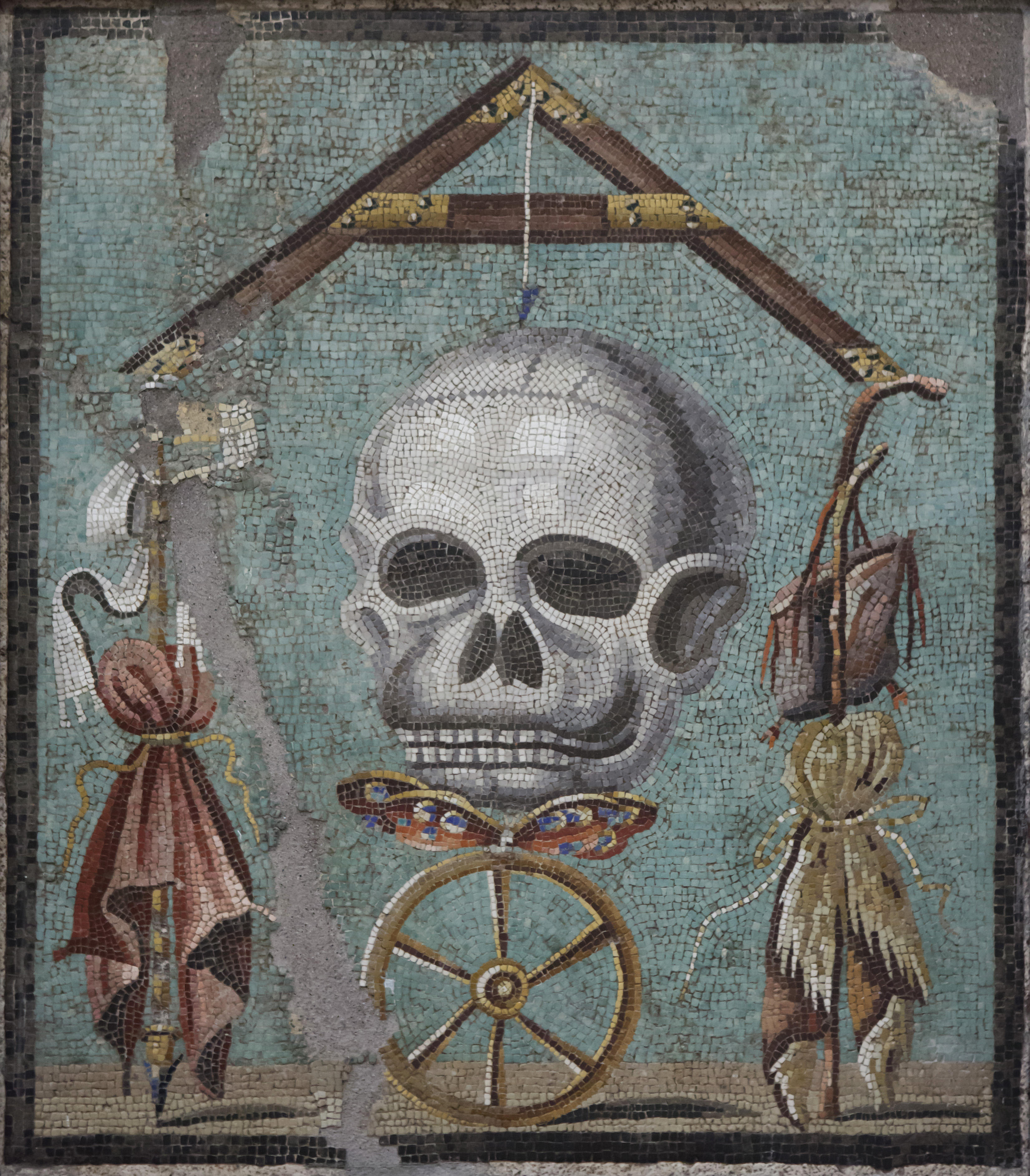
This mosaic from Pompeii represents the fragility of life.
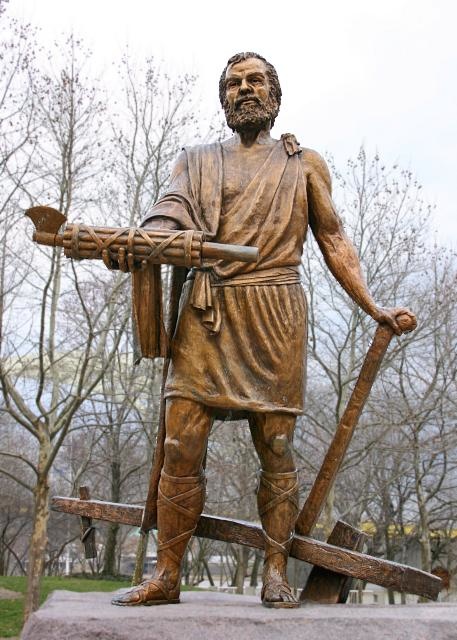
Cincinnatus is depicted holding his plow in his left hand. In his right, he carries the fascēs, a bundle of sticks bound together with an axe, which symbolized authority and power. This statue stands in Cincinnati, Ohio.
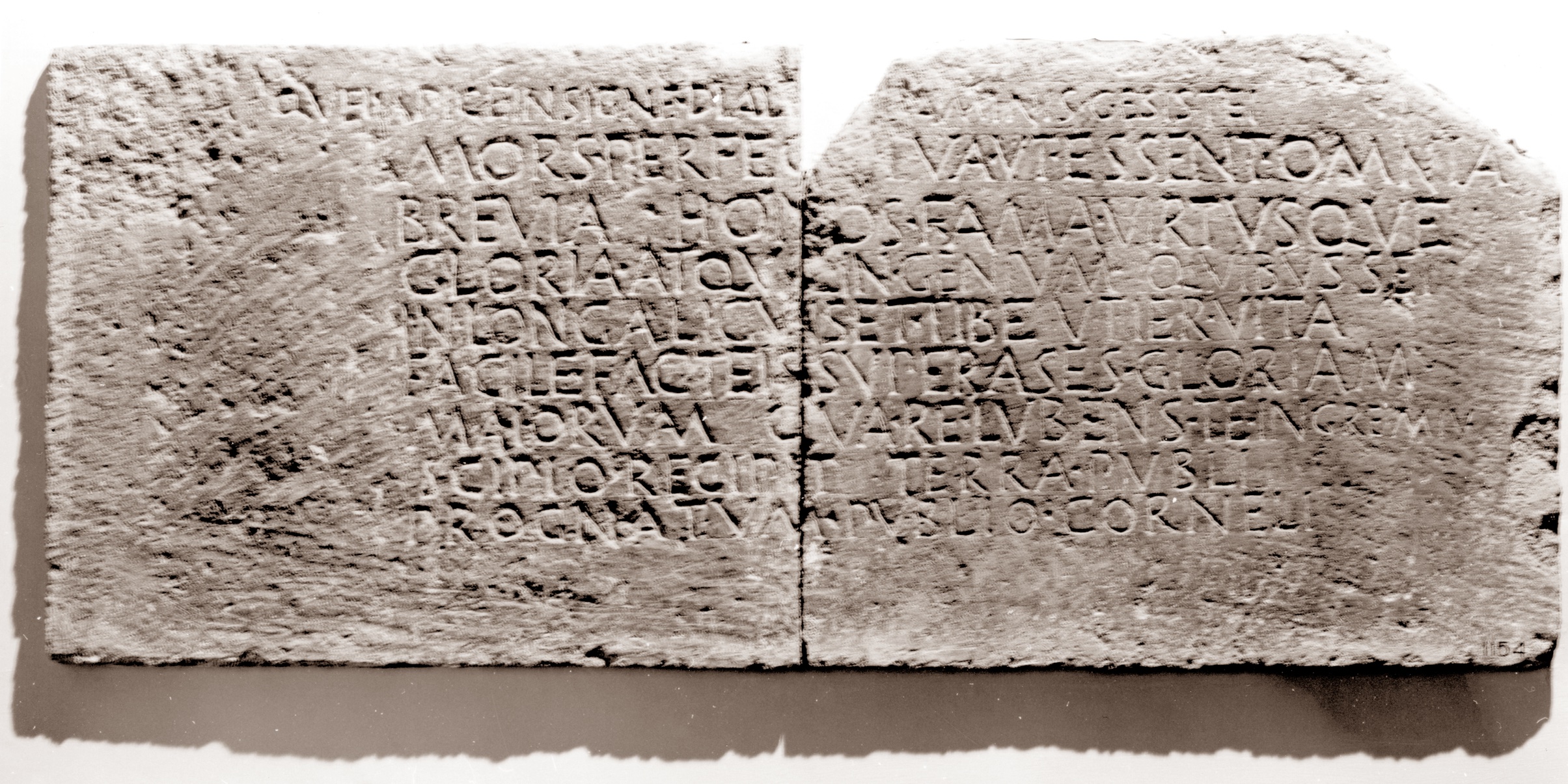
The epitaph of Publius Cornelius Scipio.
 This sculpture depicts the Stoic philosopher Seneca (right) tutoring Emperor Nero (left). The figure behind Nero is a statuette of Minerva, the goddess of wisdom. Eduardo Barrón completed this life-size piece in 1904. It is made of plaster and was a preparatory study, although a final version, in bronze or marble, was never produced.
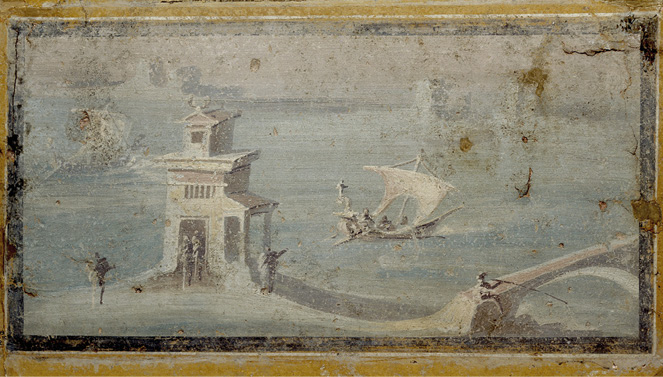 This wall painting shows a coastal landscape with a ship sailing away from the harbor. It is from Boscoreale, near Pompeii.
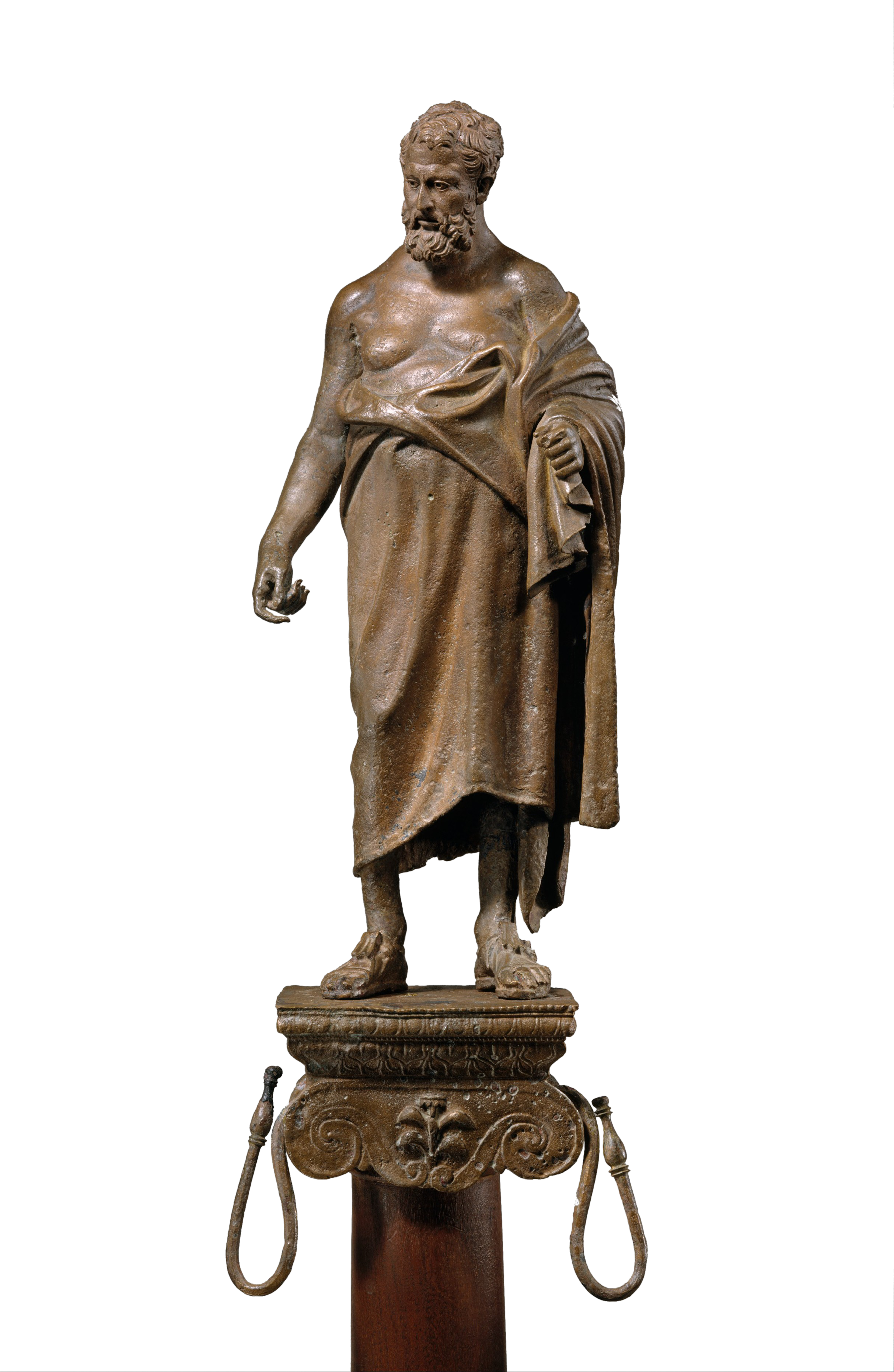 This bronze statuette decorates the top of a lamp stand. Oil lamps would have hung from from the two hooks. The man’s beard, bare chest, loose-hanging cloak, relaxed stance, and age, are all typical of the generic depiction of a philosopher.
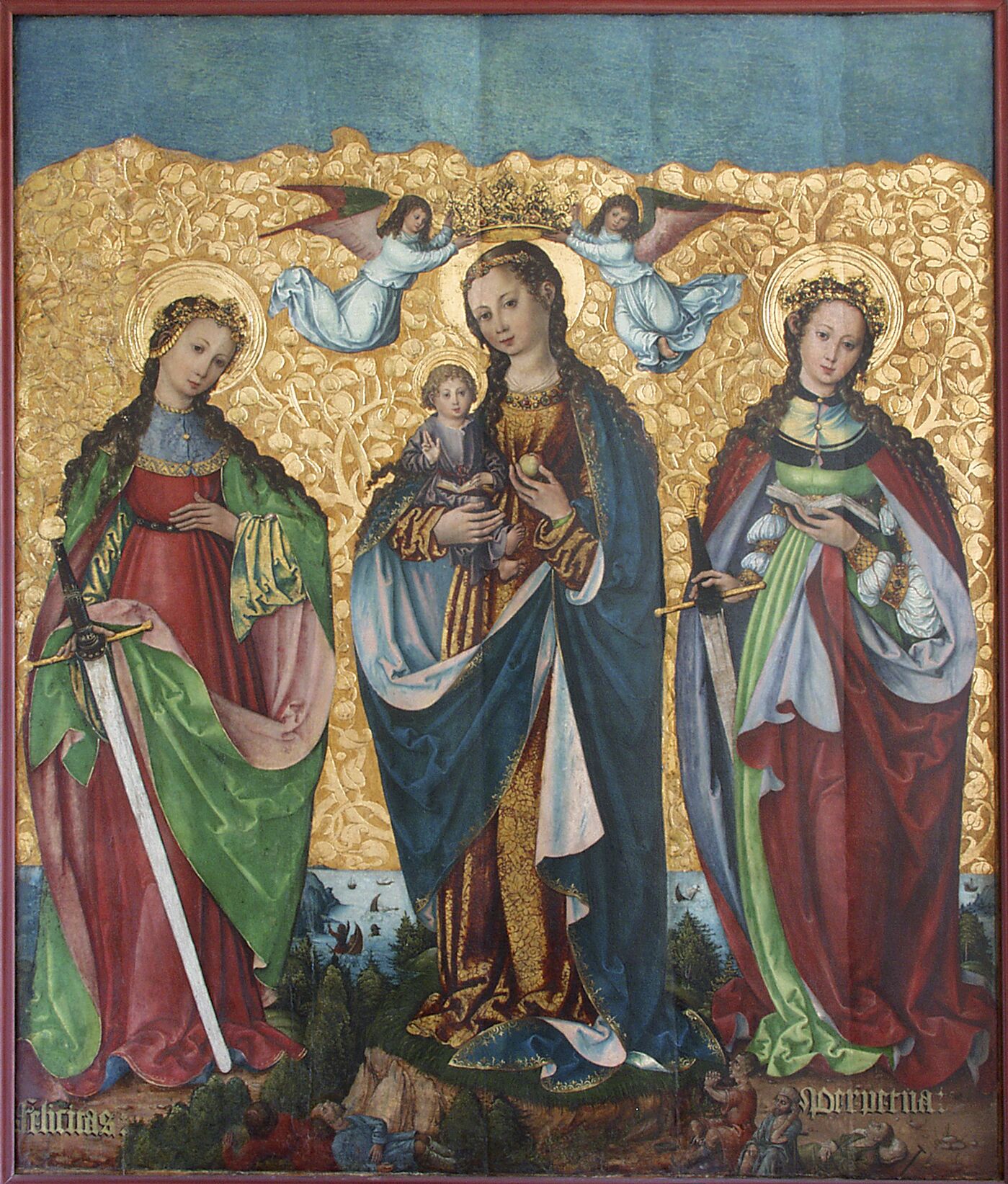 This painted wooden board is almost 7 feet high and is gilded in gold leaf. In the center stands Mary, and on either side of her are Saint Felicity and Saint Perpetua. It is thought to have been painted in around 1520, in Poland.
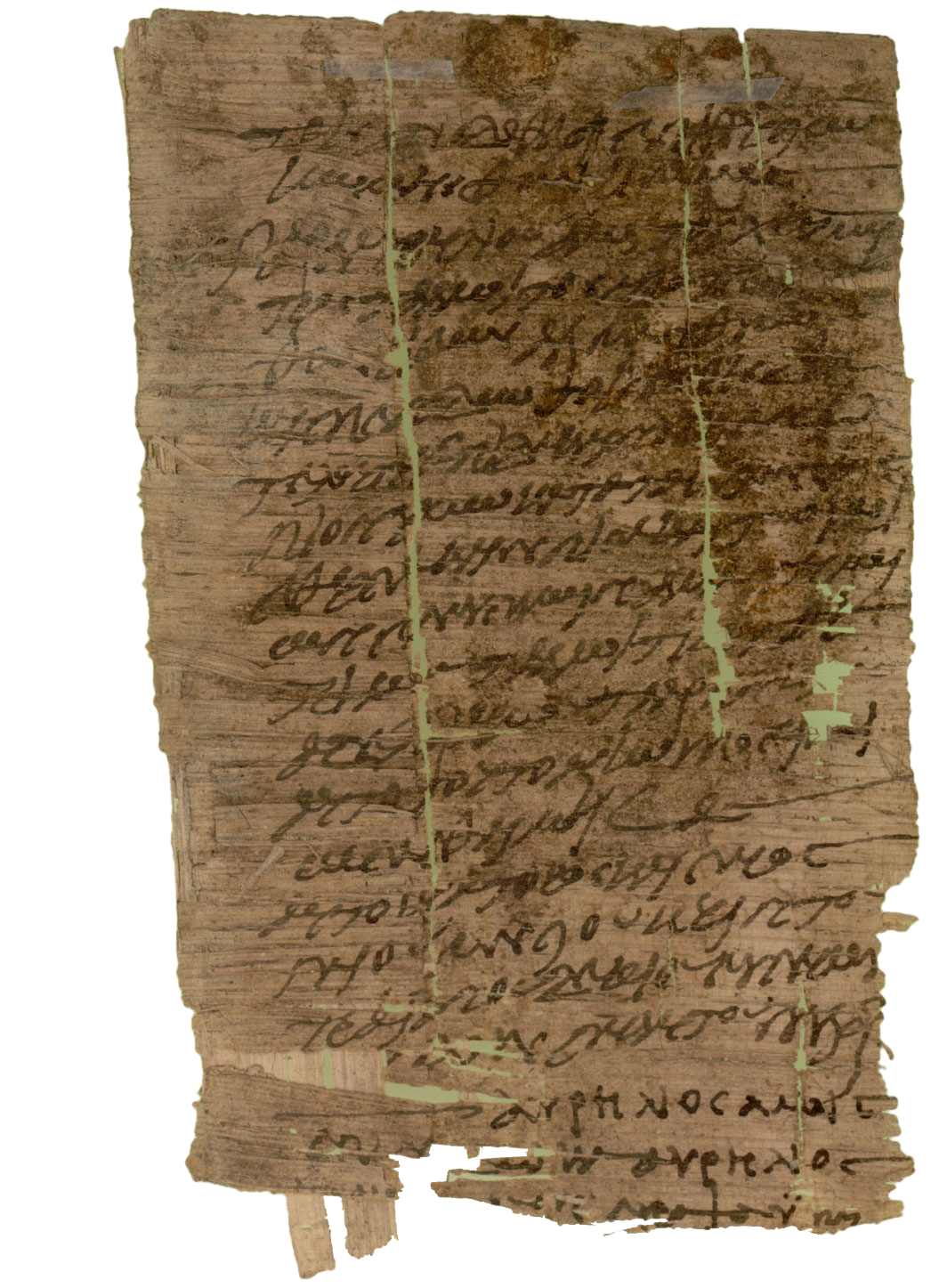 This piece of papyrus is a certificate of sacrifice that would have been granted to someone who had been accused of Christianity, but then renounced their faith. It is from ad 250 and was found at the site of Oxyrhynchus, in Egypt.
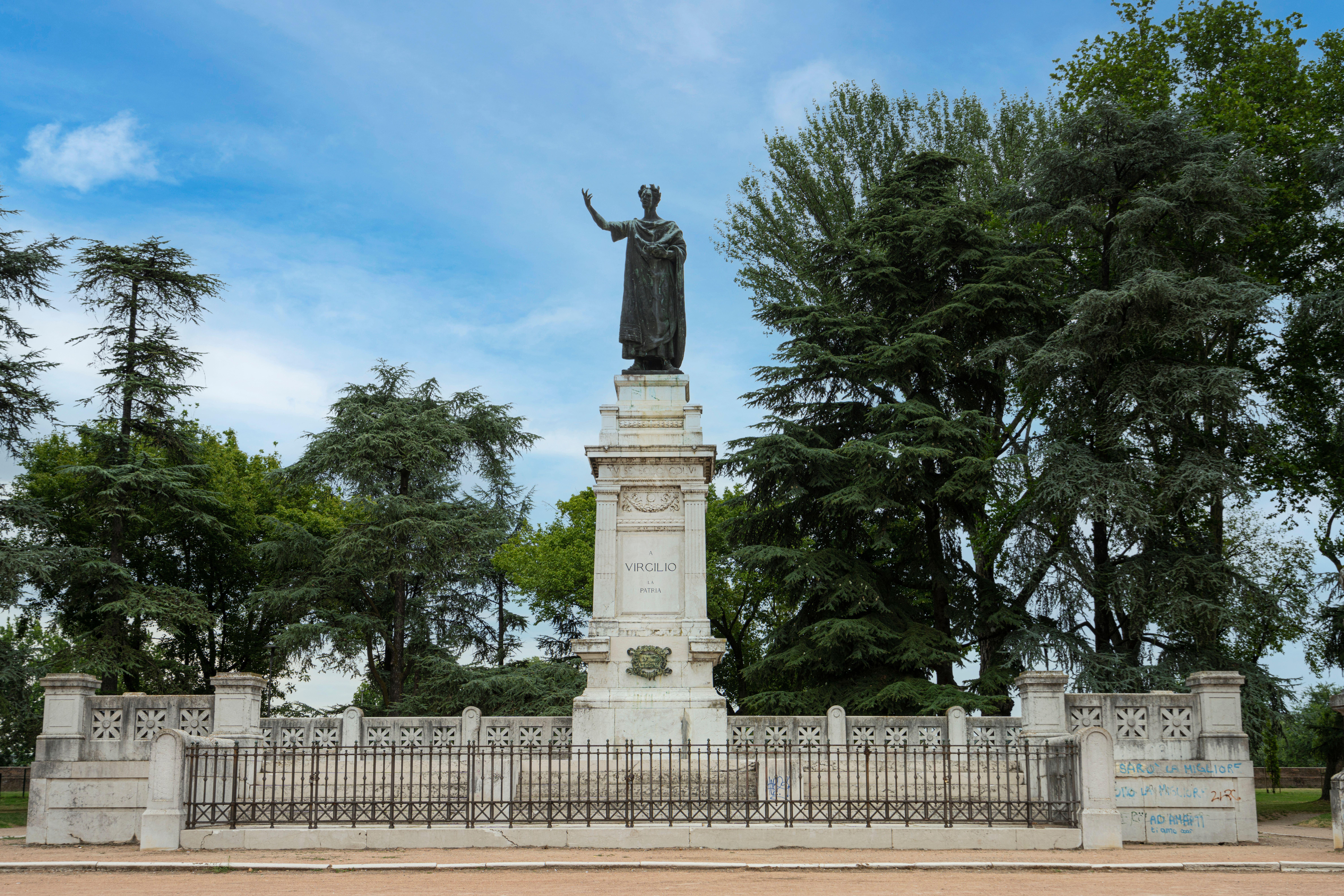 This monument to Vergil stands in the Piazza Virgiliana in Mantua, his birthplace.
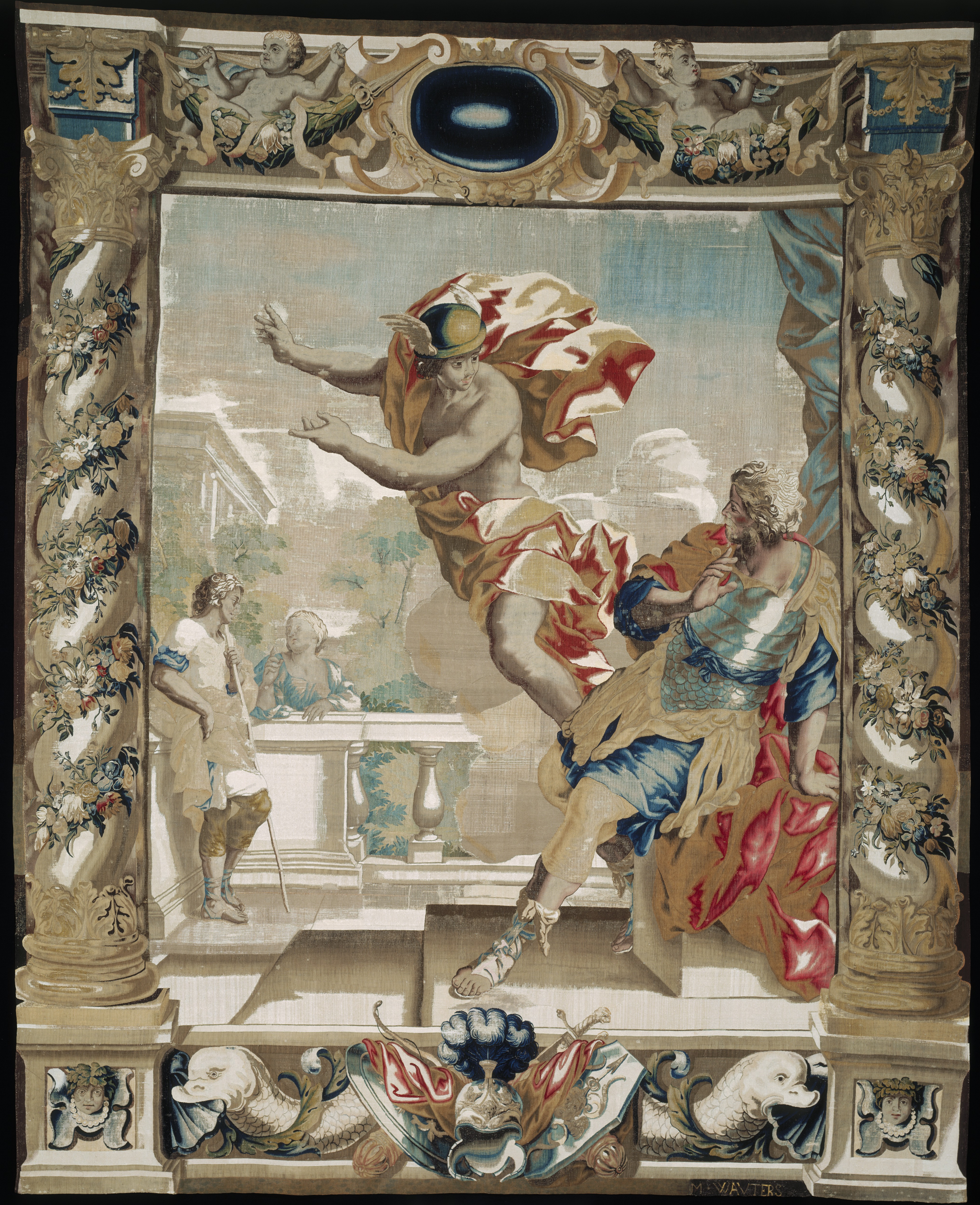 This tapestry, made of silk and wool, is part of a series illustrating the story of Dido and Aeneas. It is about 13 feet high. It was designed by Giovanni Francesco Romanelli and woven by Michael Wauters in the seventeenth century.
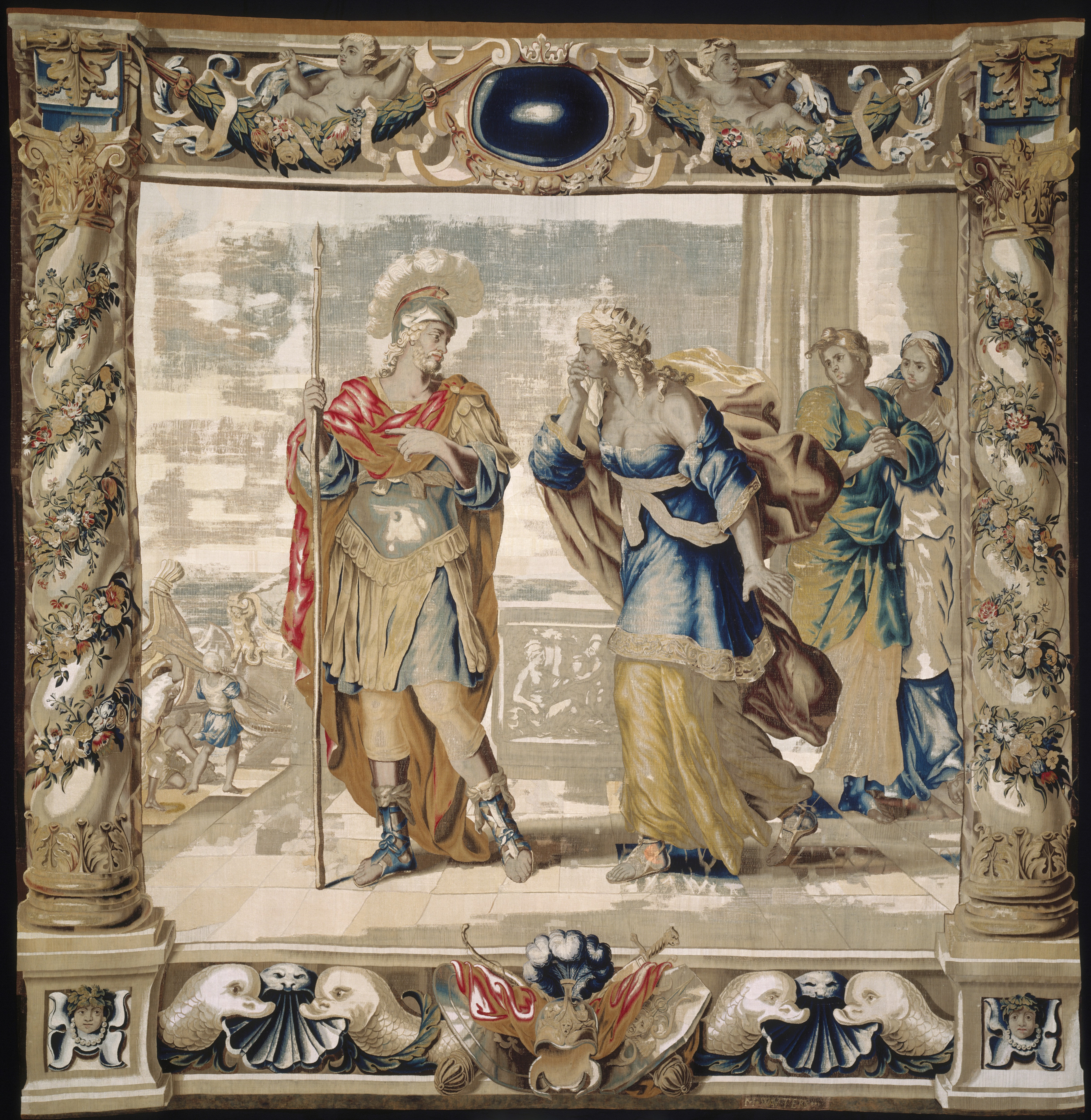 This tapestry, made of silk and wool, is part of a series illustrating the story of Dido and Aeneas. It is about 13 feet high. It was designed by Giovanni Francesco Romanelli and woven by Michael Wauters in the seventeenth century.
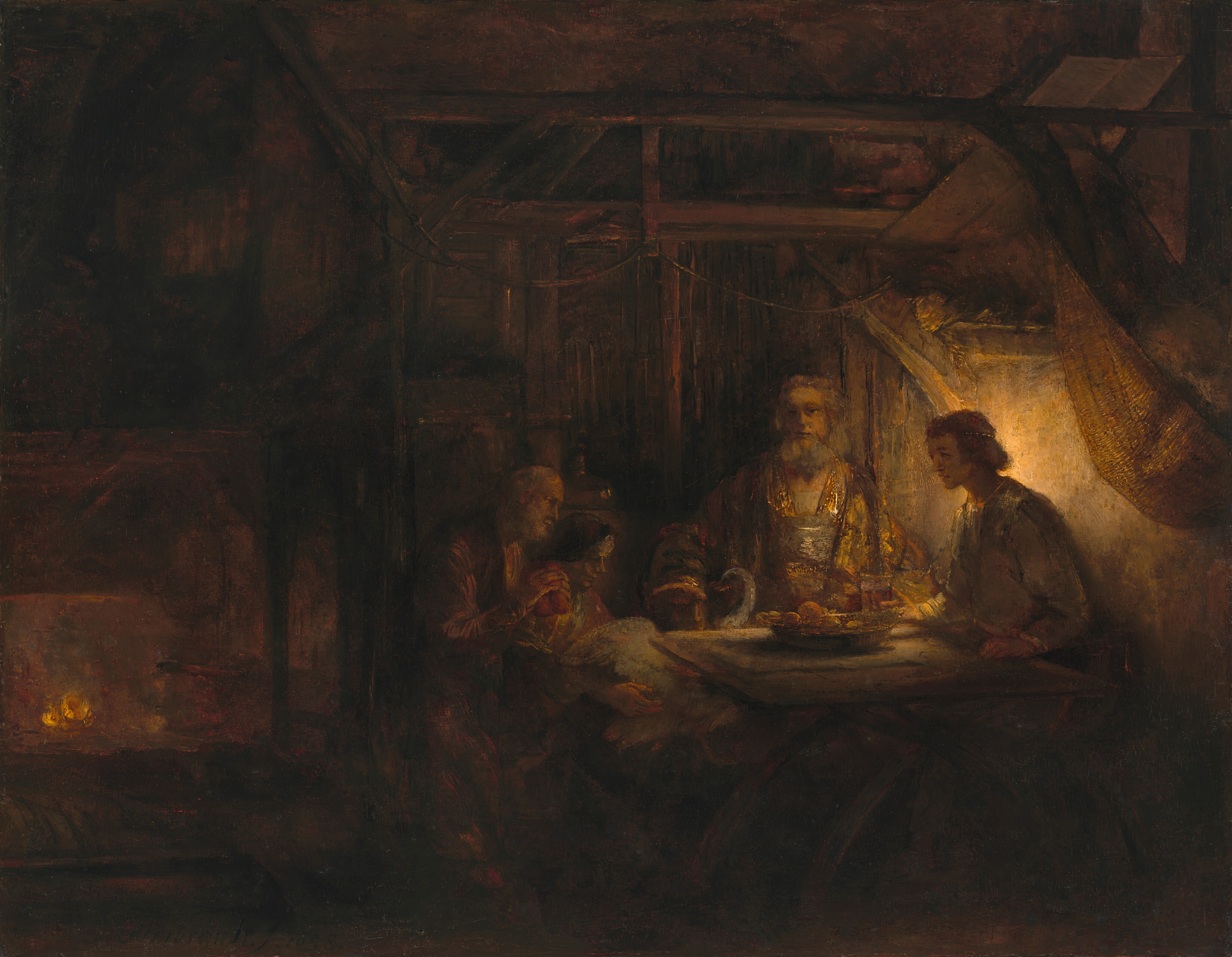 Rembrandt van Rijn painted this scene from Ovid’s ‘Metamorphoses’ in 1658. It shows Baucis and Philemon sitting at a table with Jupiter and Mercury.
-hi.jpg) This sixteenth-century oil painting depicts the legend of the ring of Gyges. It is thought to have been painted by the Italian artist Francesco Rizzi da Santacroce.
This sixteenth-century oil painting depicts the legend of the ring of Gyges. It is thought to have been painted by the Italian artist Francesco Rizzi da Santacroce.
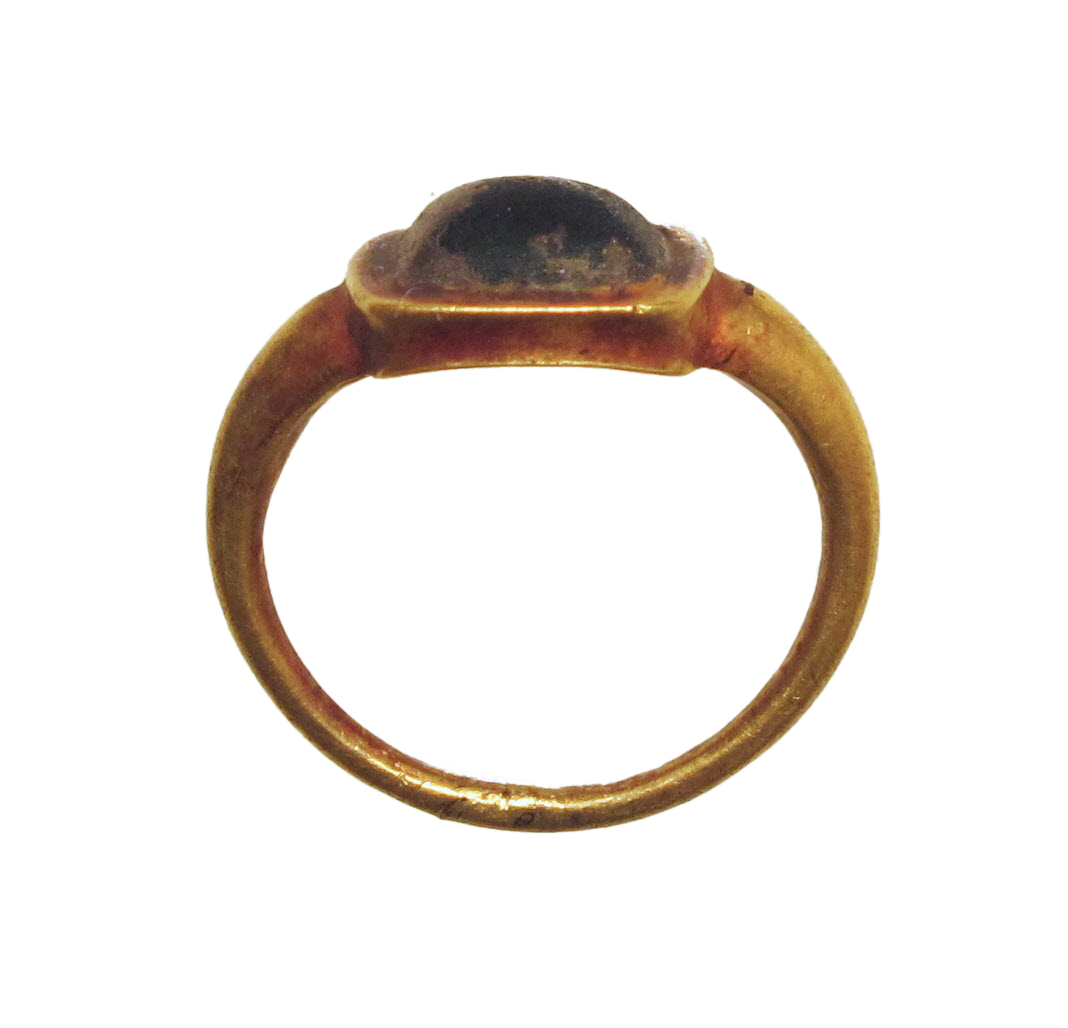 A Roman ring with a glass bezel.
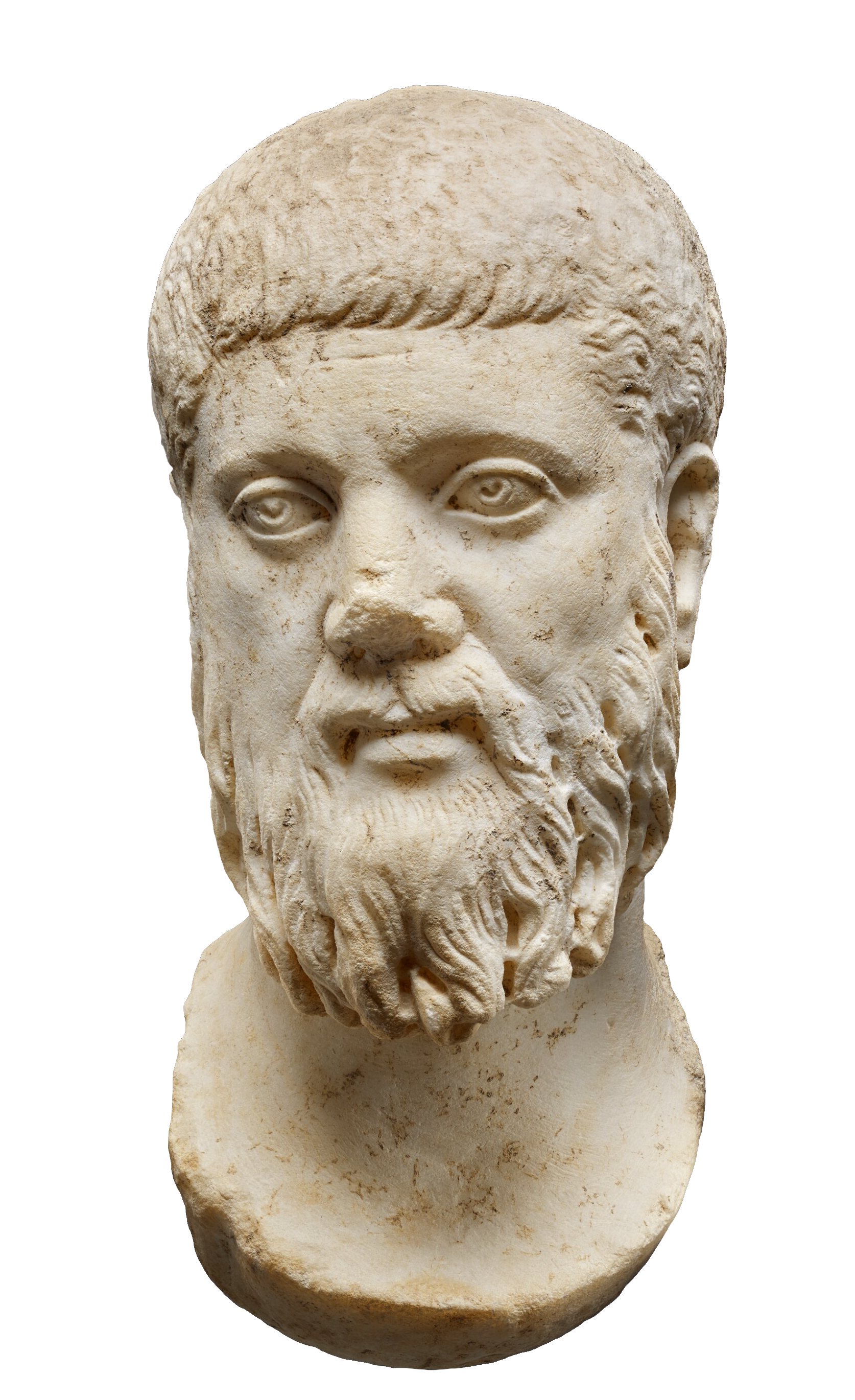 A marble bust of Plato, from the mid-third century ad.