
WEBLINKS
IMAGE GALLERY
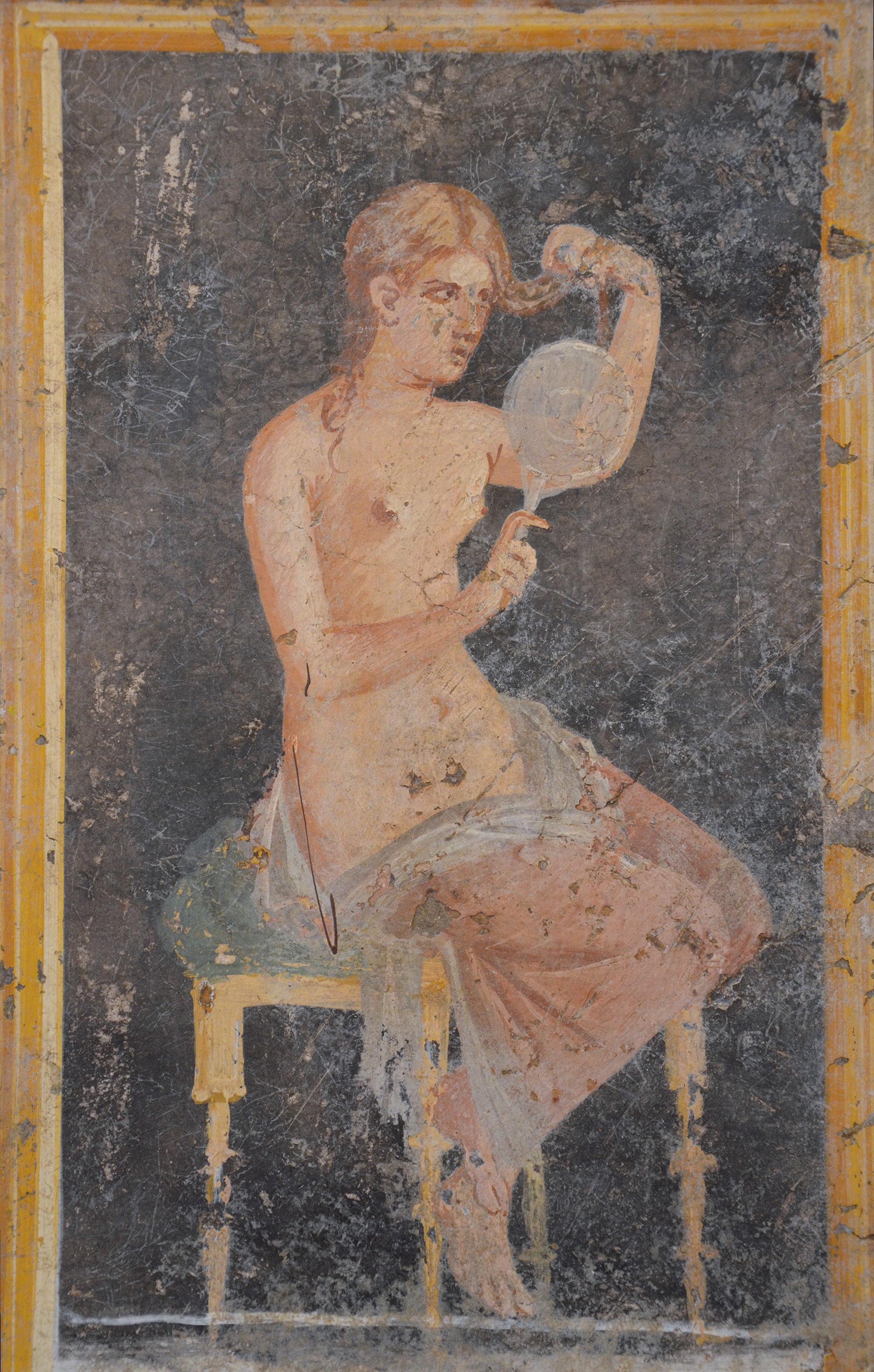
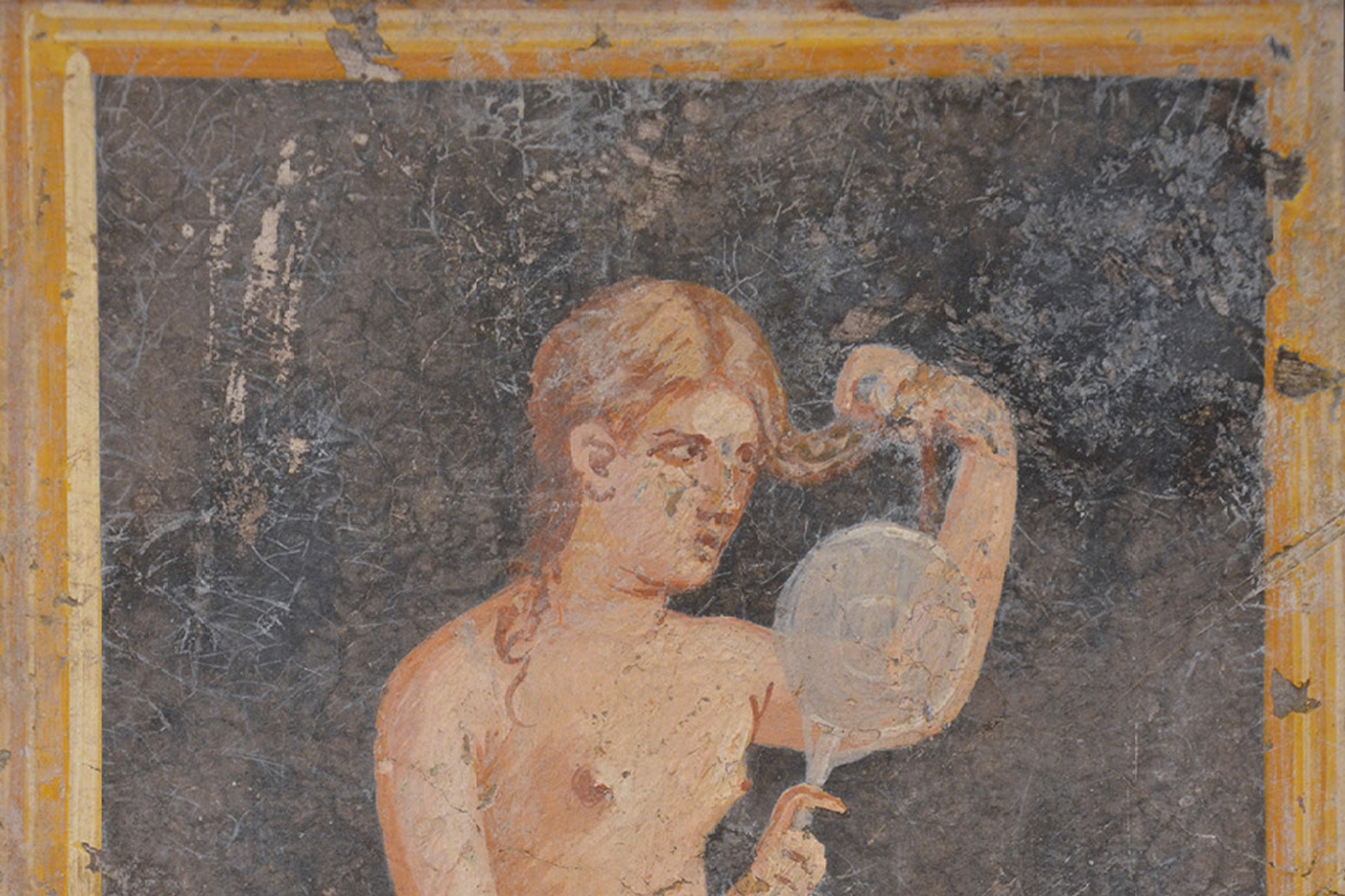
This fresco of a woman holding a hand mirror is from the Villa of Arianna at Stabiae, near Pompeii.
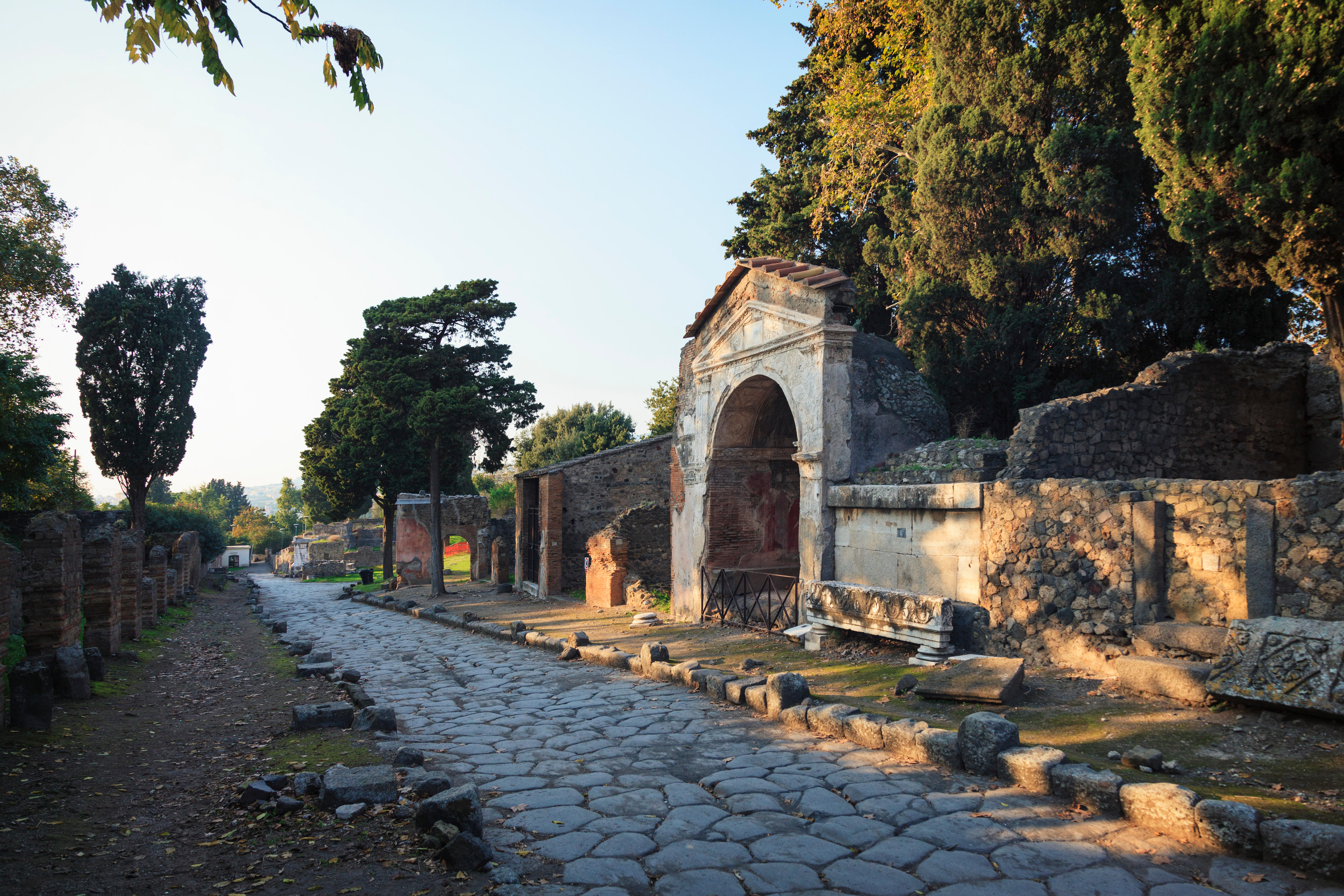
The Via delle Tombe (Street of Tombs) in Pompeii. Romans buried their dead outside the city walls, along the roads in and out of the city. These were busy thoroughfares, and funerary inscriptions sometimes directly address those who passed by.

A photo of three large pyramids standing in a flat sandy desert against a blue sky.
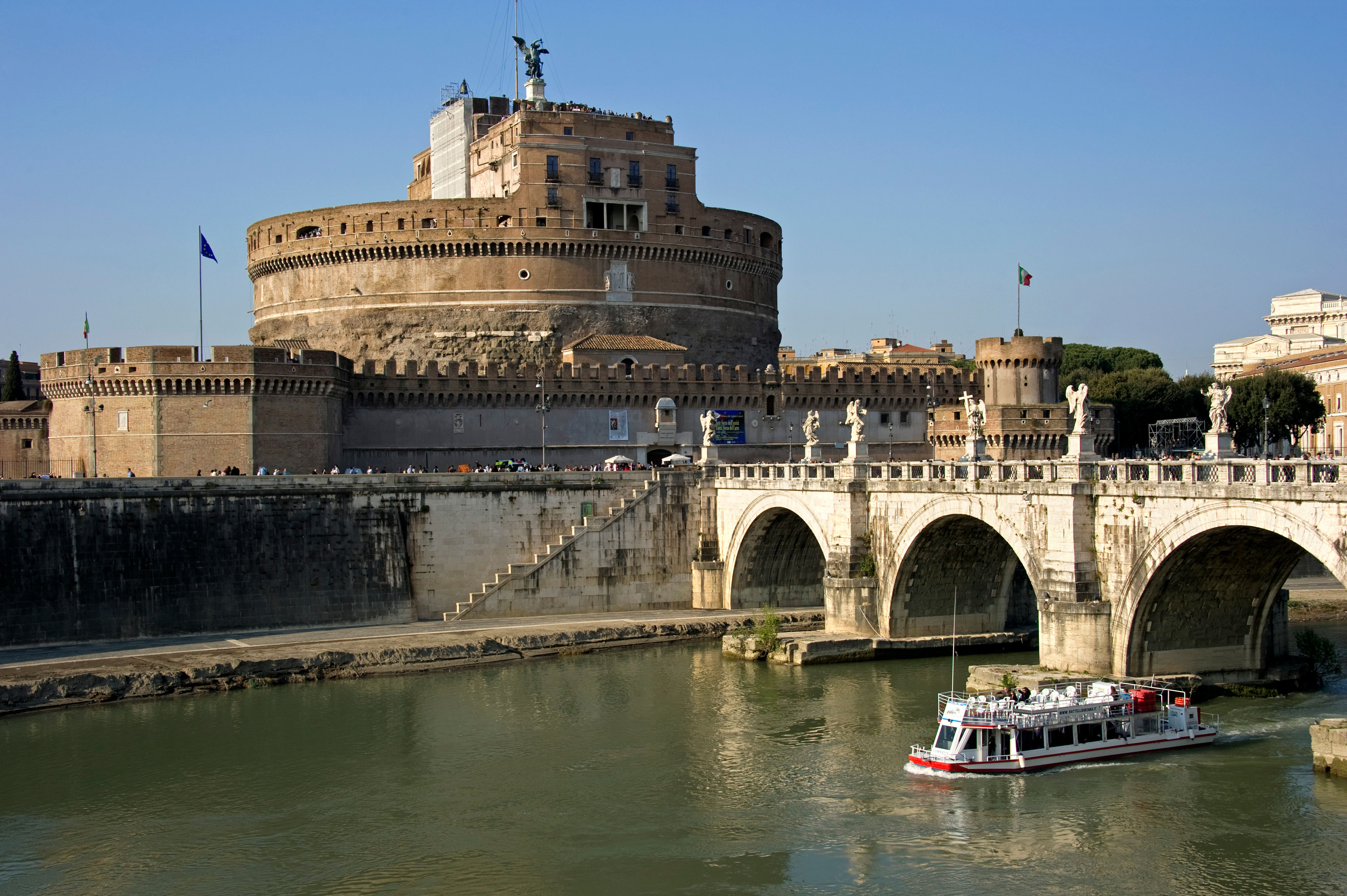 The mausoleum of Hadrian.
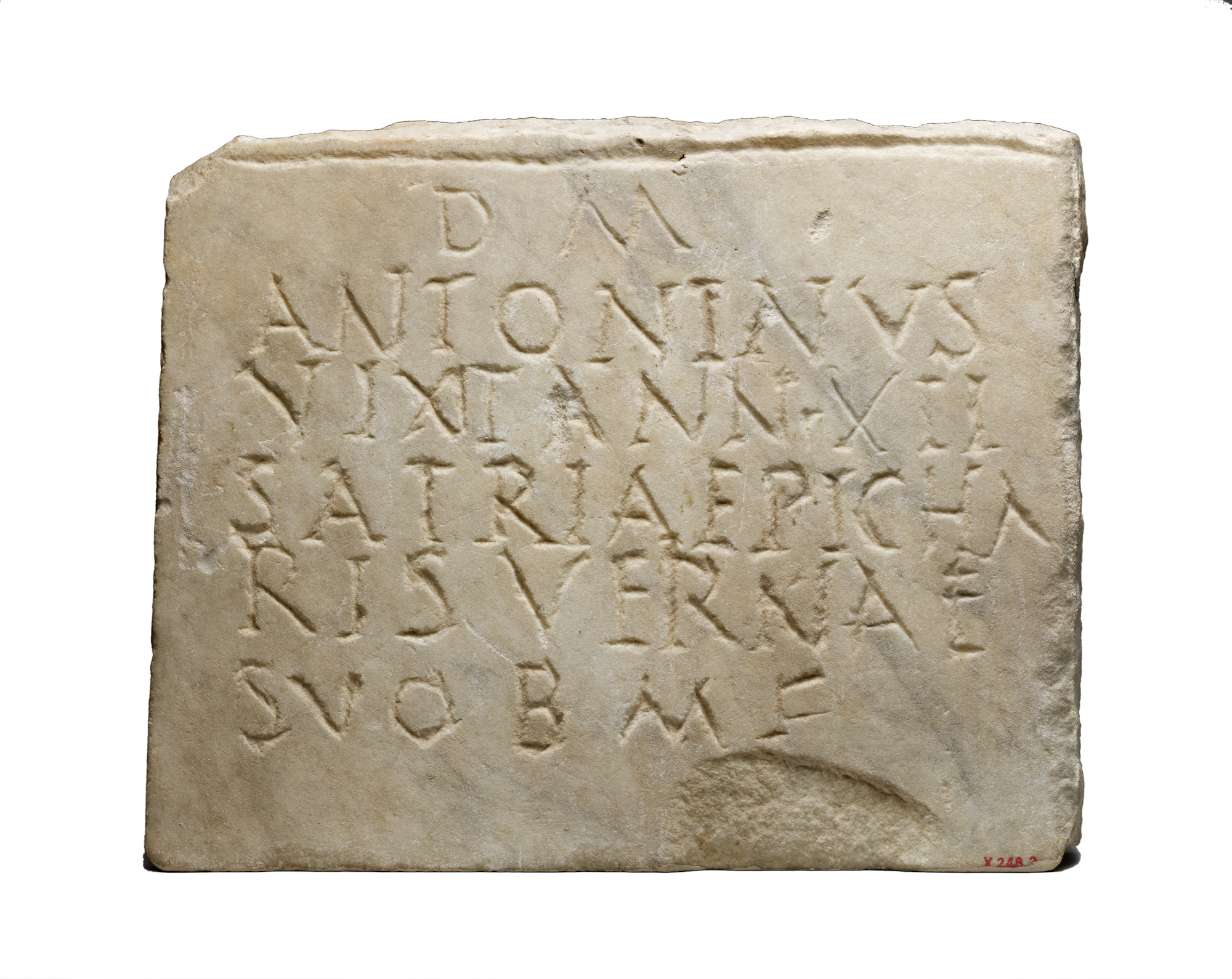 This marble funerary inscription was set up by Satria Epicharis for Antoninus, an enslaved boy in her household, who died aged twelve.
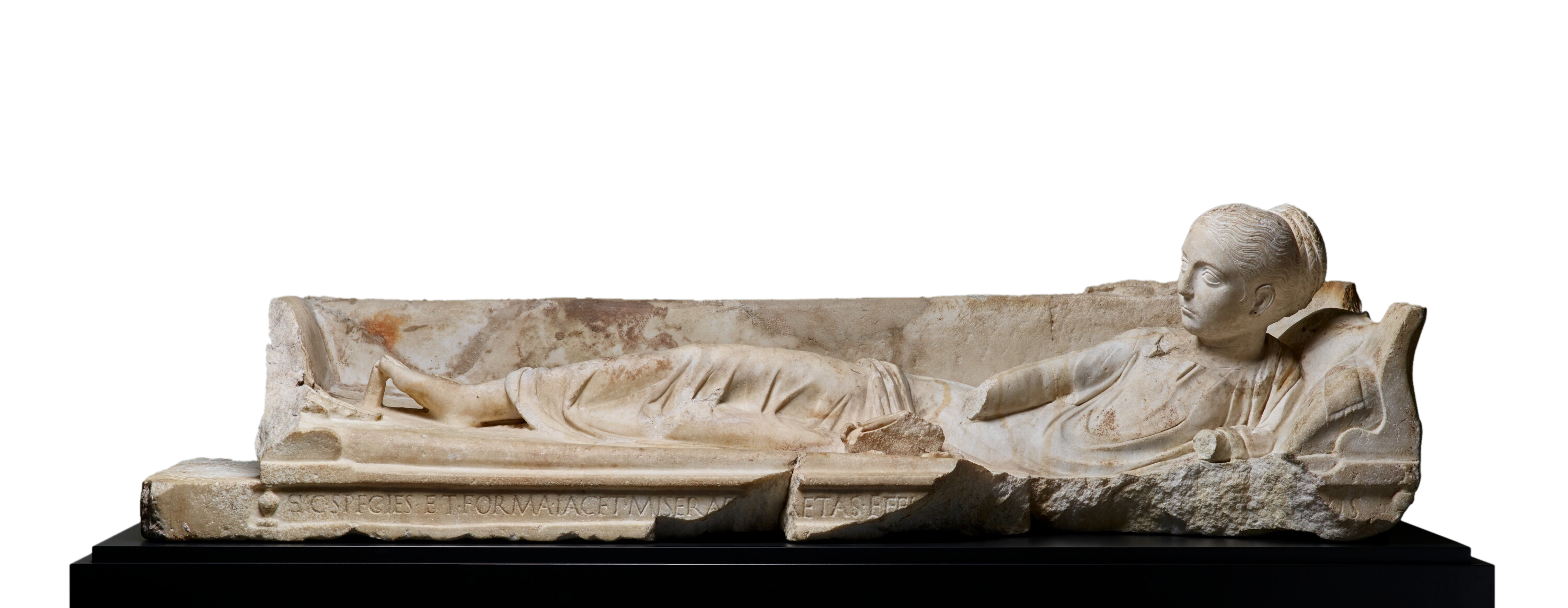 A funerary sculpture of a young girl, from the second century ad.
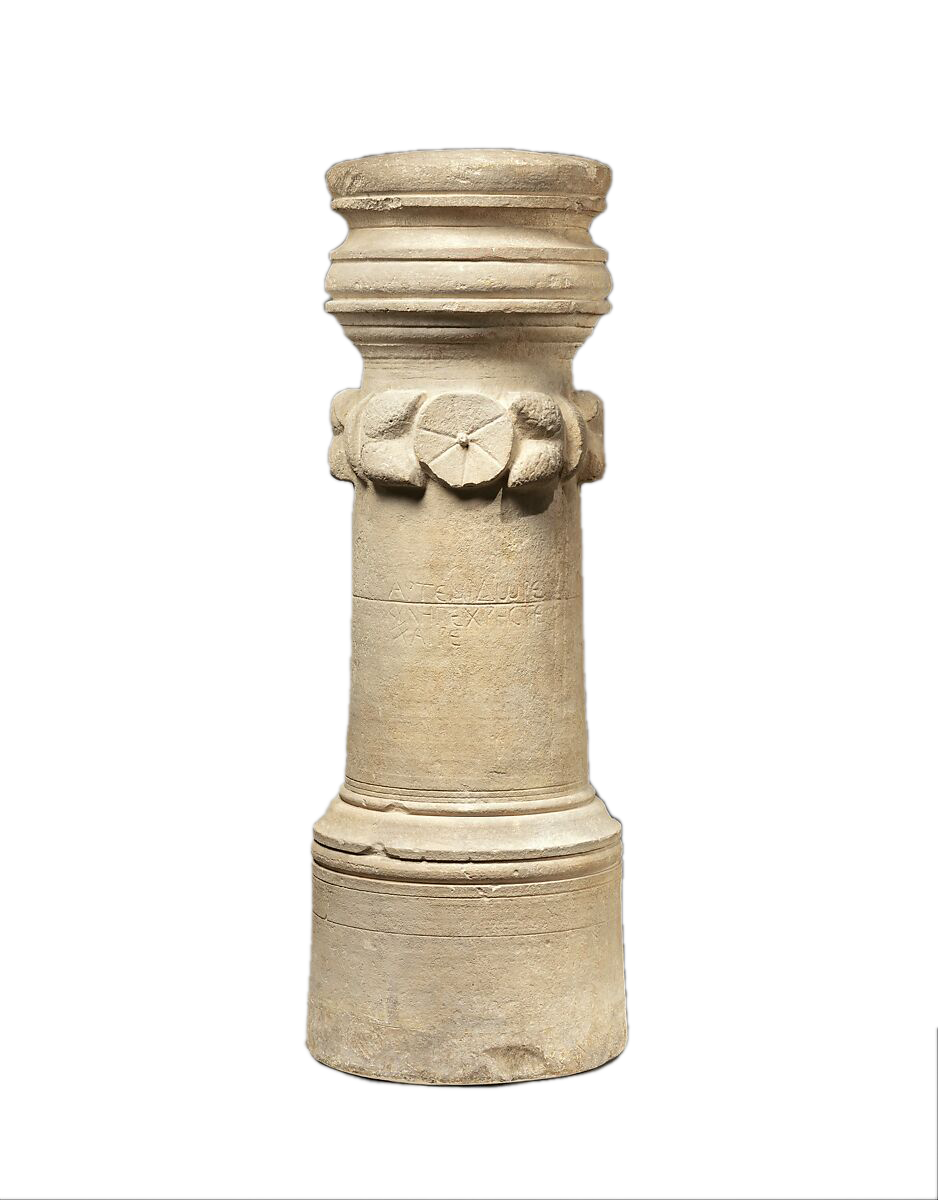 This cippus is from Cyprus and is made from limestone. The inscription is in Greek and says: ‘Good Artemidoros Kynegos, farewell’.
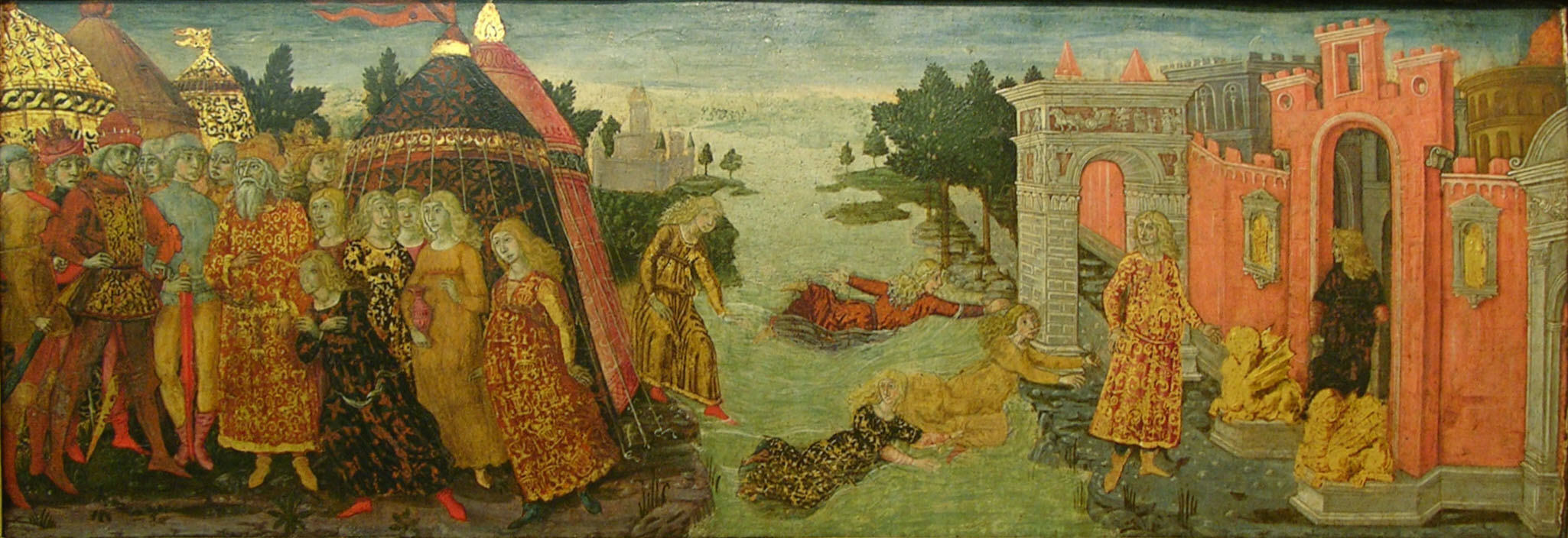 On this wooden panel, events from the story of Cloelia are depicted in chronological order from left to right. The panel, which was once the front of a chest, was painted by Guidoccio di Giovanni Cozzarelli in around 1480.
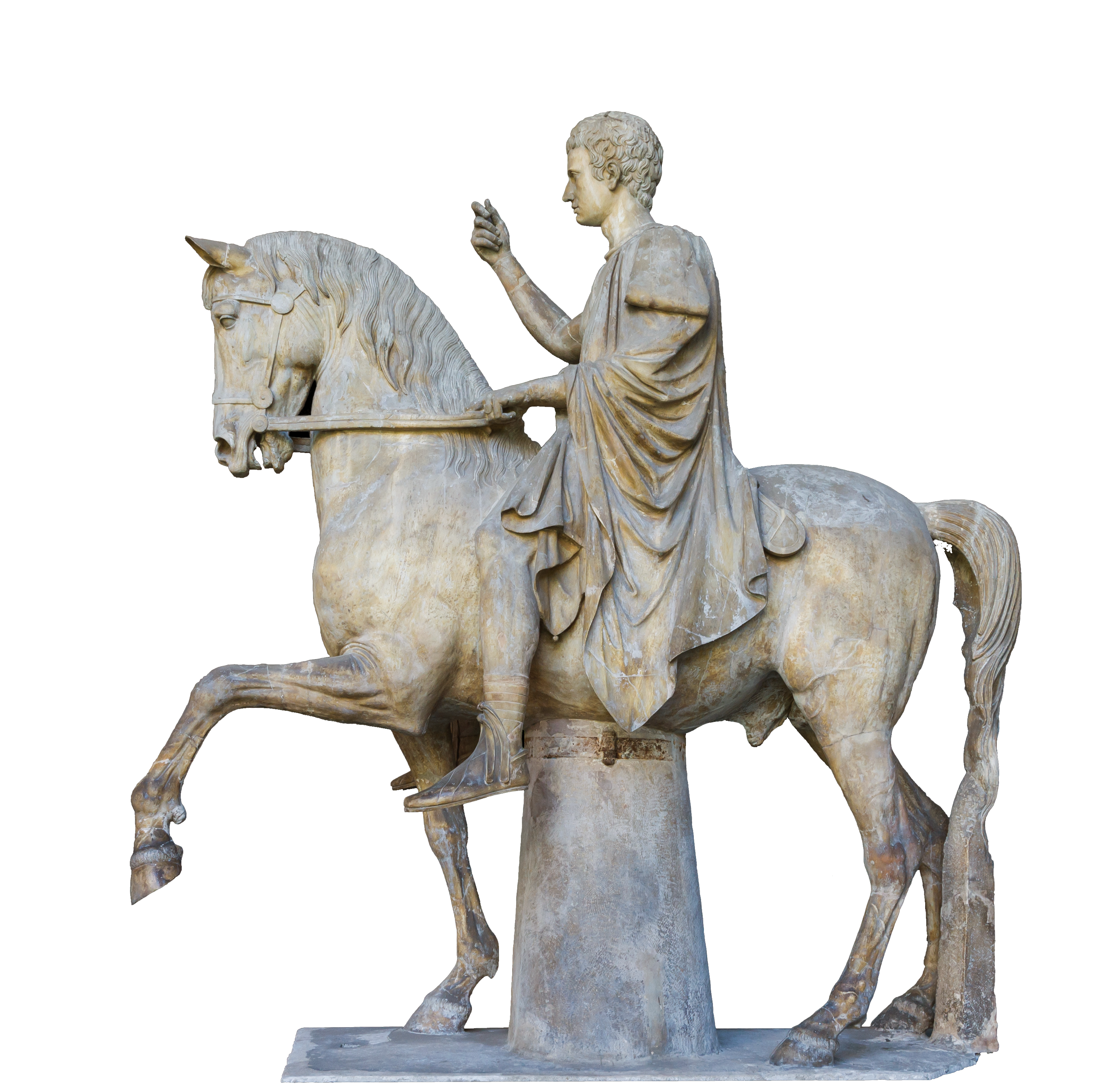 Equestrian statues, such as this one, were erected to honor and commemorate victorious generals, political figures, generous benefactors, and later the emperor and his family members. This statue is made of marble. Equestrian statues were also made in bronze, although only one of these survives (a statue of Emperor Marcus Aurelius), as the others were melted down for reuse.
The man depicted in this statue is Marcus Nonius Balbus. Statues dedicated to both himself and his father, of the same name, were erected in Herculaneum. His father had endowed Herculaneum with various public buildings, and paid to rebuild the basilica after the earthquake in ad 62. For his generosity he had been named a patron of the city, and statues of him and his family members were put up at public expense.
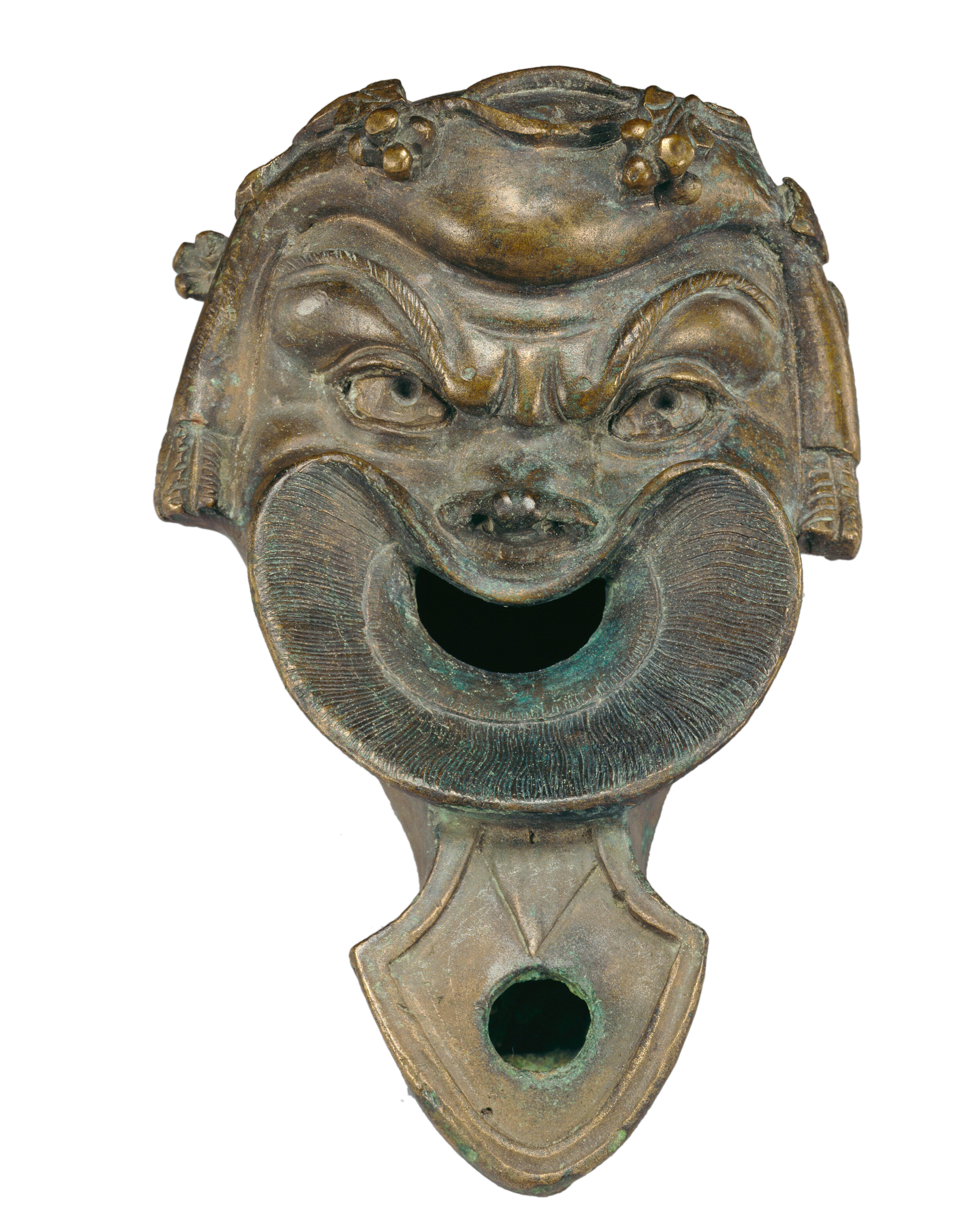 This bronze oil lamp is decorated with a comic mask. The furrowed brow and wide mouth are typical features of the masks worn by actors in Greek and Roman comic theater.
 Masks and other theatrical imagery were a popular choice for Roman decoration and ornaments, from frescoes to ceramics and silverware.
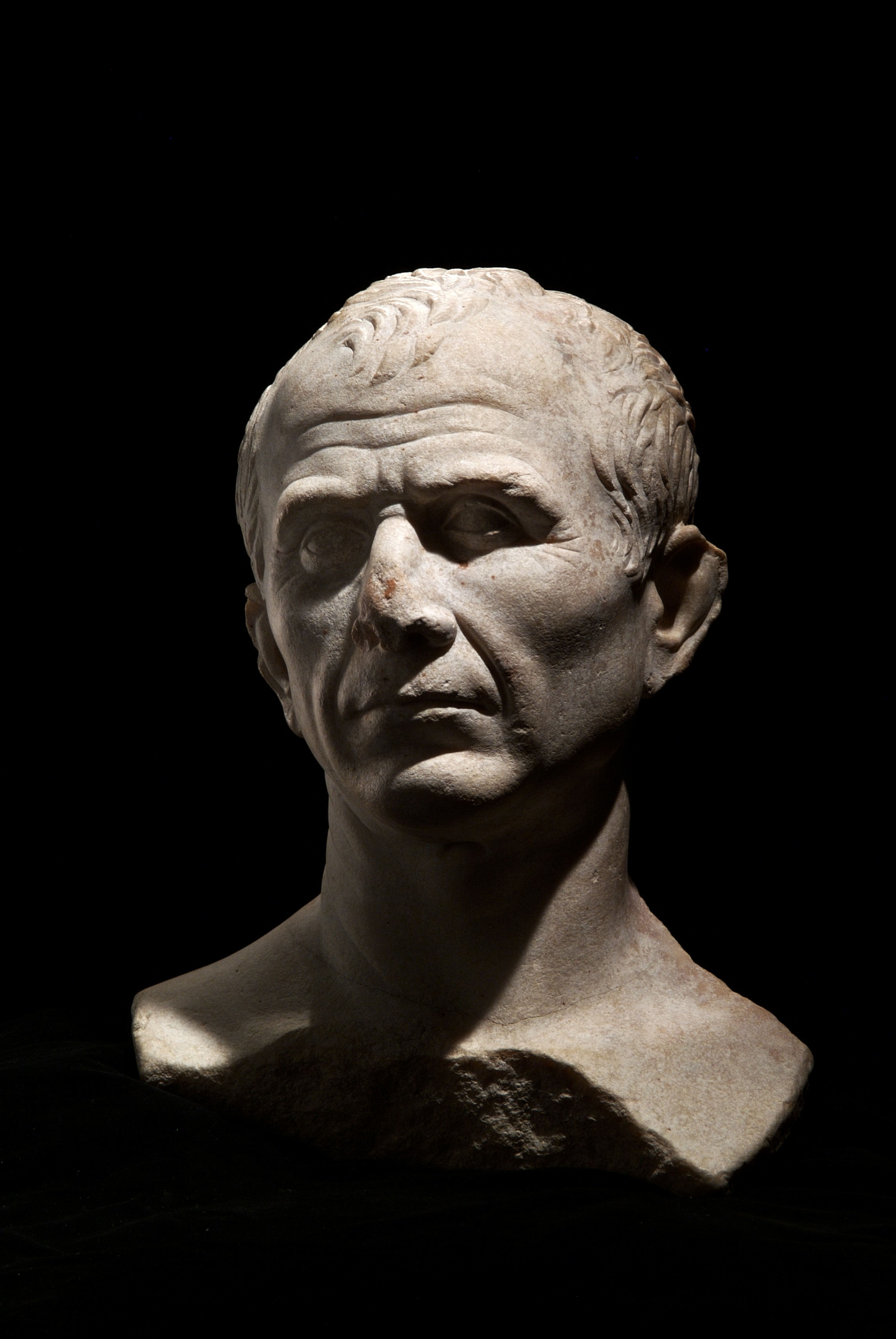 This life-sized marble bust, found in the Rhône River, is thought to be a portrait of Julius Caesar.
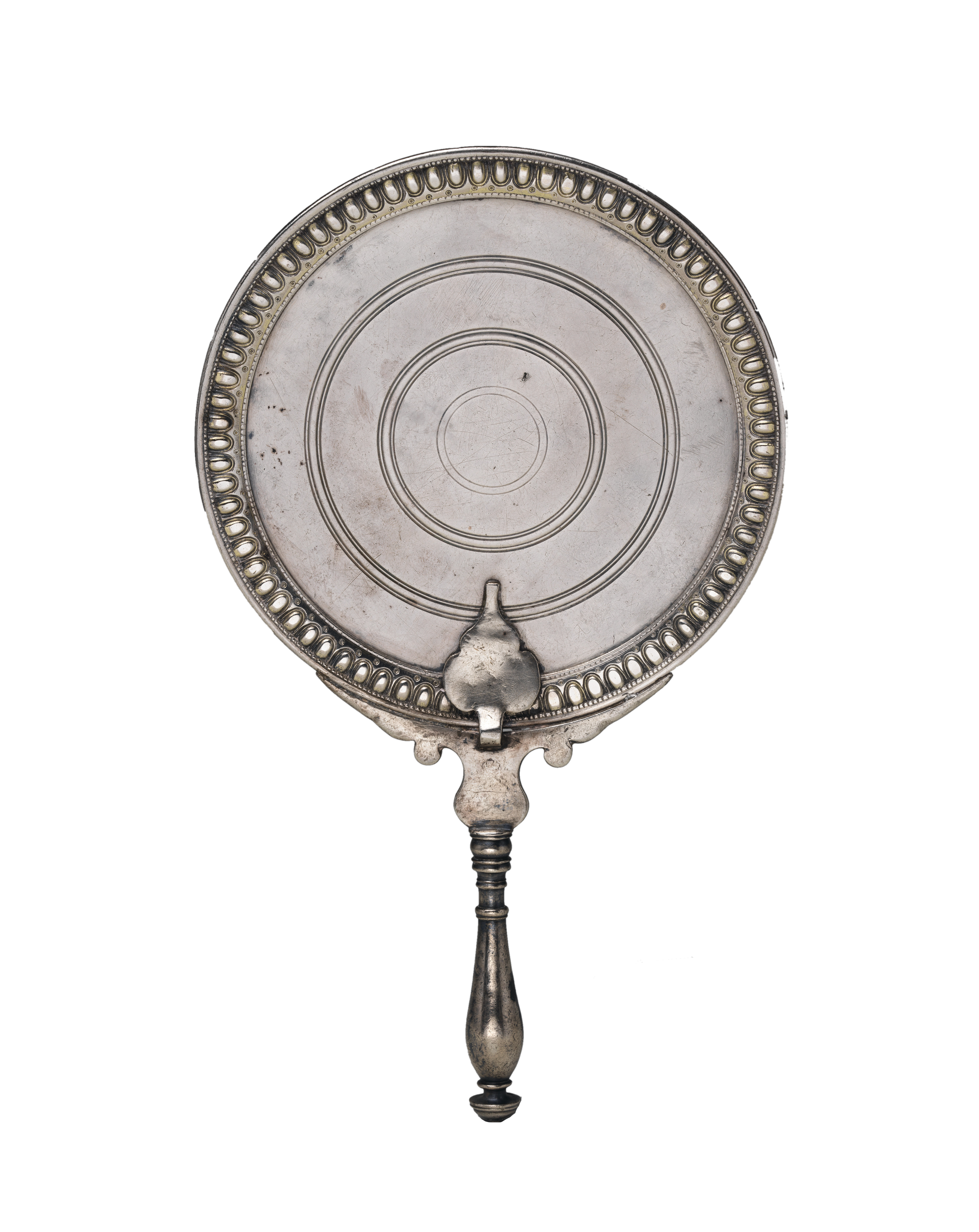 The surface of this silver mirror is slightly convex. It would have been polished to provide a clear reflection.
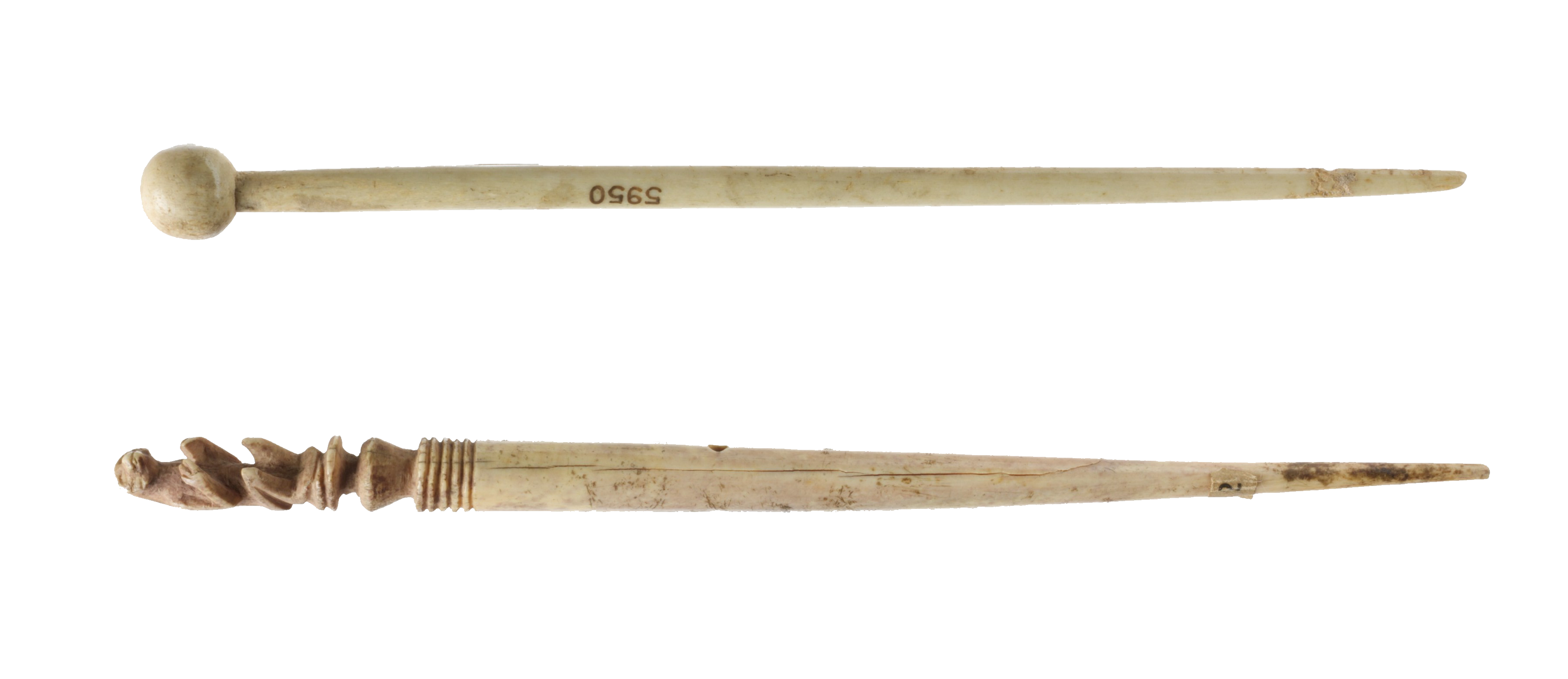 Two hairpins, one made of bone and the other of ivory.
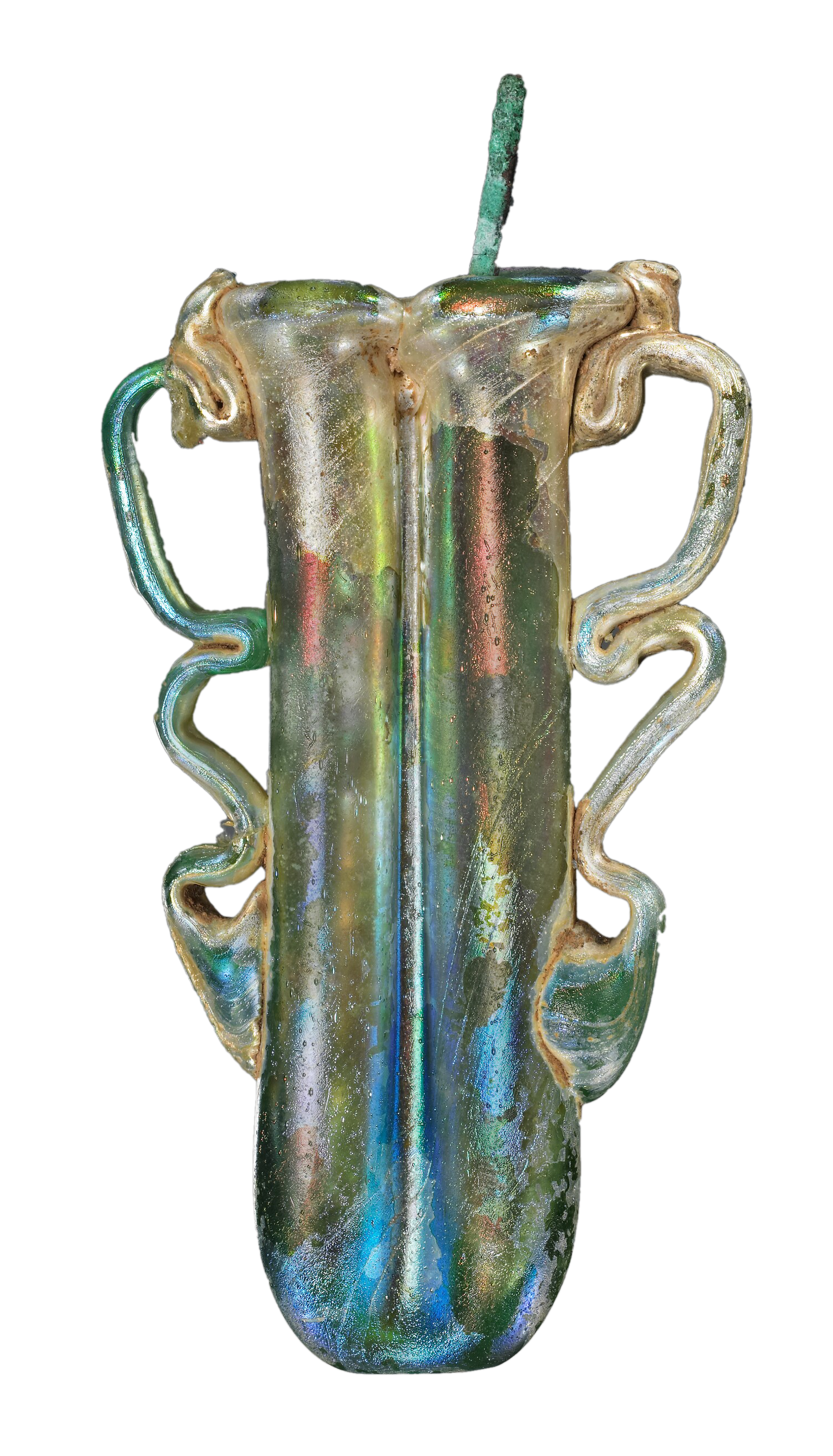 This glass container was probably used to hold cosmetics. It has two separate tubes; a bronze rod for applying the makeup still remains in one of them. It is from the third or fourth century ad.
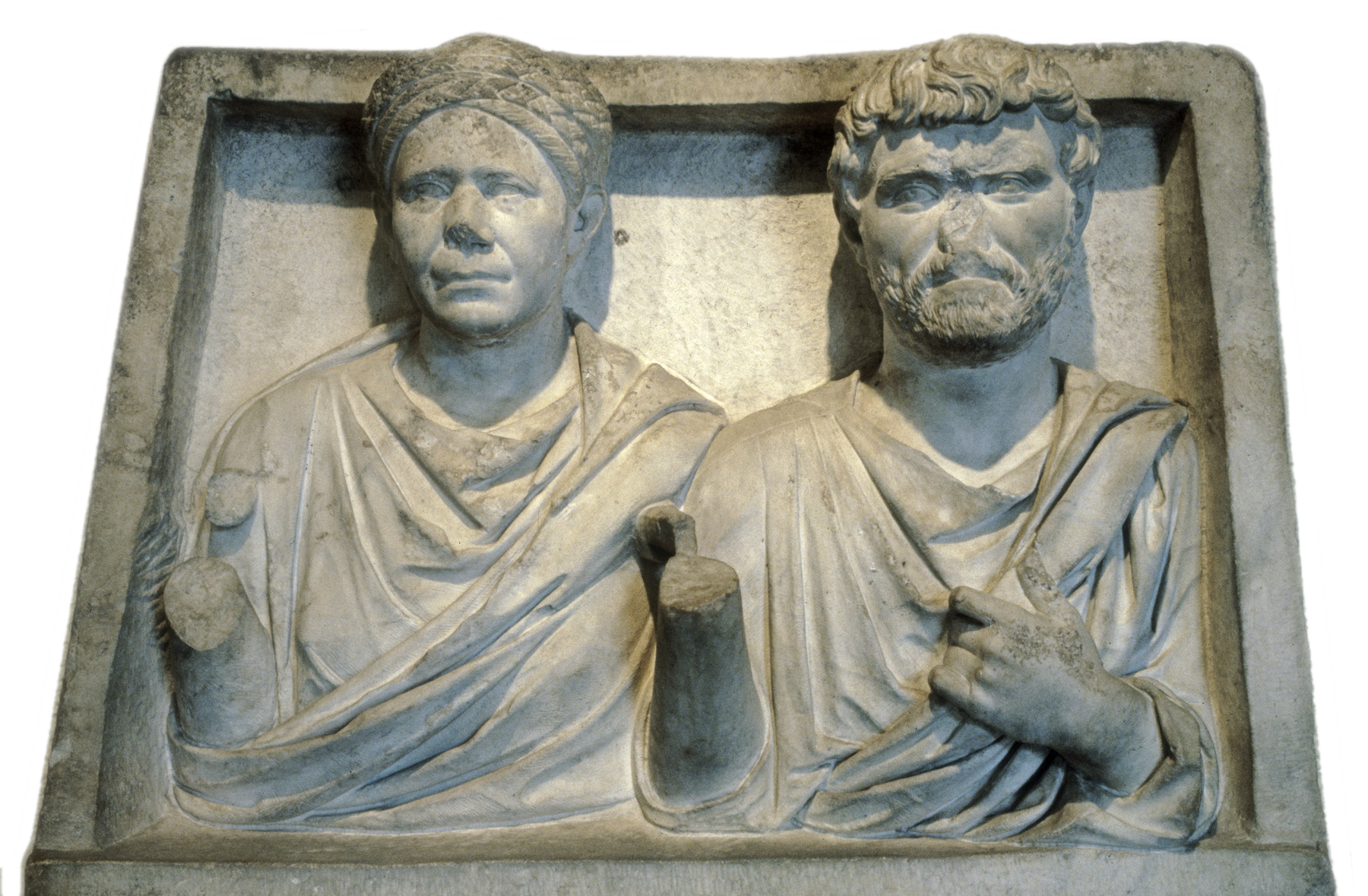 A funerary relief of a husband and wife.
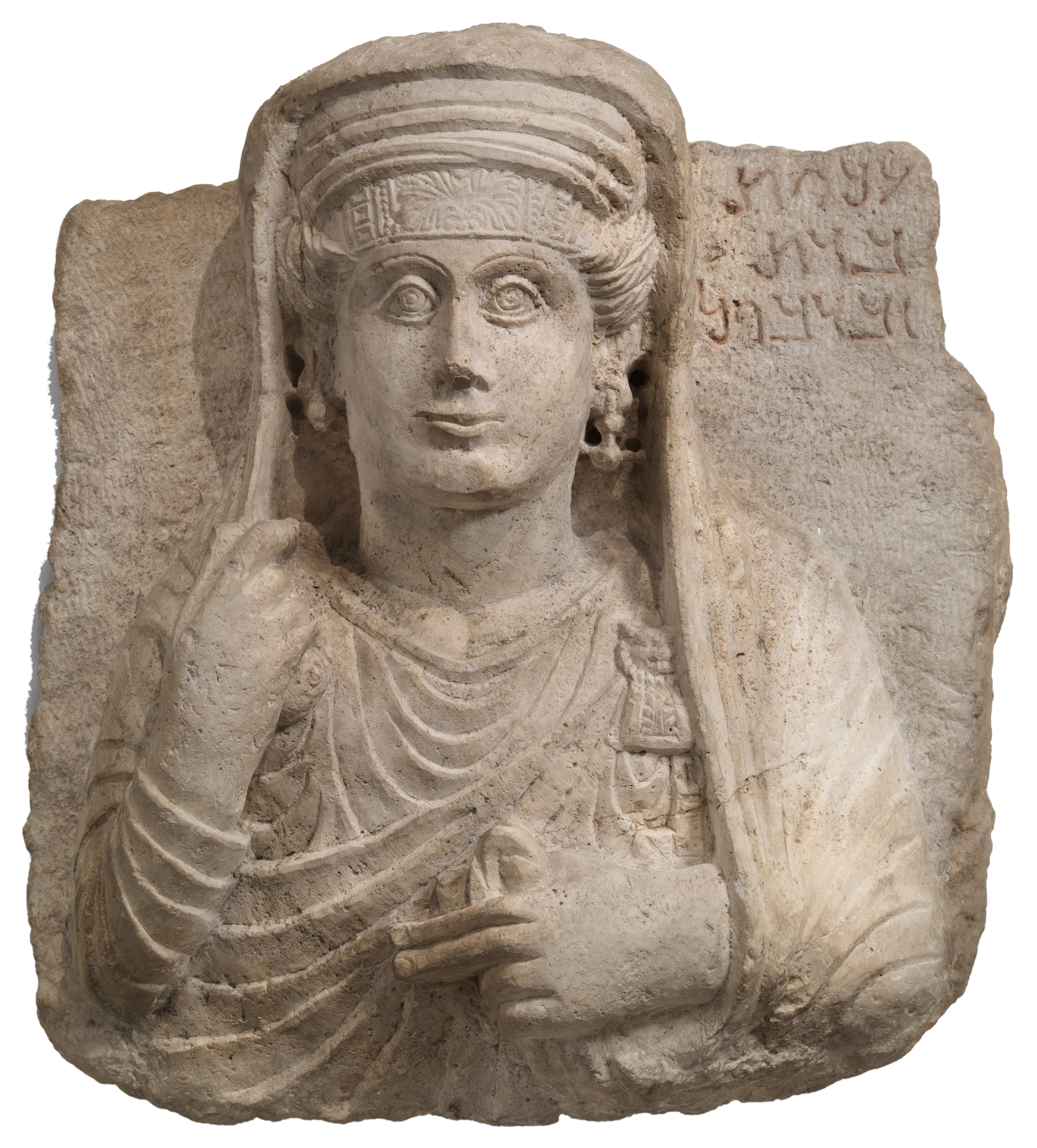 A funerary monument from Palmyra.
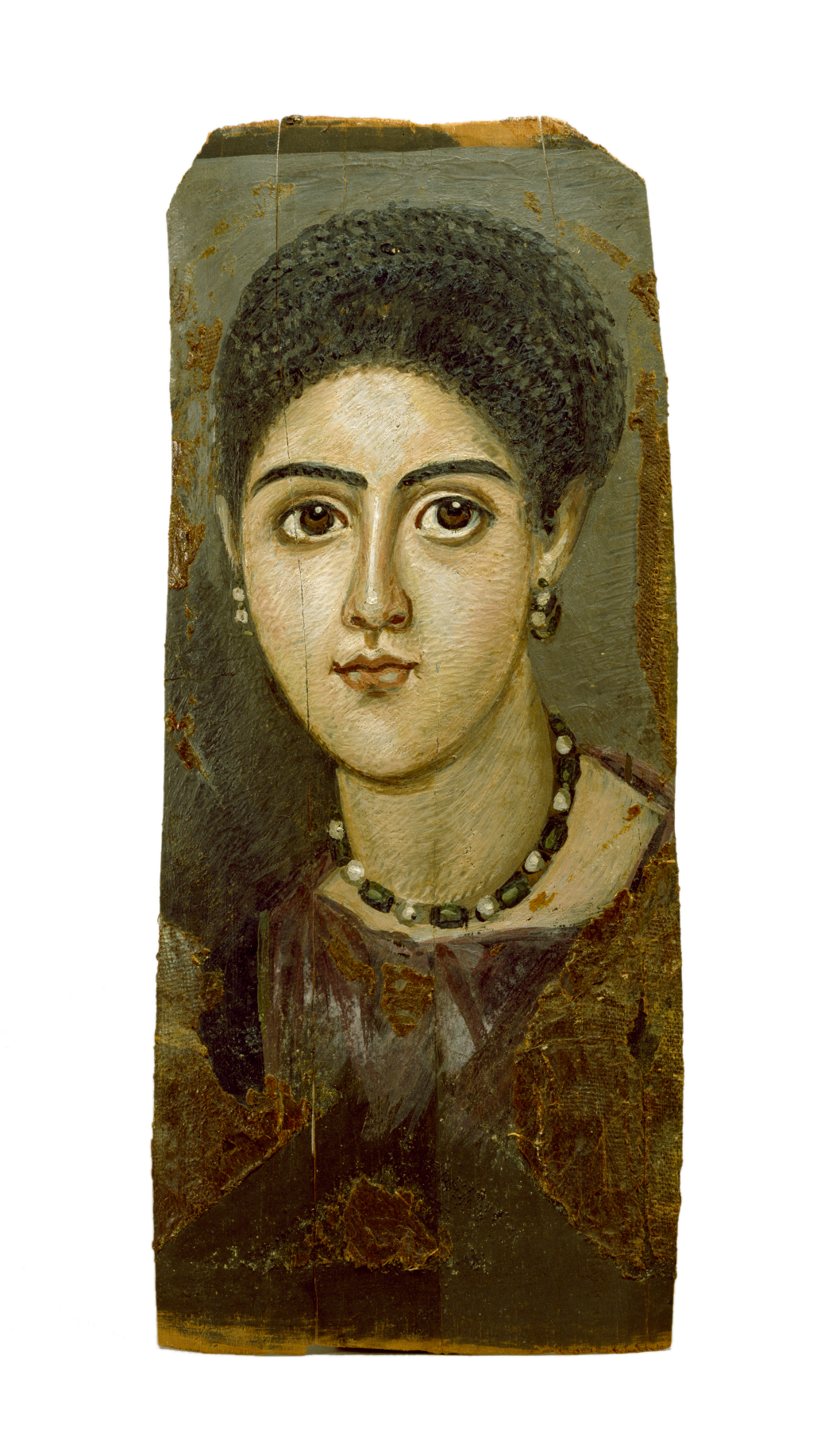 A painted portrait of a woman from Egypt.
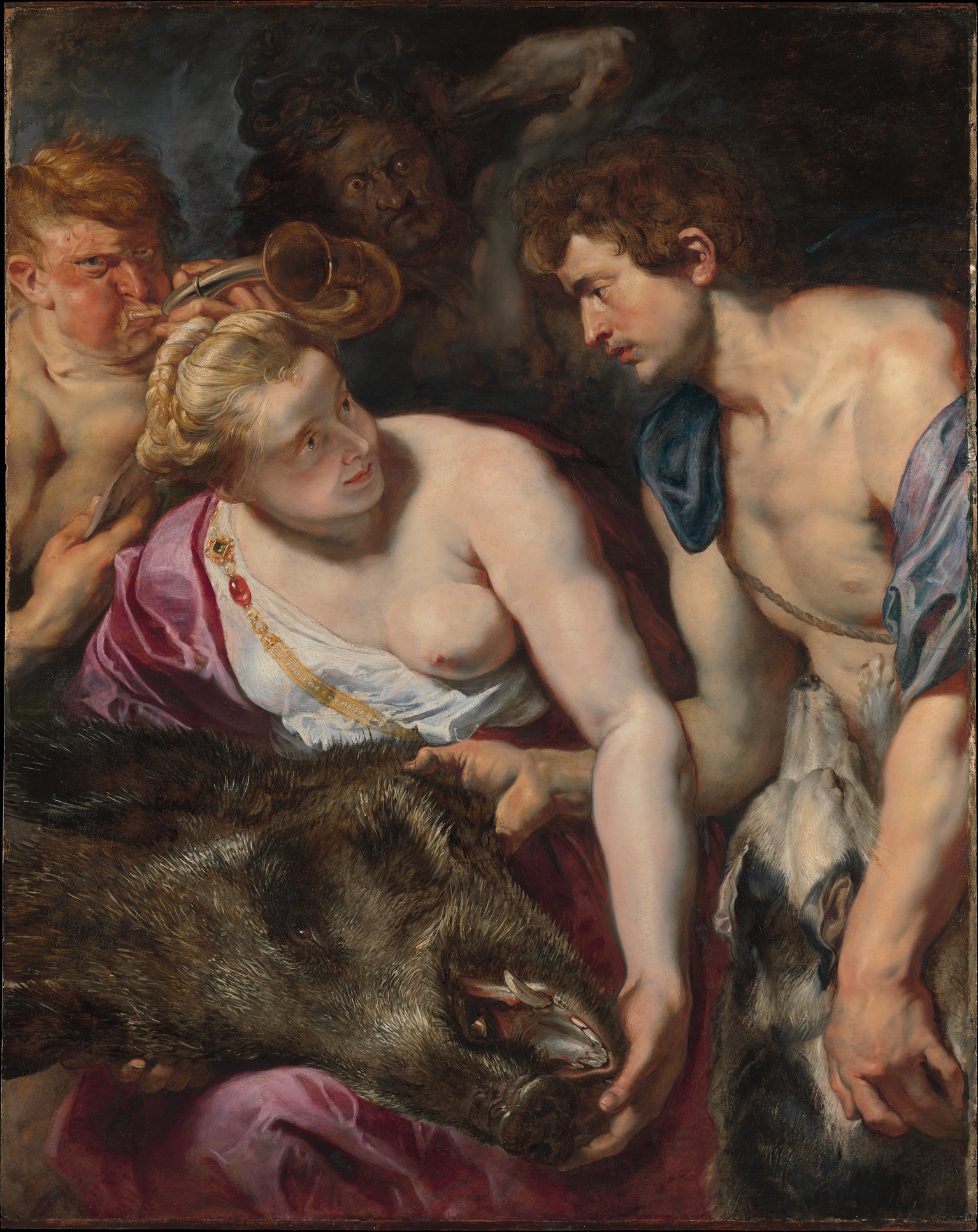 This painting illustrates the story of Atalanta and Meleager from Book 8 of Ovid’s ‘Metamorphoses’. It was painted by Rubens around 1616.
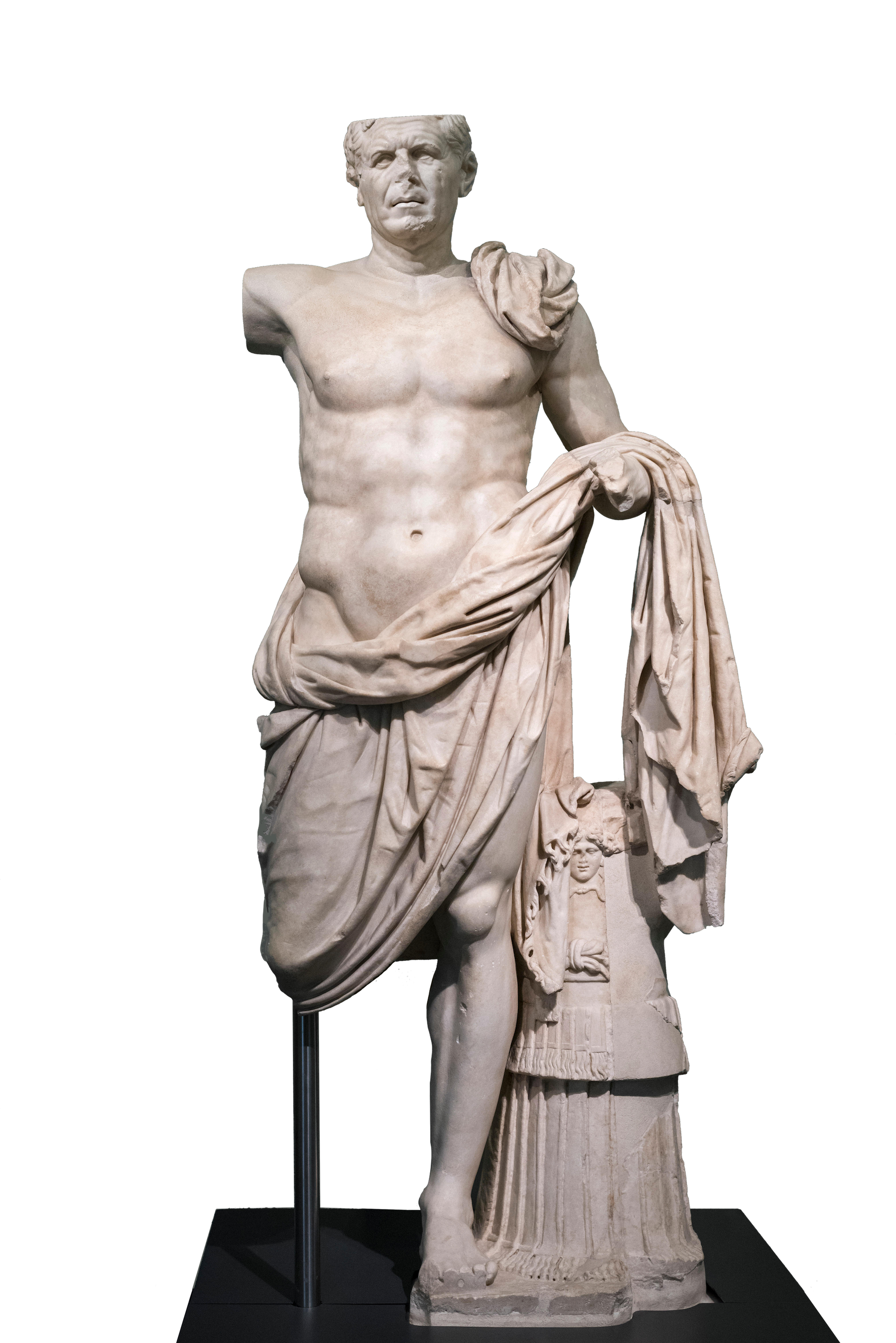 This marble statue, known as the ‘Tivoli General‘, is from the first century bc. It has been damaged and the top part of the head and some limbs are missing. The stone pillar that supports the statue is decorated to look like a breastplate.
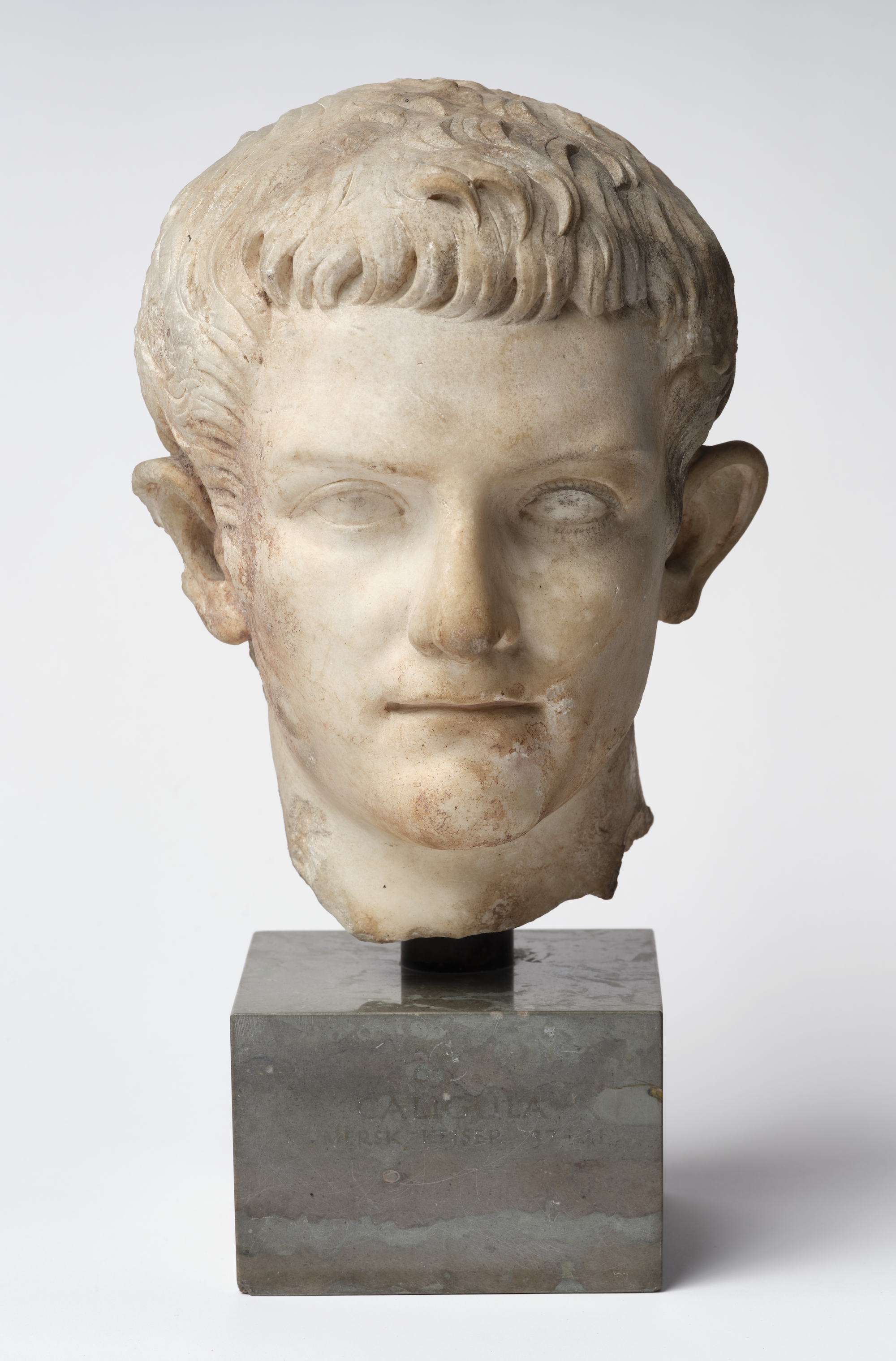 Portrait of Emperor Caligula.
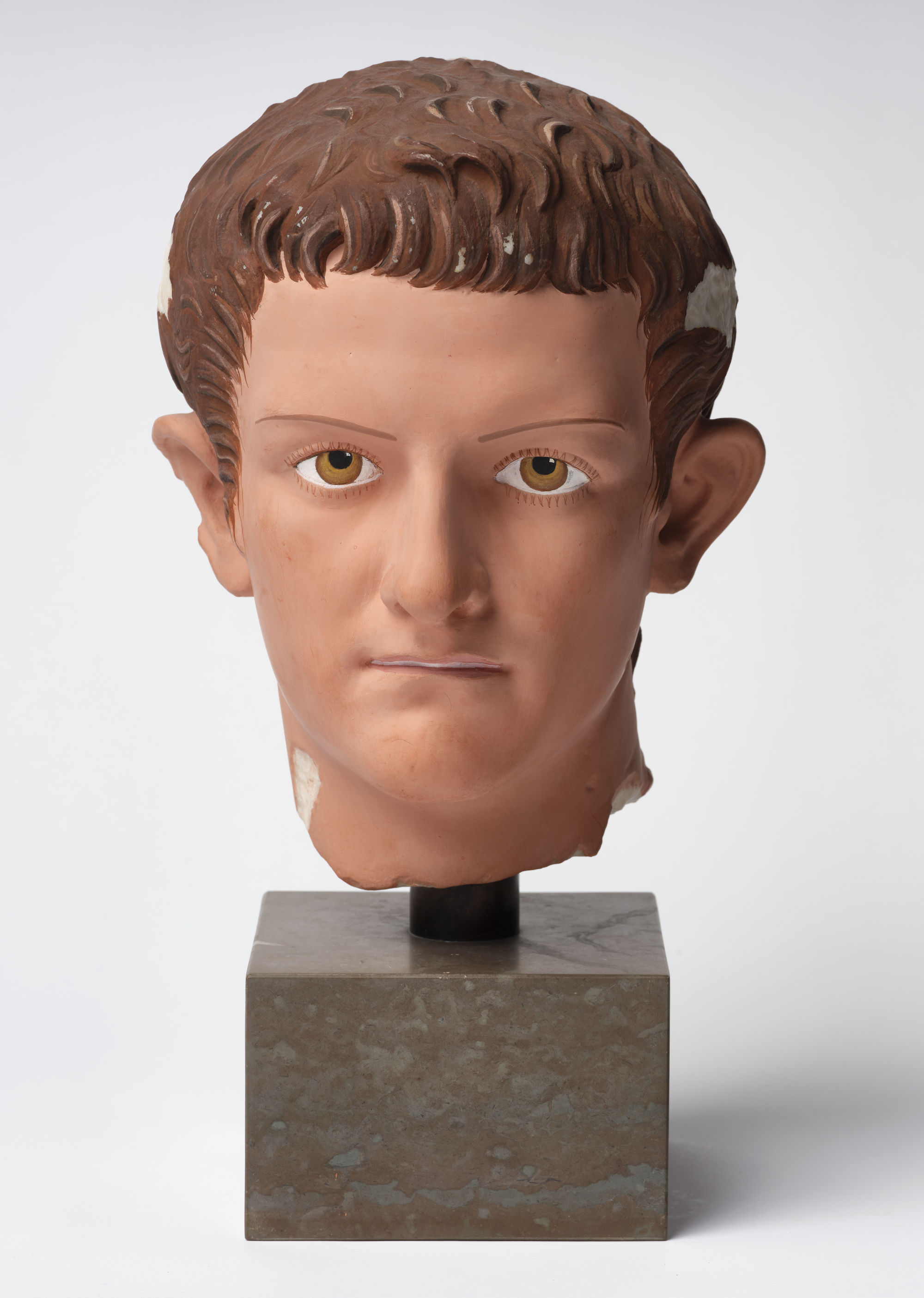 Sculptures in the ancient world were brightly painted. This copy of a marble head of Emperor Caligula has been colored, based on scientific research of the pigment traces and shadows left on the marble, to give an idea of how it may have originally looked.