
WEBLINKS
IMAGE GALLERY
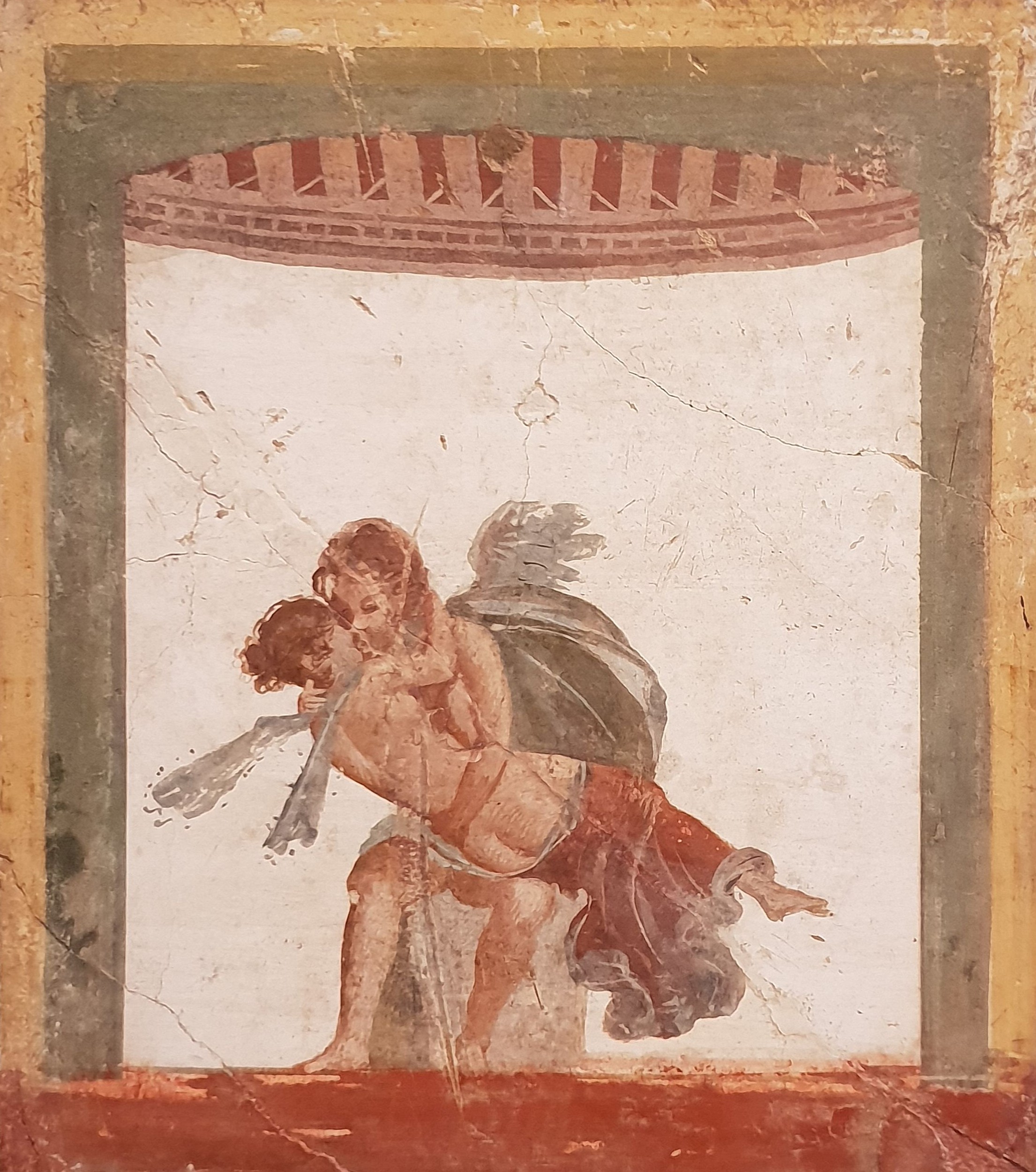
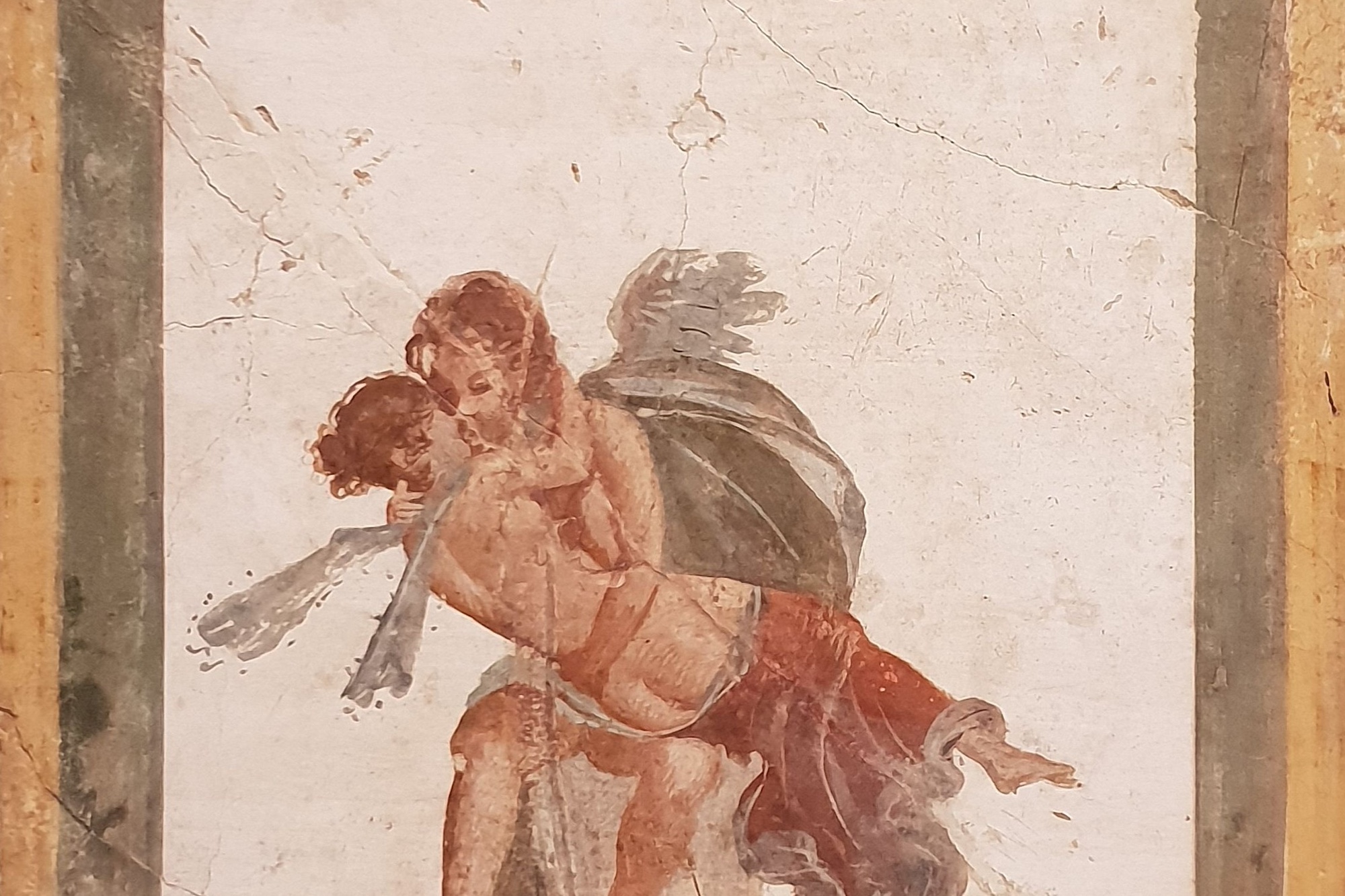
Fresco from Pompeii showing the mythical lovers Cupid and Psyche.
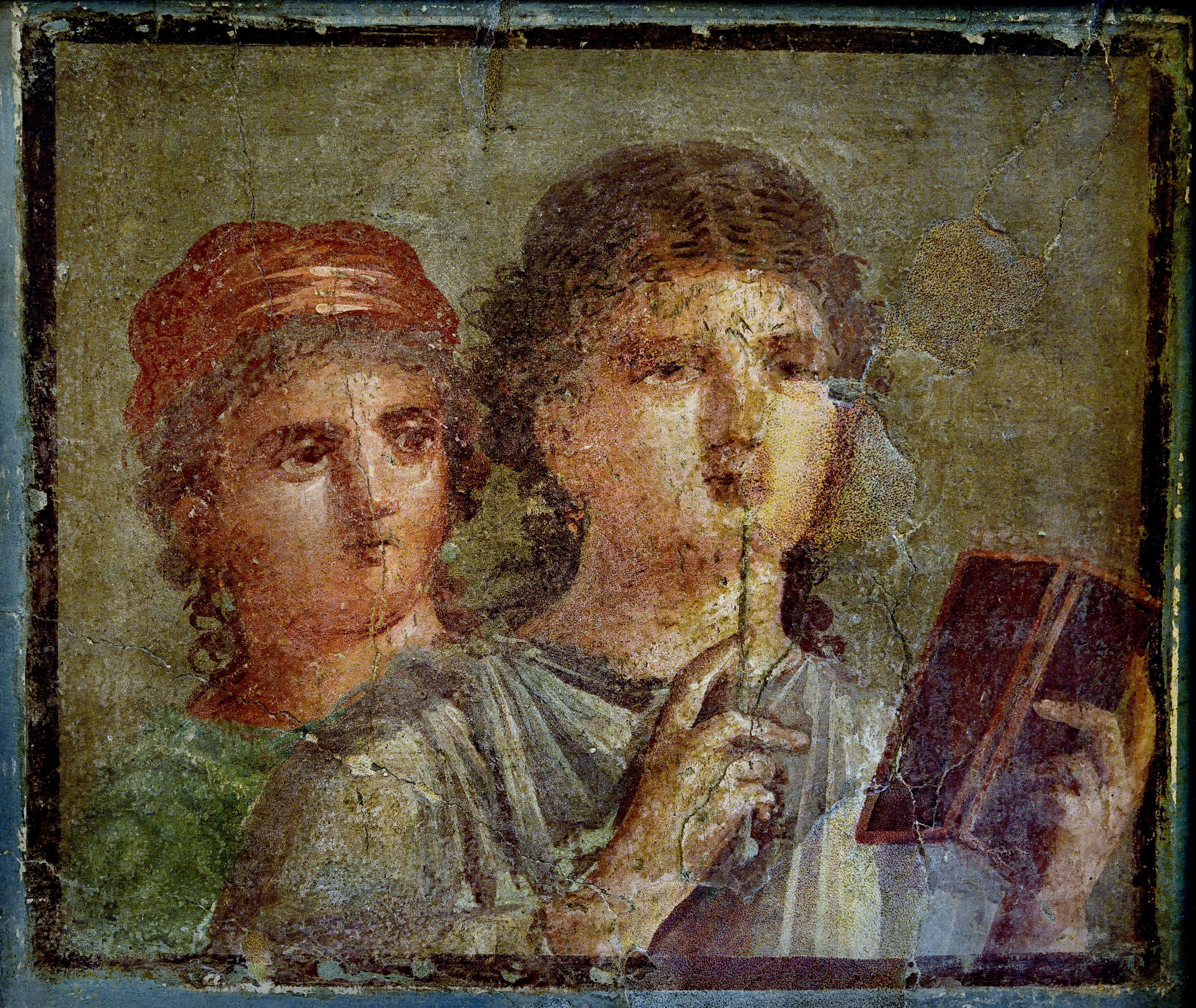
In this fresco, from the theater at Herculaneum, a woman holds an open writing tablet in her left hand, and a stylus in her right. Behind her stands another woman.
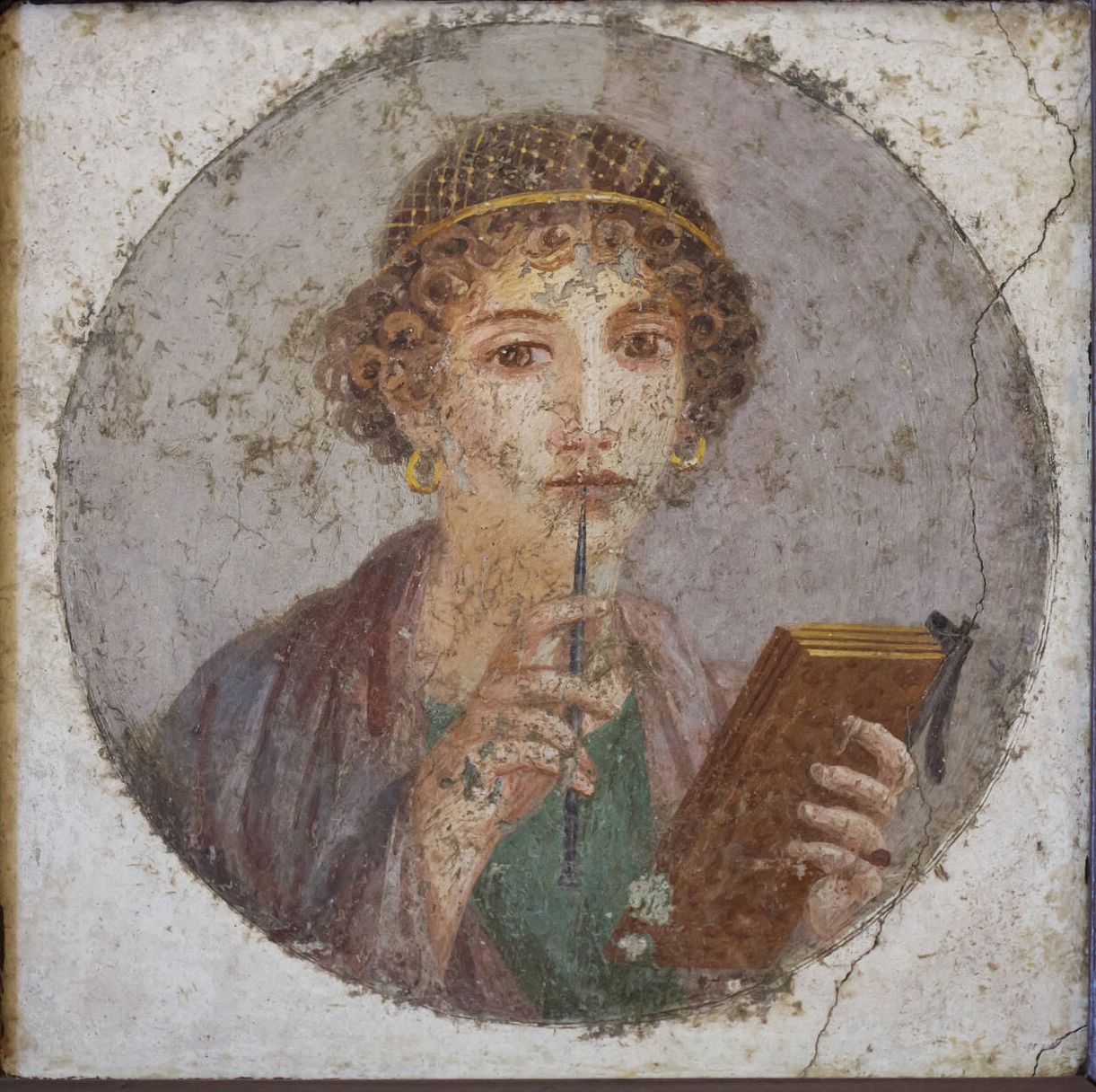
A portrait of a woman holding a writing tablet and stylus. The woman is sometimes referred to as the Greek poet Sappho, although her true identity is unknown.
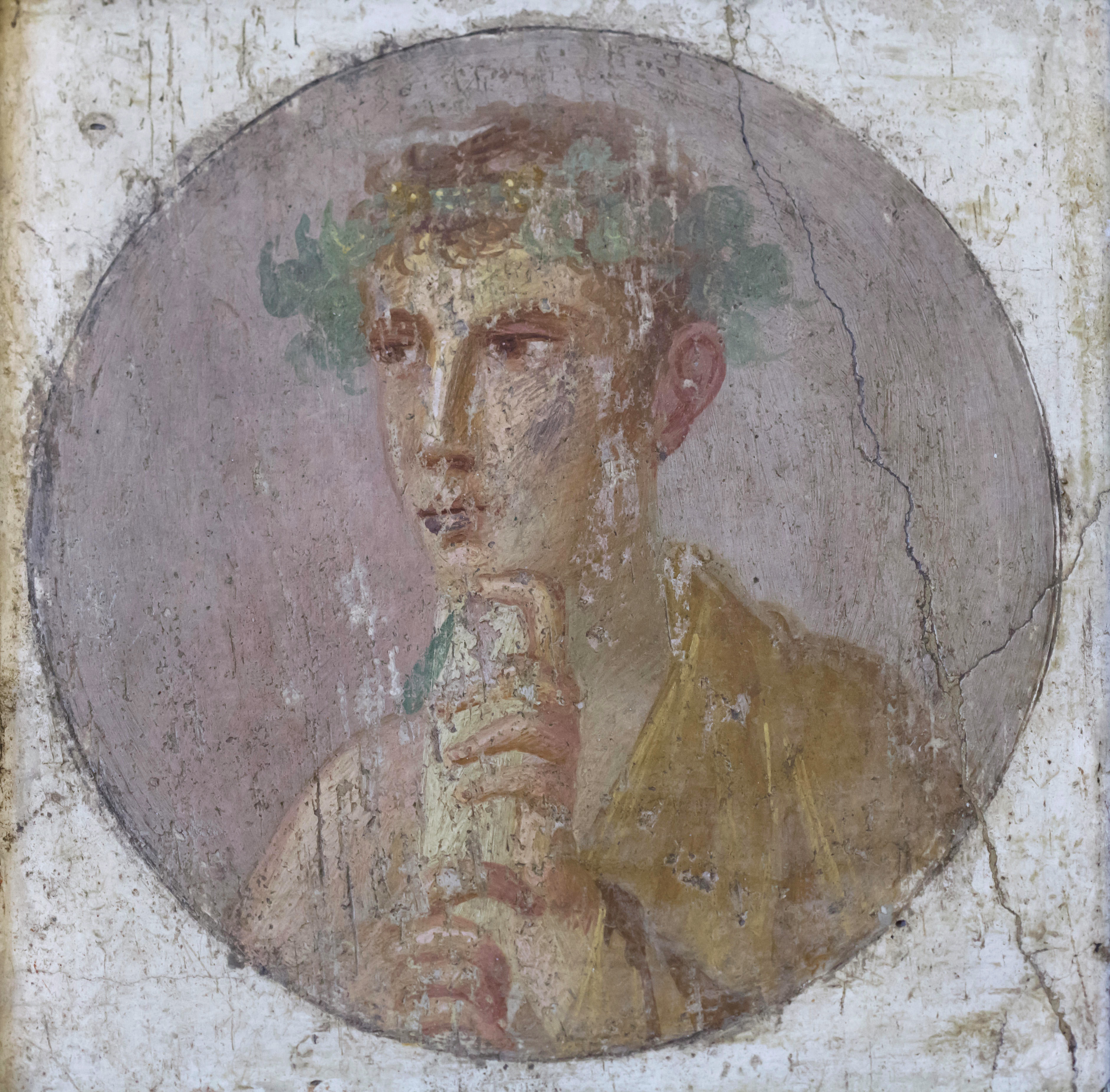 A portrait of a man holding a scroll.
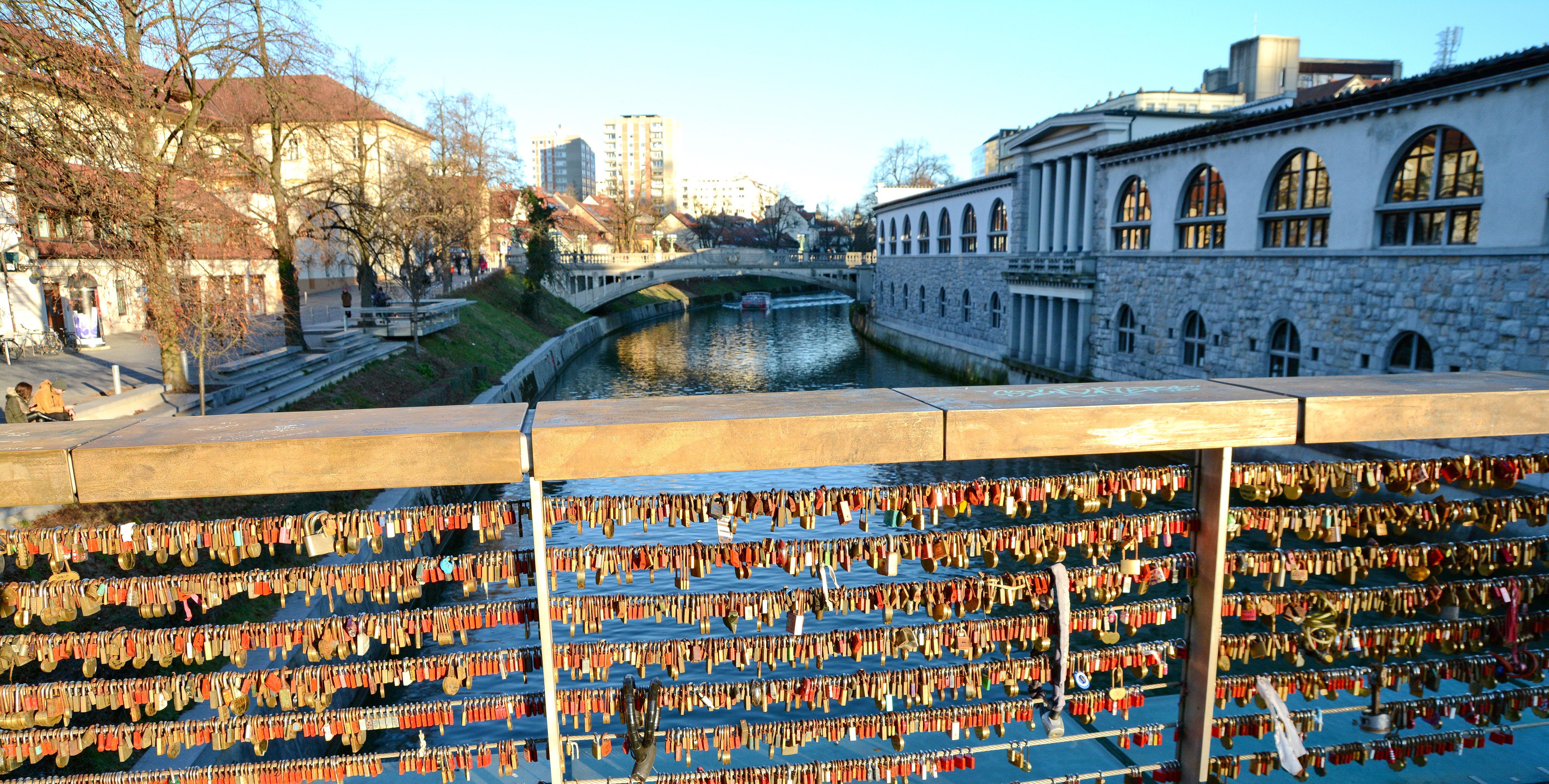 The Butchers’ Bridge in Ljubljana, Slovenia, where hundreds of couples have attached padlocks as a symbol of their love.
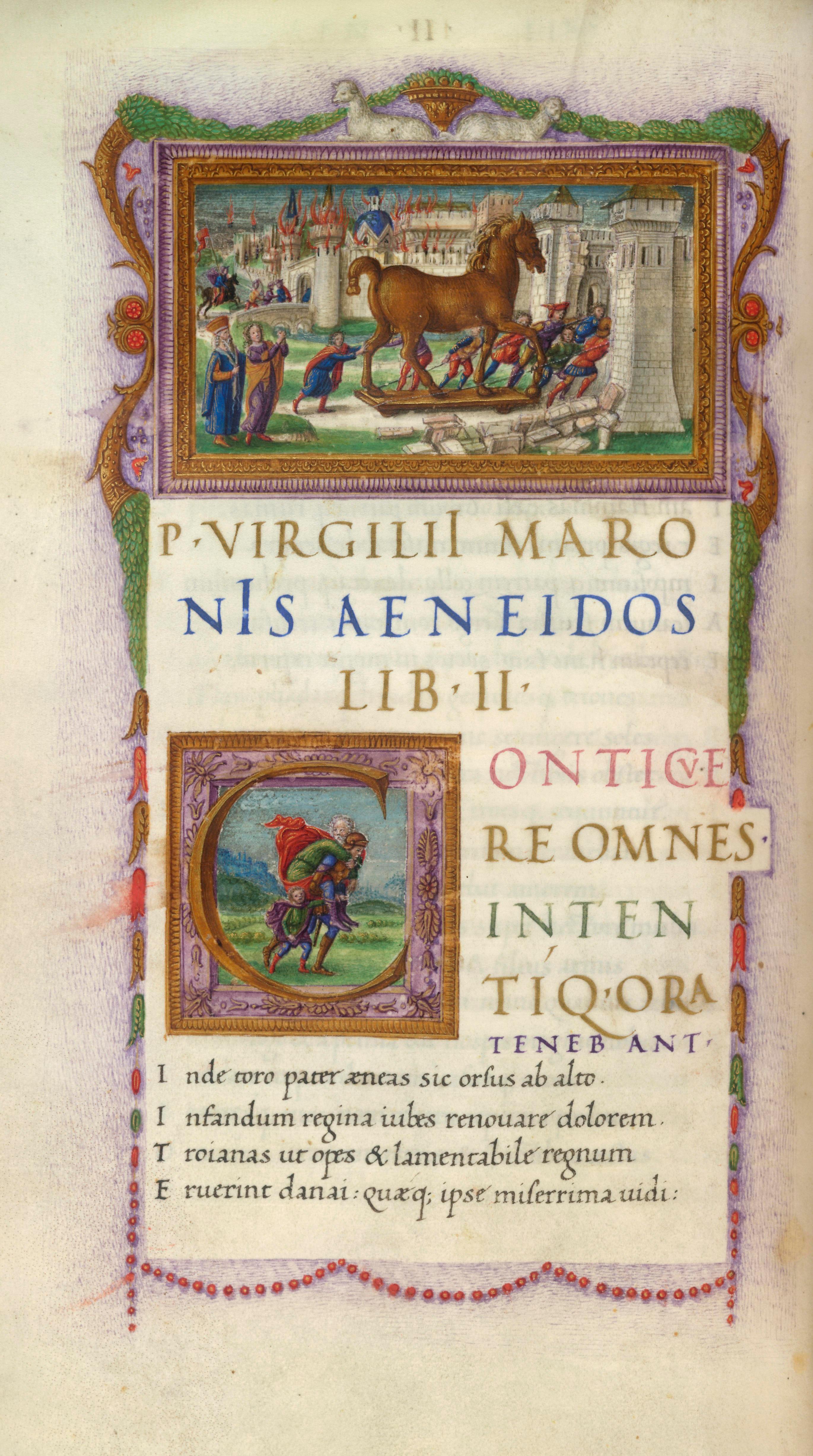 A manuscript of Vergil’s ‘Aeneid’, copied in around ad 1500, probably produced for Ludovico Agnelli, Bishop of Cosenza.
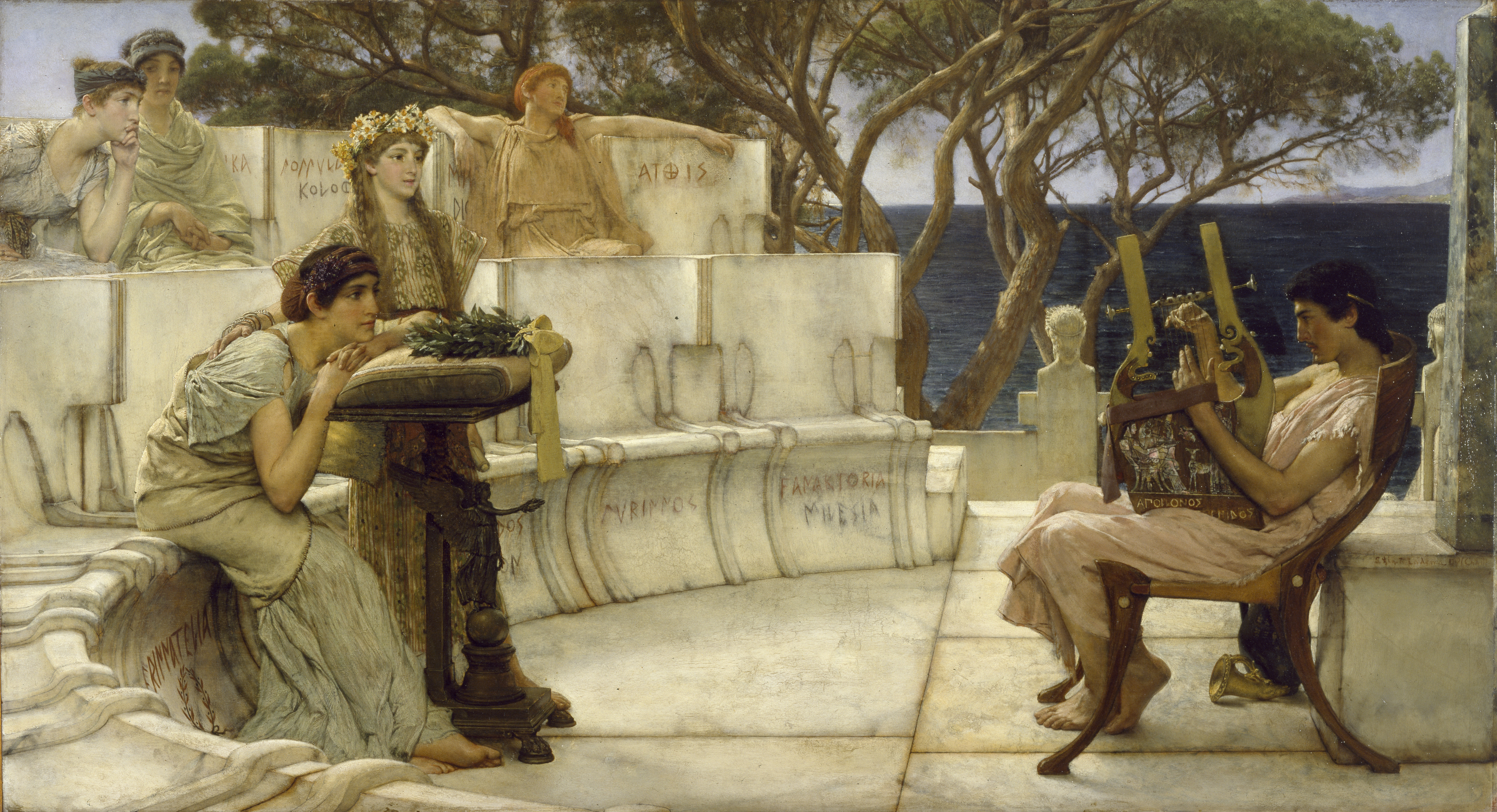 In this painting, the poet Sappho sits and listens to the poet Alcaeus as
he plays the kithara. The scene is imagined as taking place on the island
of Lesbos, although the seating is based on the marble seating of the
Theater of Dionysus in Athens. Sir Lawrence Alma-Tadema painted many
scenes from the classical world. He completed this work in 1881.
In this painting, the poet Sappho sits and listens to the poet Alcaeus as
he plays the kithara. The scene is imagined as taking place on the island
of Lesbos, although the seating is based on the marble seating of the
Theater of Dionysus in Athens. Sir Lawrence Alma-Tadema painted many
scenes from the classical world. He completed this work in 1881.
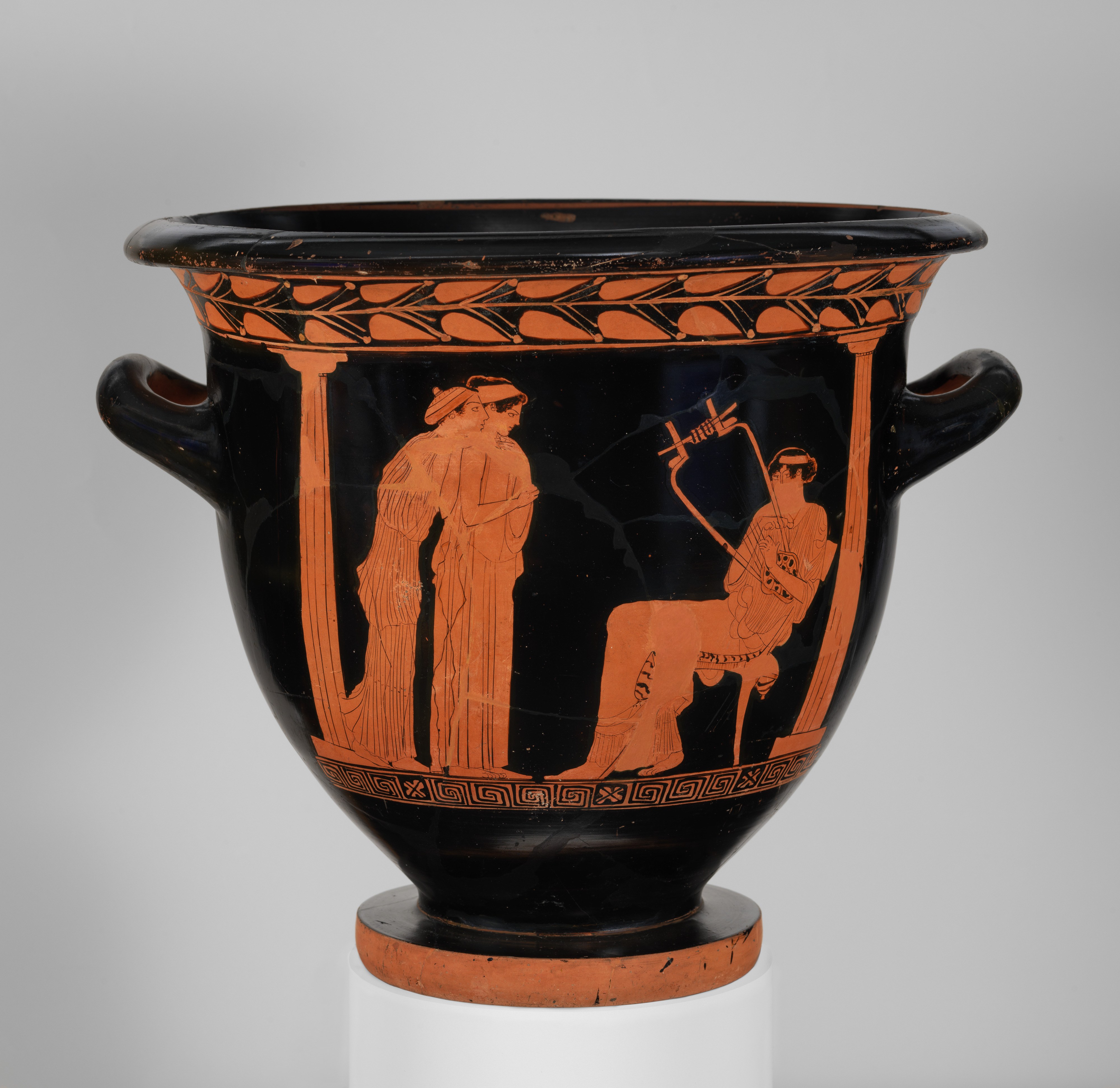 This bowl was used for mixing wine and
was made in Greece in the fifth century bc. It
has been suggested that the seated woman
playing the lyre could be Sappho.
This bowl was used for mixing wine and
was made in Greece in the fifth century bc. It
has been suggested that the seated woman
playing the lyre could be Sappho.
 Graffiti on the wall of Juliet’s house, the setting of Shakespeare’s ‘Romeo and Juliet’, in Verona.
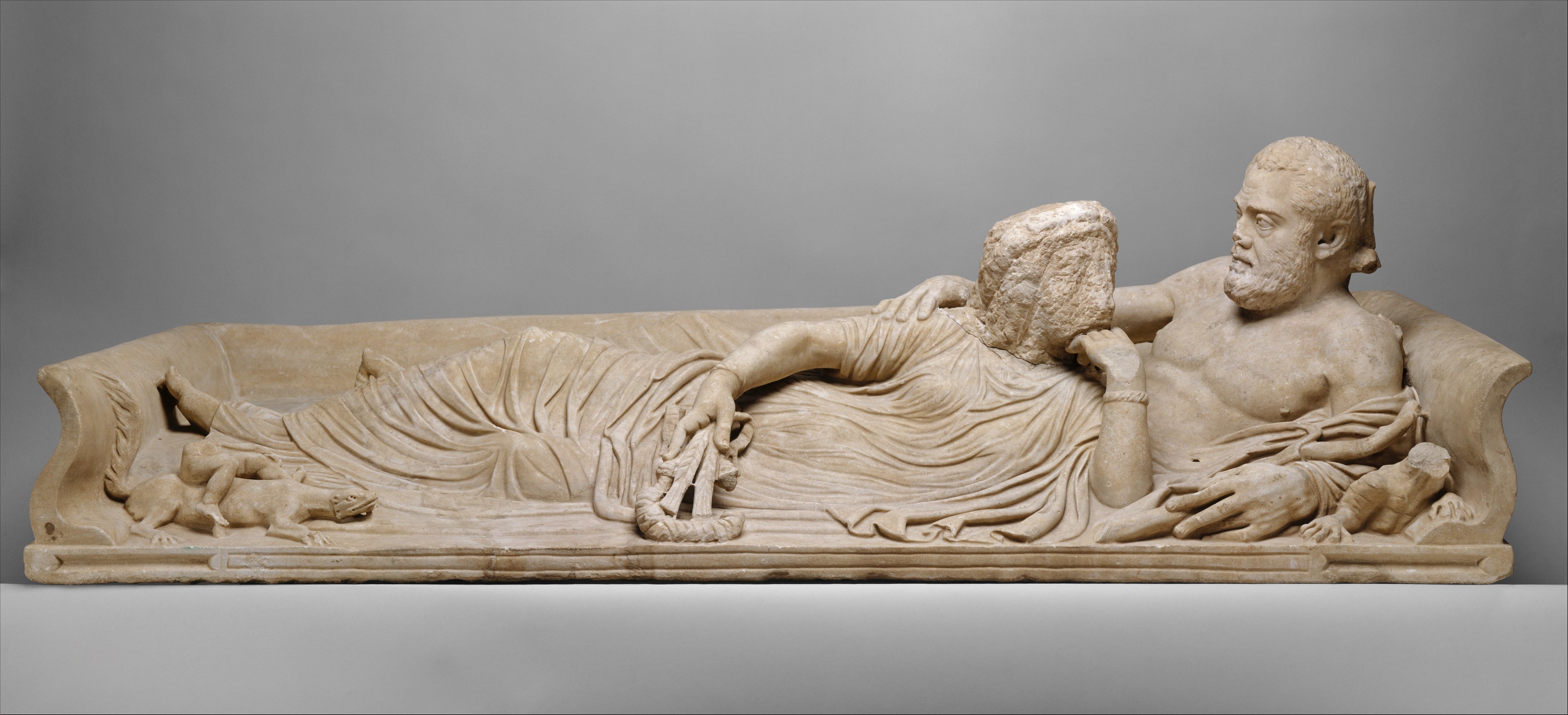 This lid of a marble sarcophagus is carved in the form of the deceased couple. The man and
woman are represented as semi-divine: his bare chest and the river reed in his left hand suggest
he is a river god, and the ears of wheat in her right hand depict her as a personification of Earth.
The man’s face has been sculpted in his likeness, whereas the woman’s has been left unfinished,
perhaps because he predeceased her and nobody completed her portrait after her death.
This lid of a marble sarcophagus is carved in the form of the deceased couple. The man and
woman are represented as semi-divine: his bare chest and the river reed in his left hand suggest
he is a river god, and the ears of wheat in her right hand depict her as a personification of Earth.
The man’s face has been sculpted in his likeness, whereas the woman’s has been left unfinished,
perhaps because he predeceased her and nobody completed her portrait after her death.
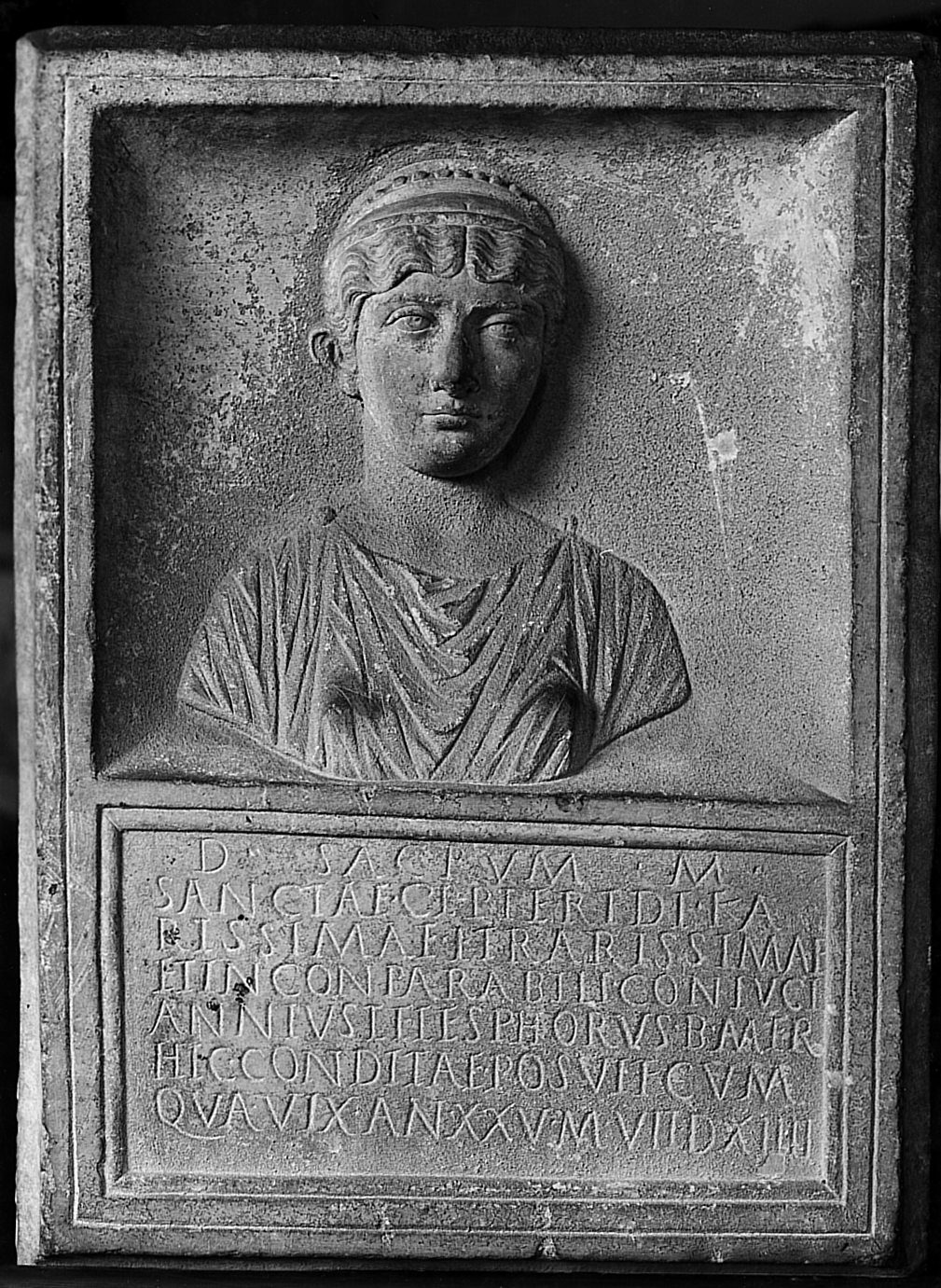 Monument to Claudia Pieris.
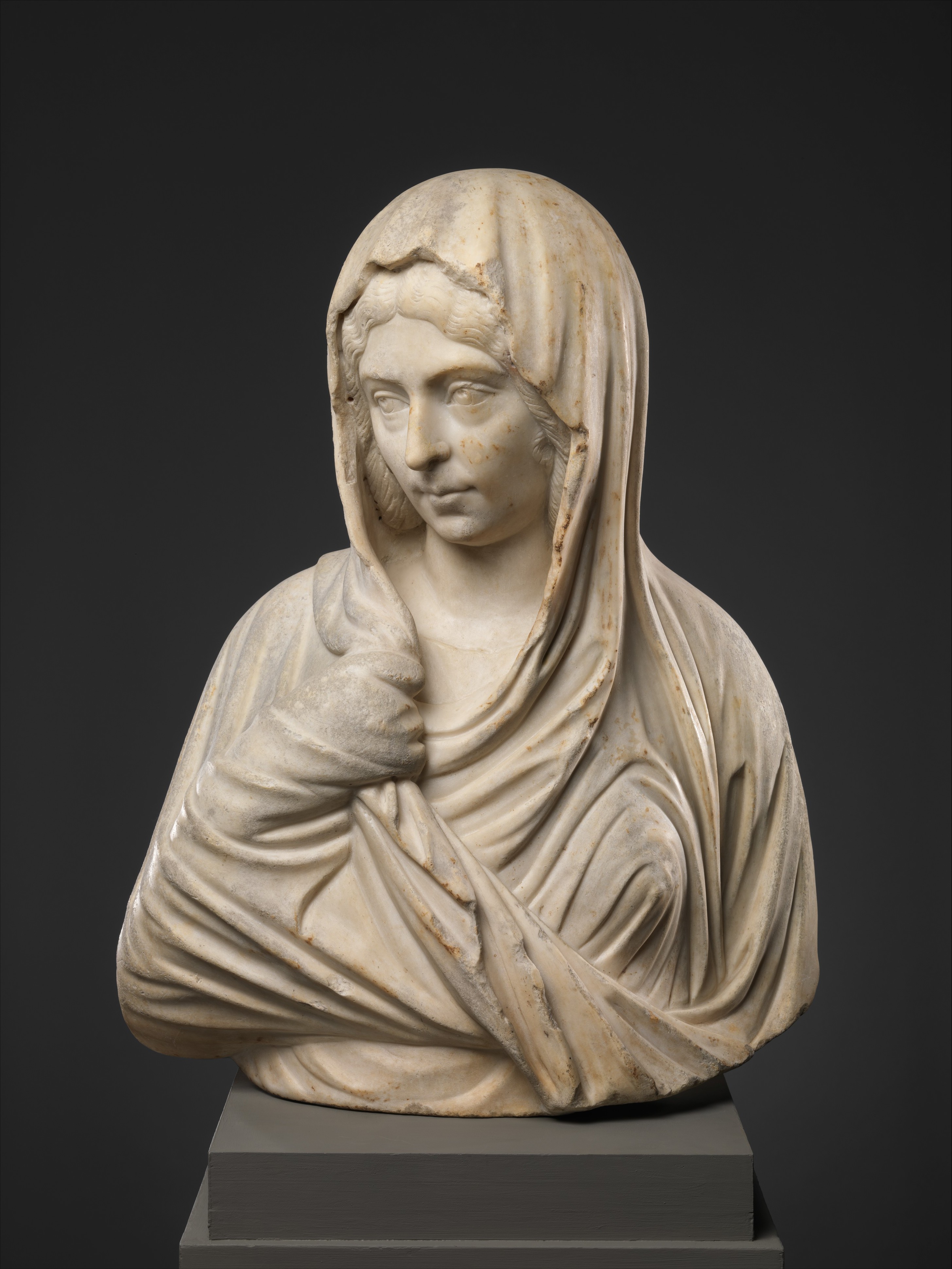 The Roman woman represented
in this statue covers her head
with a veil as a mark of modesty.
The Roman woman represented
in this statue covers her head
with a veil as a mark of modesty.
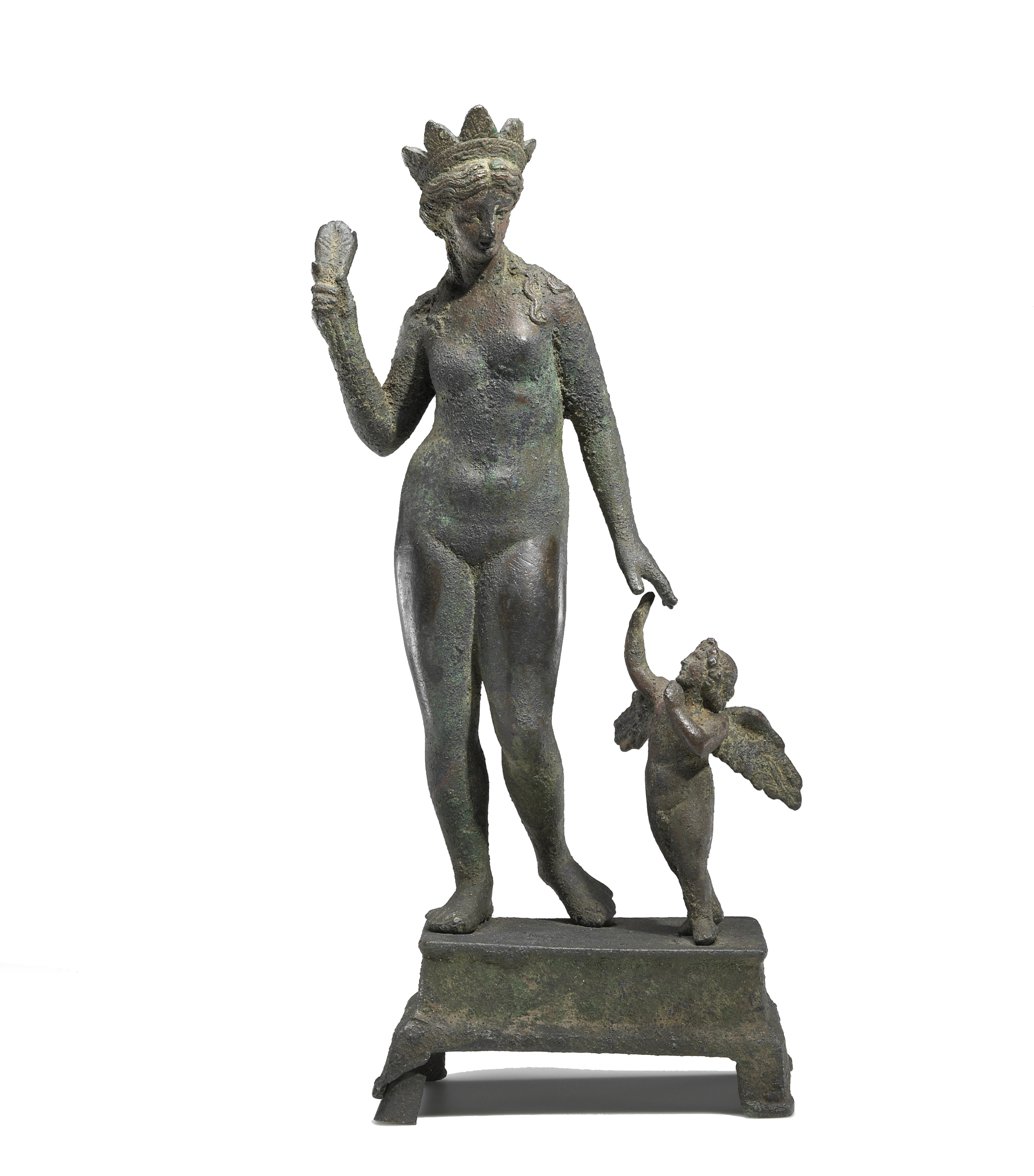 A bronze statuette, about 12 inches high,
showing Venus with her son Cupid.
A bronze statuette, about 12 inches high,
showing Venus with her son Cupid.
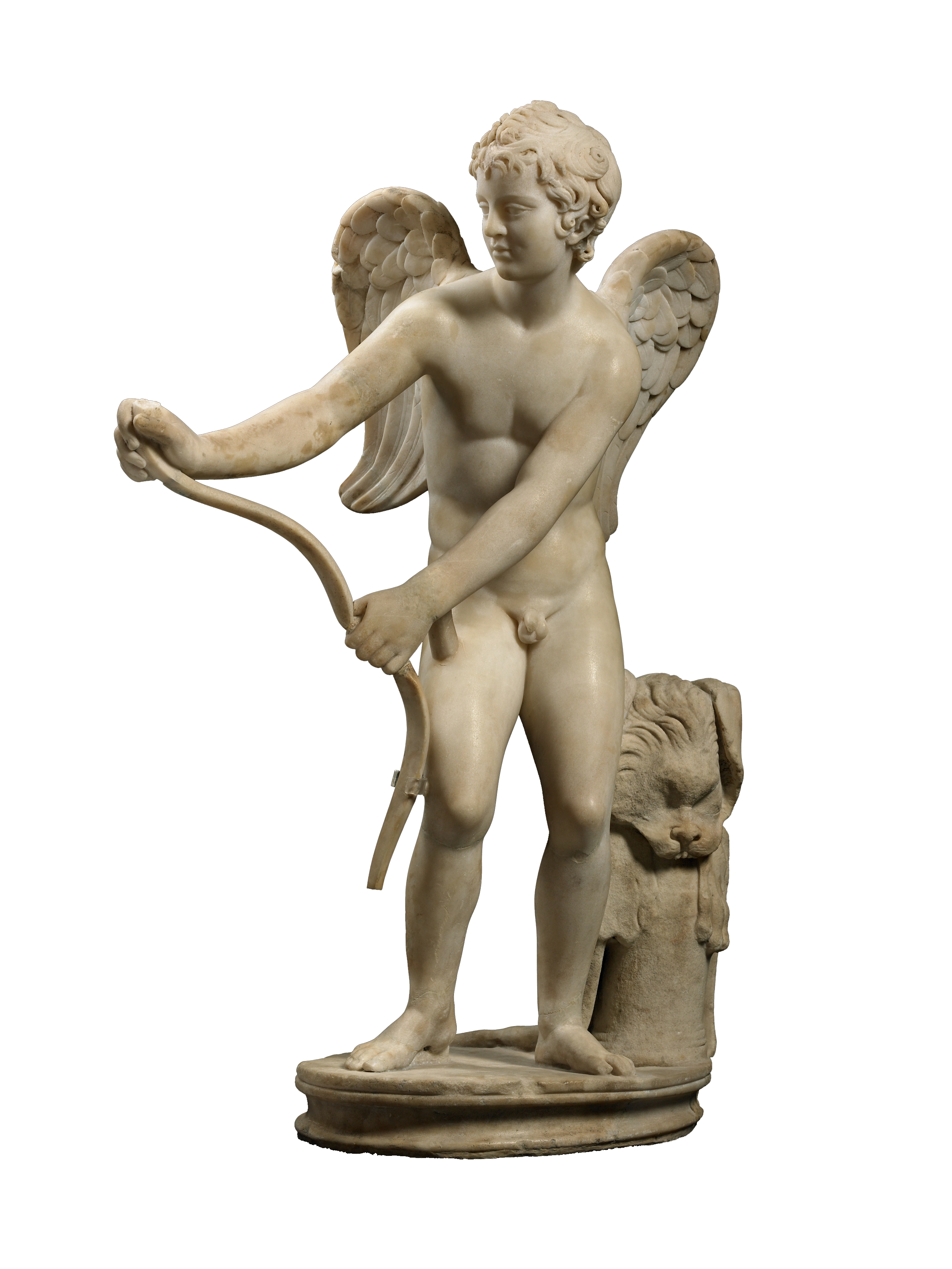 A marble statue of Cupid
bending his bow.
A marble statue of Cupid
bending his bow.
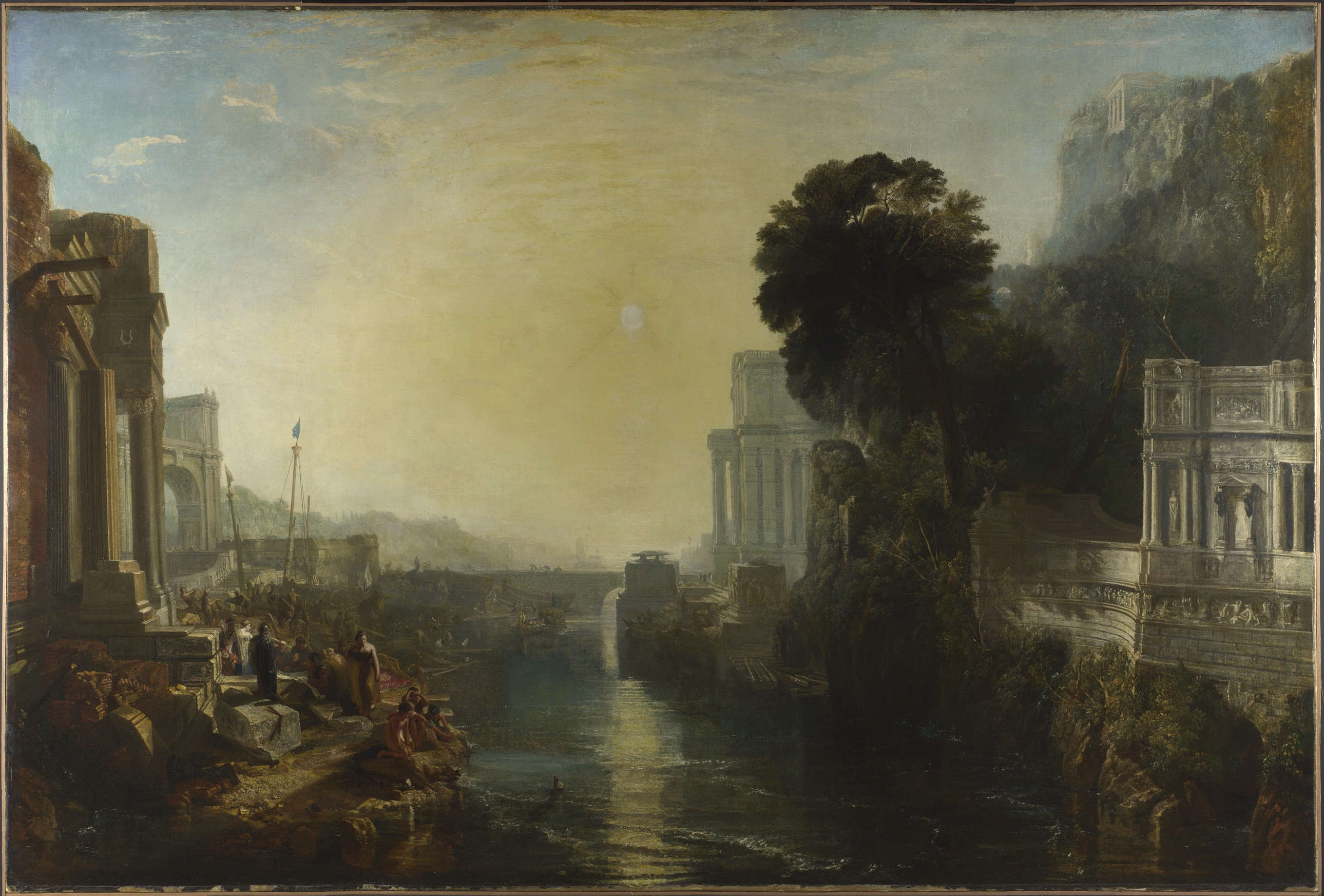 'Dido Building Carthage’, by Joseph Mallord William Turner, was
painted in 1815. It was based on John Dryden’s English translation
of Vergil’s ‘Aeneid’. Dido stands near the front on the left overseeing
building works and Aeneas stands nearby in full armor.
'Dido Building Carthage’, by Joseph Mallord William Turner, was
painted in 1815. It was based on John Dryden’s English translation
of Vergil’s ‘Aeneid’. Dido stands near the front on the left overseeing
building works and Aeneas stands nearby in full armor.
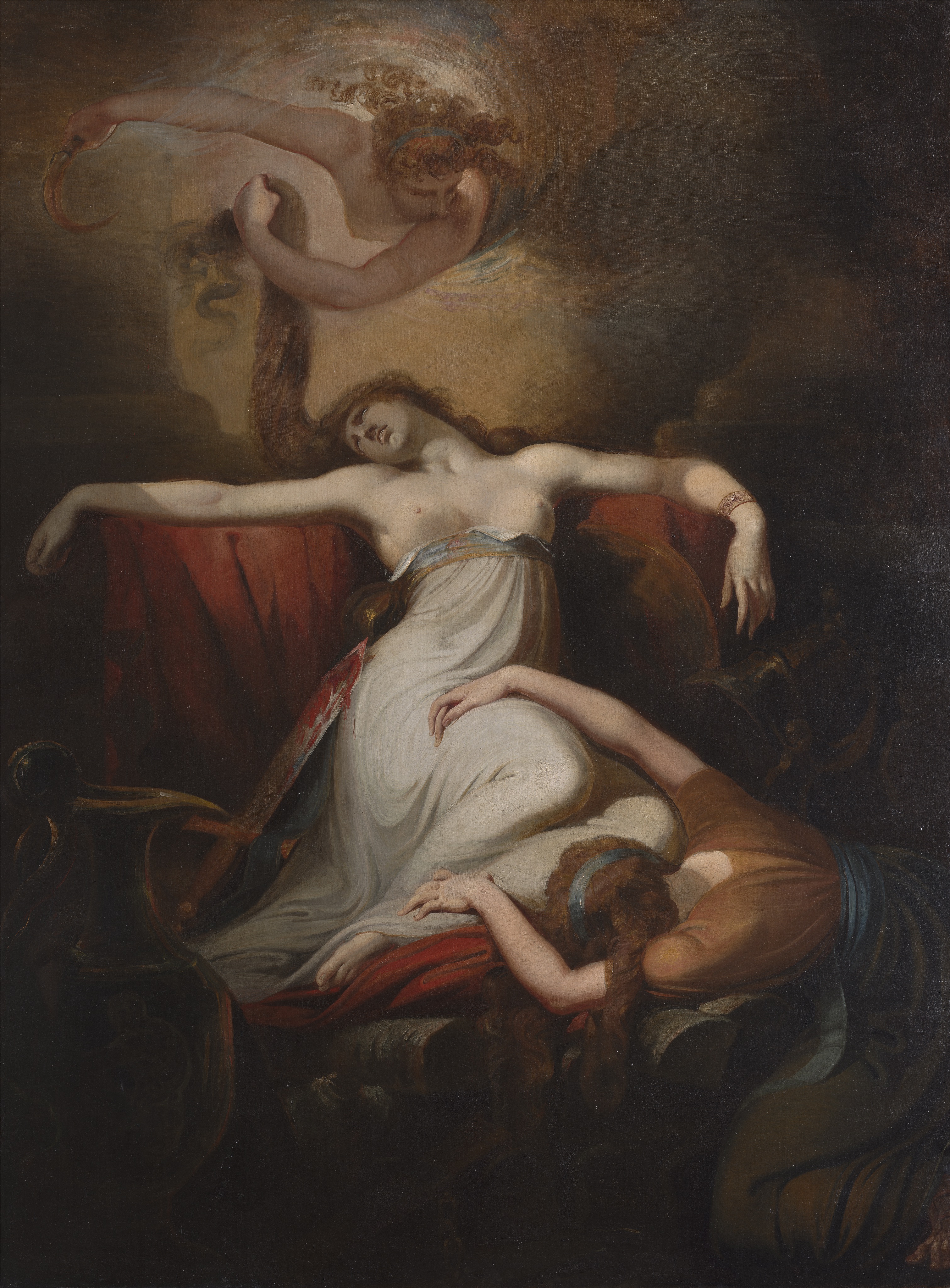 ‘Dido on the Funeral Pyre’, by Henry Fuseli, was painted in 1781.
Dido’s sister Anna grieves at the dead queen’s feet. Above, the
goddess Iris, sent by Juno, cuts a lock of Dido’s hair to free her
soul from her body.
‘Dido on the Funeral Pyre’, by Henry Fuseli, was painted in 1781.
Dido’s sister Anna grieves at the dead queen’s feet. Above, the
goddess Iris, sent by Juno, cuts a lock of Dido’s hair to free her
soul from her body.
ACTIVITIES AND GAMES (TRACKED)
Autograded translations

Autograded translation:
Language Practice
Chpt 33, Ex. 1 (33.1)
Autograded translation:
Language Practice
Chpt 33, Ex. 2 (33.2)
Sorting - Language note 1: present subjunctive
Sorting - Language note 2: present subjunctive (irregulars)
Sorting 33.2a
Irregular verbs:
Present indicative
or subjunctive? (a)
Sorting 33.2b
Irregular verbs:
Present indicative
or subjunctive? (b)
Sorting - Language note 3: present passive subjunctive
Sorting 33.3a
Subjunctive:
active or passive?
Sorting 33.3b
Subjunctive:
which tense?
(Active and passive)
Sorting 33.3c
Present indicative
or subjunctive?
(Active and passive)