Pedagogy
Suburani is a course in Latin language, Roman culture, history and mythology.
Language
Central to Suburani is a reading approach.
- new language features are introduced in illustrated stories
- images aid comprehension of the Latin text
- changing forms highlight the new language feature
- illustrations in the style of a graphic novel bring the Roman world to life
- language notes then analyse the new language feature
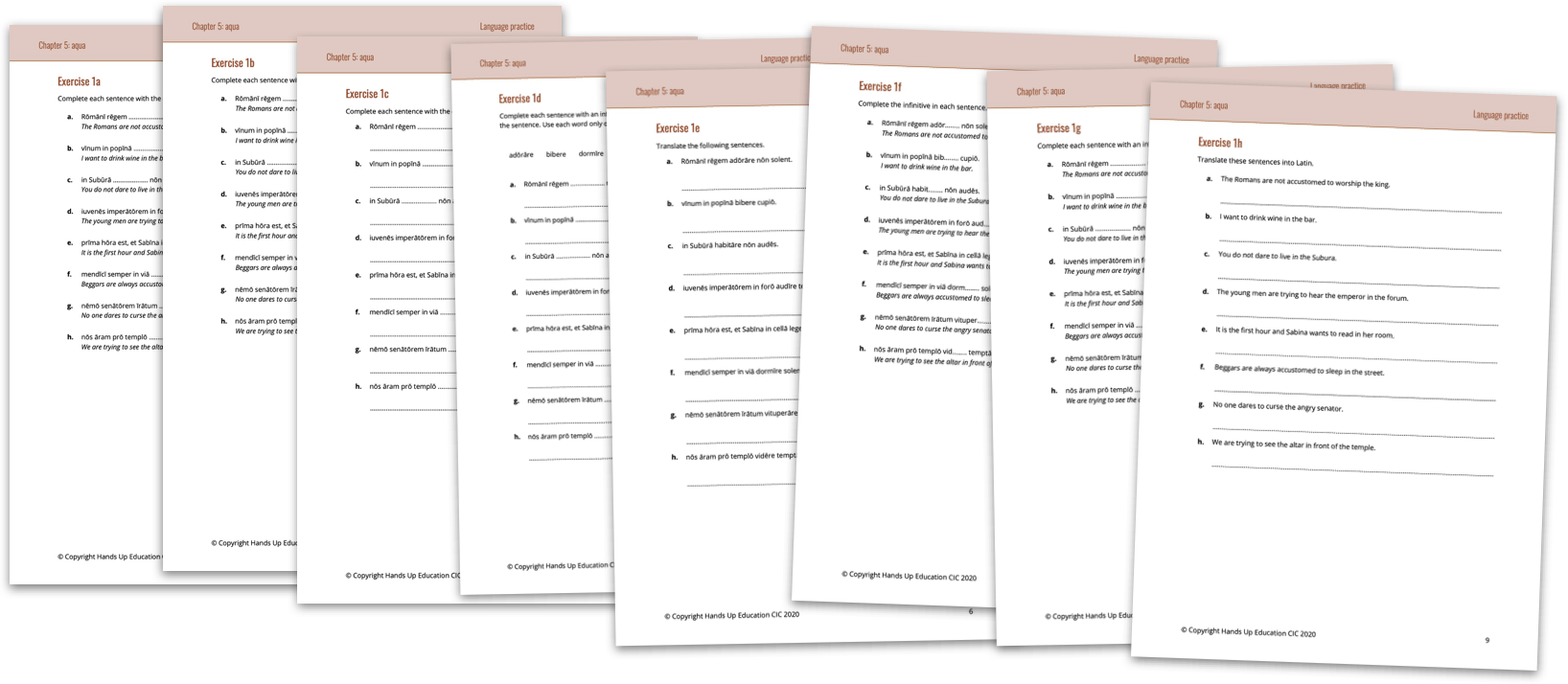
To supplement the book, there’s a host of online resources. For every chapter, printable resources are provided including comprehension questions on the stories, English into Latin sentences, and derivation activities. Digital subscriptions also give access to hundreds of interactive resources, such as autograded translation activities and grammar categorization exercises.
There are also differentiated versions of the language exercises which can be downloaded and printed, enabling teachers to meet the individual needs of their students. Printable additional language notes also allow teachers to explore language points in greater depth if desired.
Roman culture
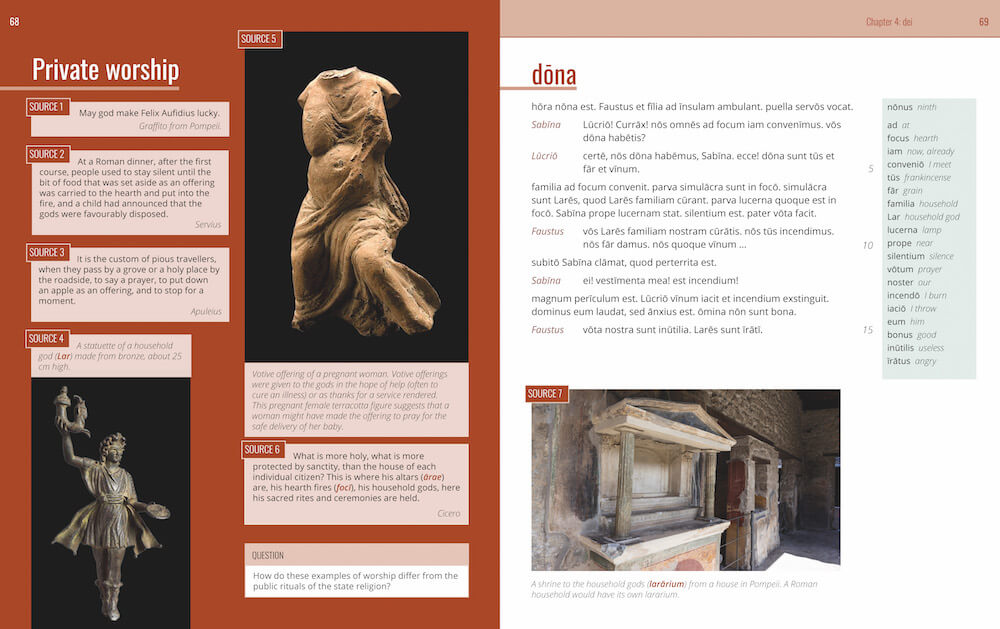
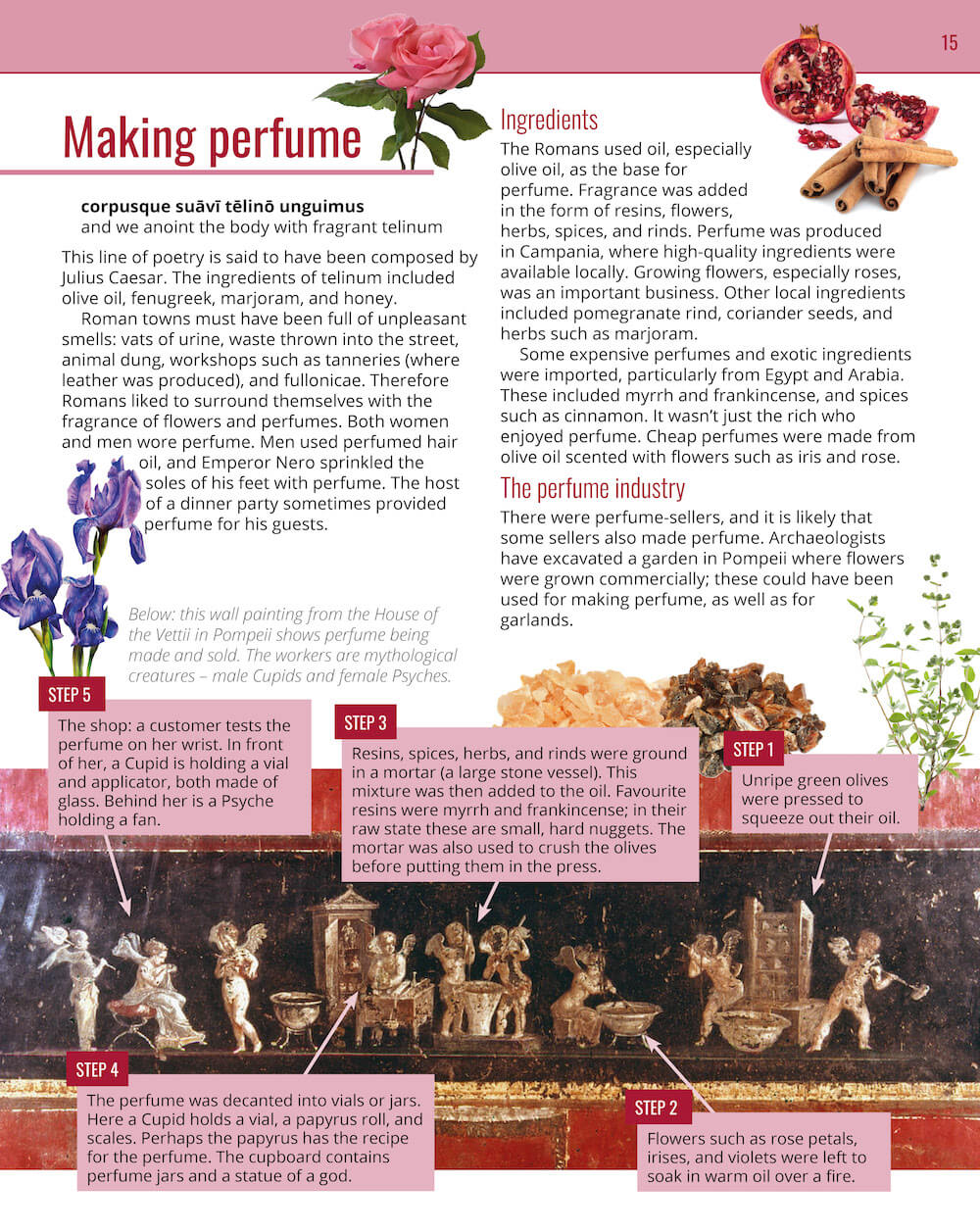
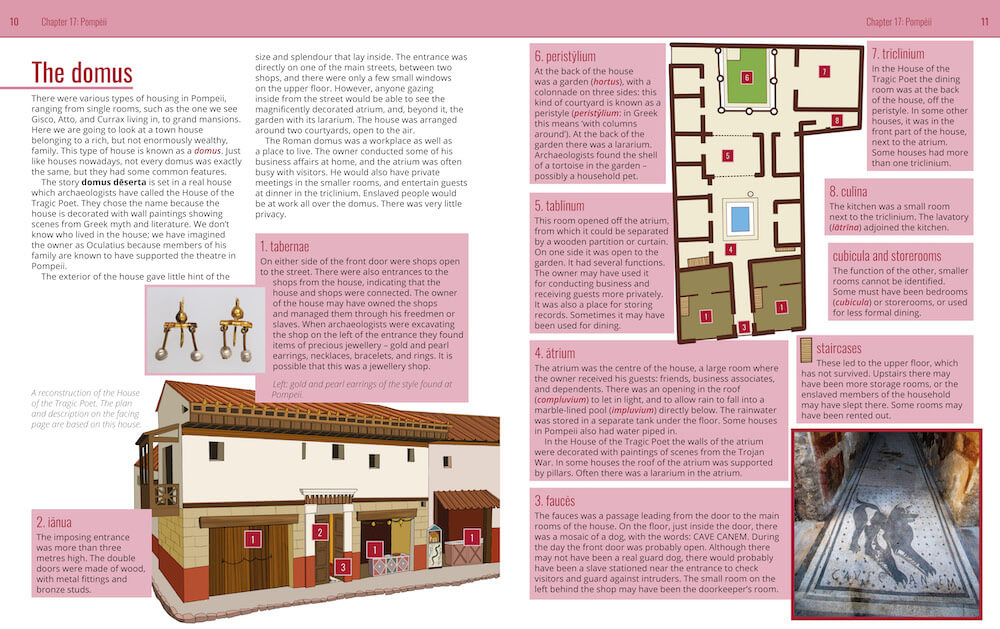
The Latin stories and the cultural material in Suburani give an honest reflection of life in the Roman Empire, for the enslaved and the poor as well as the wealthy and powerful, for the provincials and for the city-dwellers. Our aim is to help students understand the realities of life in the Empire. The civilization notes are interspersed among the stories and language teaching materials, to encourage stories and culture topics to be approached jointly and support each other.
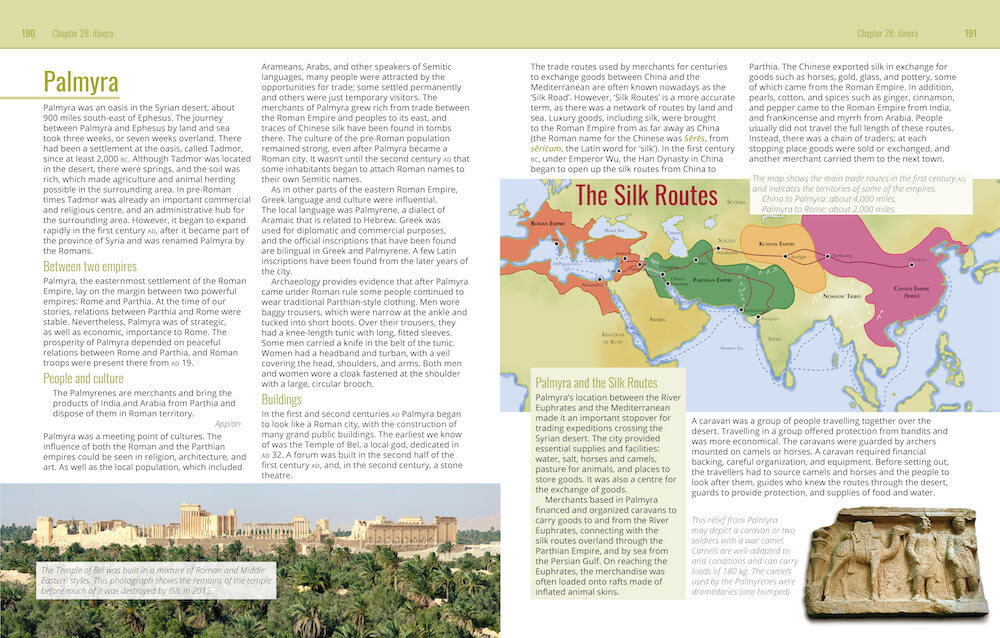
Topics have been selected with care and in consultation with teachers. They include all the themes commonly covered in GCSE and the NLE (such as the city of Rome, housing, the forum, daily life, entertainment, religion, the army), but the culture sections also include topics such as animals in the Roman world, poison, the sea, and the Silk Routes, as well as STEM-related topics (e.g. bread production, water supply, mining techniques, Roman medicine).
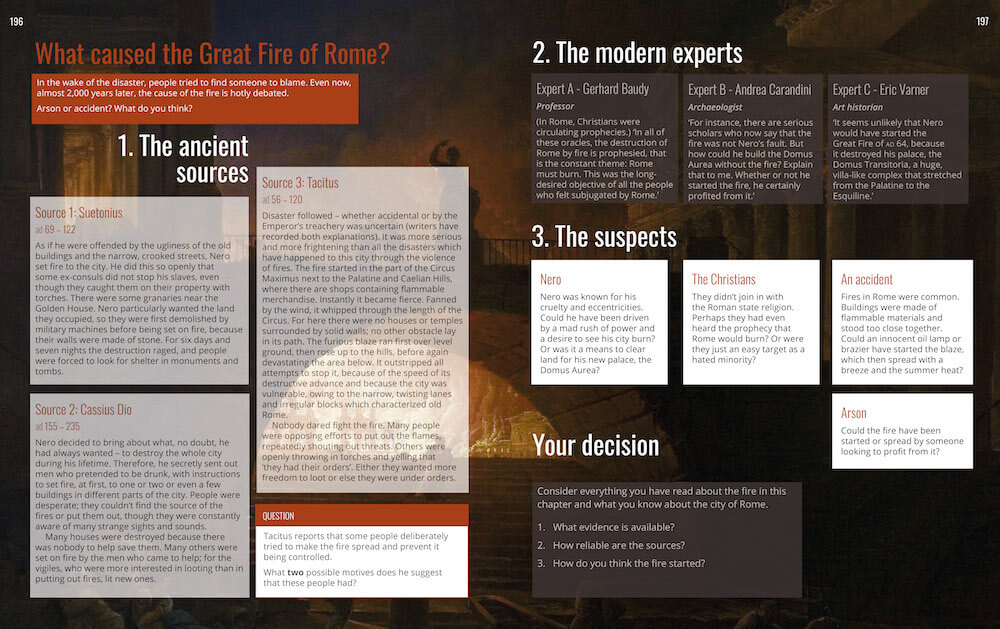
Suburani encourages students to interrogate the ancient sources. From the first chapters, students investigate the ancient world through textual and archaeological sources, exposing them to:
- literary sources, including some in Latin where accessible, introducing students to evidence from a variety of authors
- epigraphic evidence, including inscriptions and graffiti
- archaeological evidence, including art, artefacts, coins, monuments, and sites
Questions in the book allow students to evaluate and interrogate the primary evidence themselves, and draw their own conclusions.
History and mythology
Each chapter contains a page on a topic of mythology or history. These pages often connect to the civilization content in the chapter and to the storyline, but also sit separately from the core content.
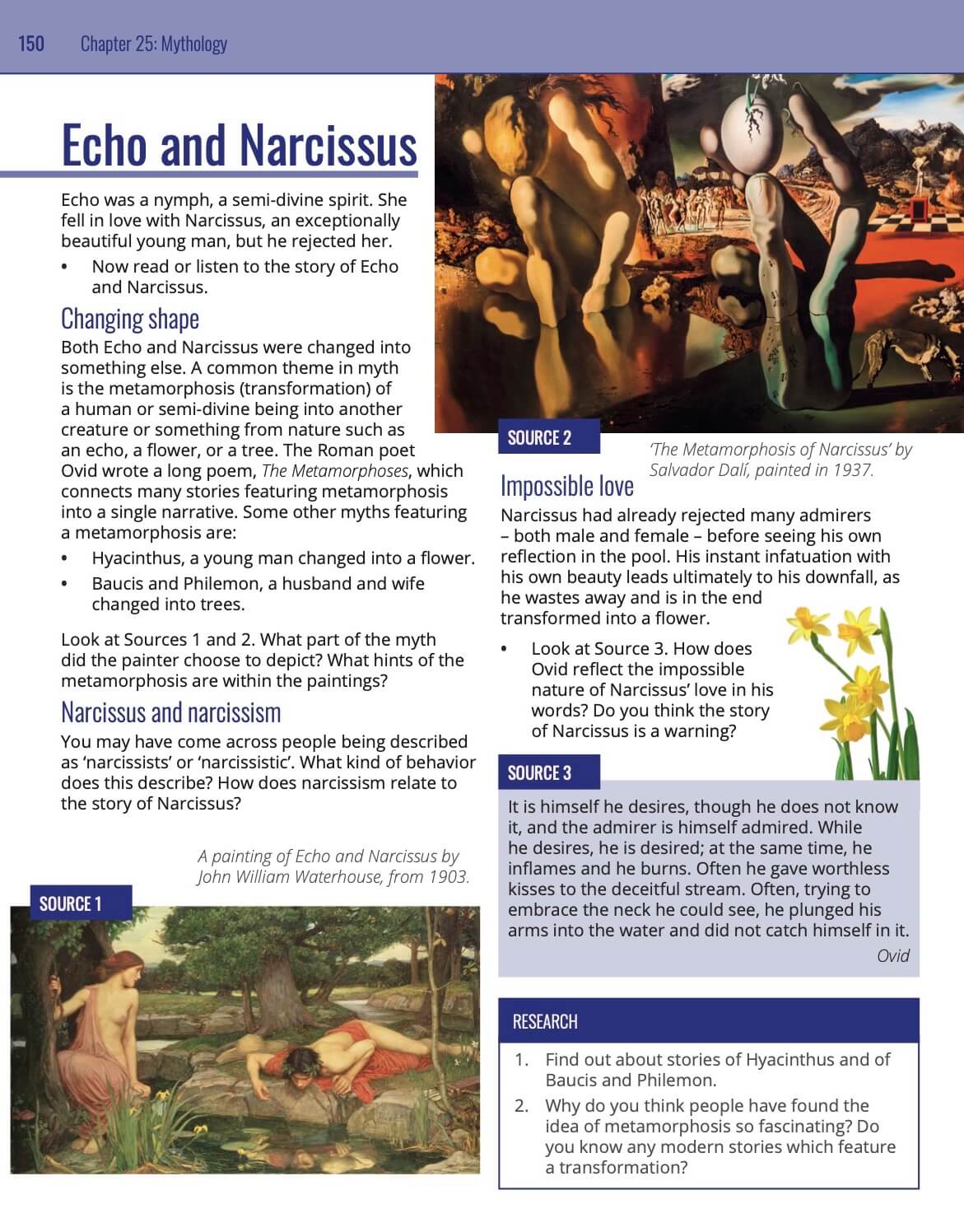
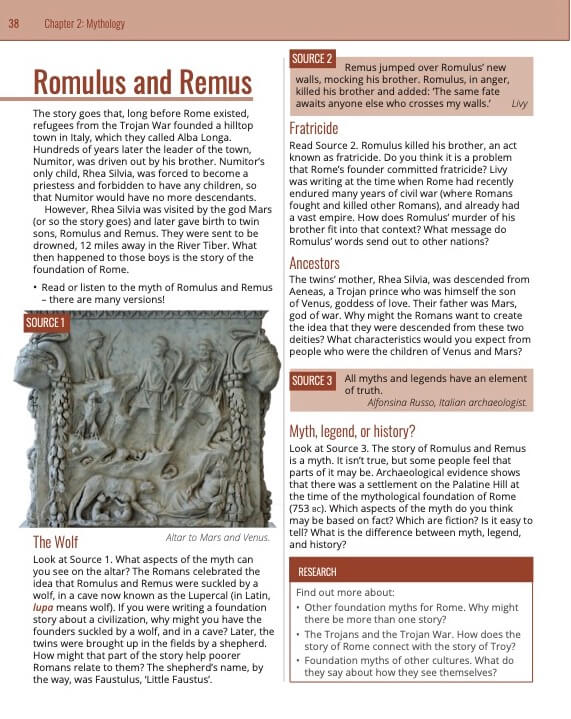
The mythology pages do not aim to retell the myths. Instead they aim to stimulate discussion about the myths and provide relevant literary and visual sources through which the myths may be further explored. These pages provide an opportunity to study ancient and modern art and open up discussions about Roman ideas and attitudes more generally. Where appropriate, connections are drawn between myths from other cultures, and students are encouraged to think about why these stories are told in different ways around the world.
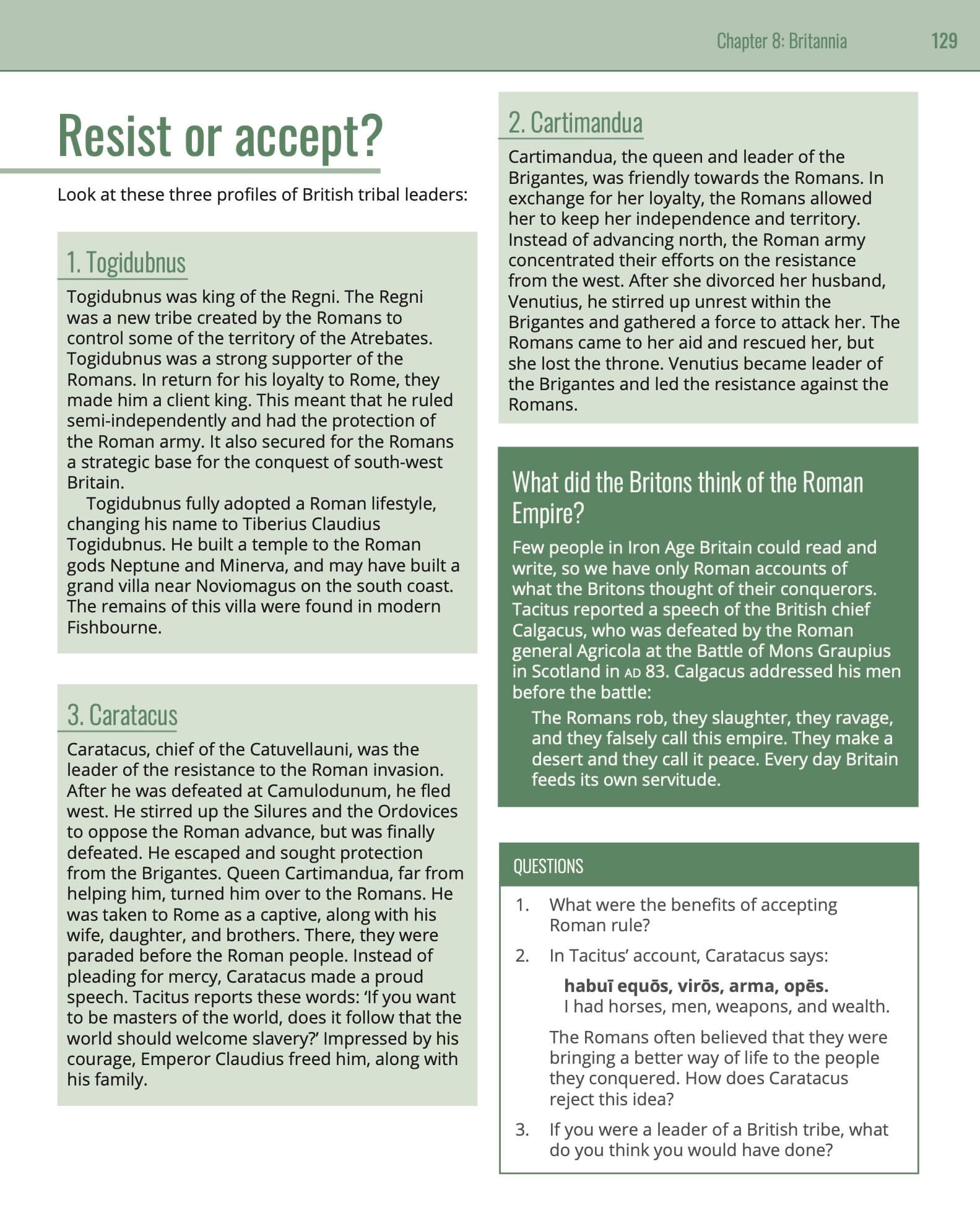
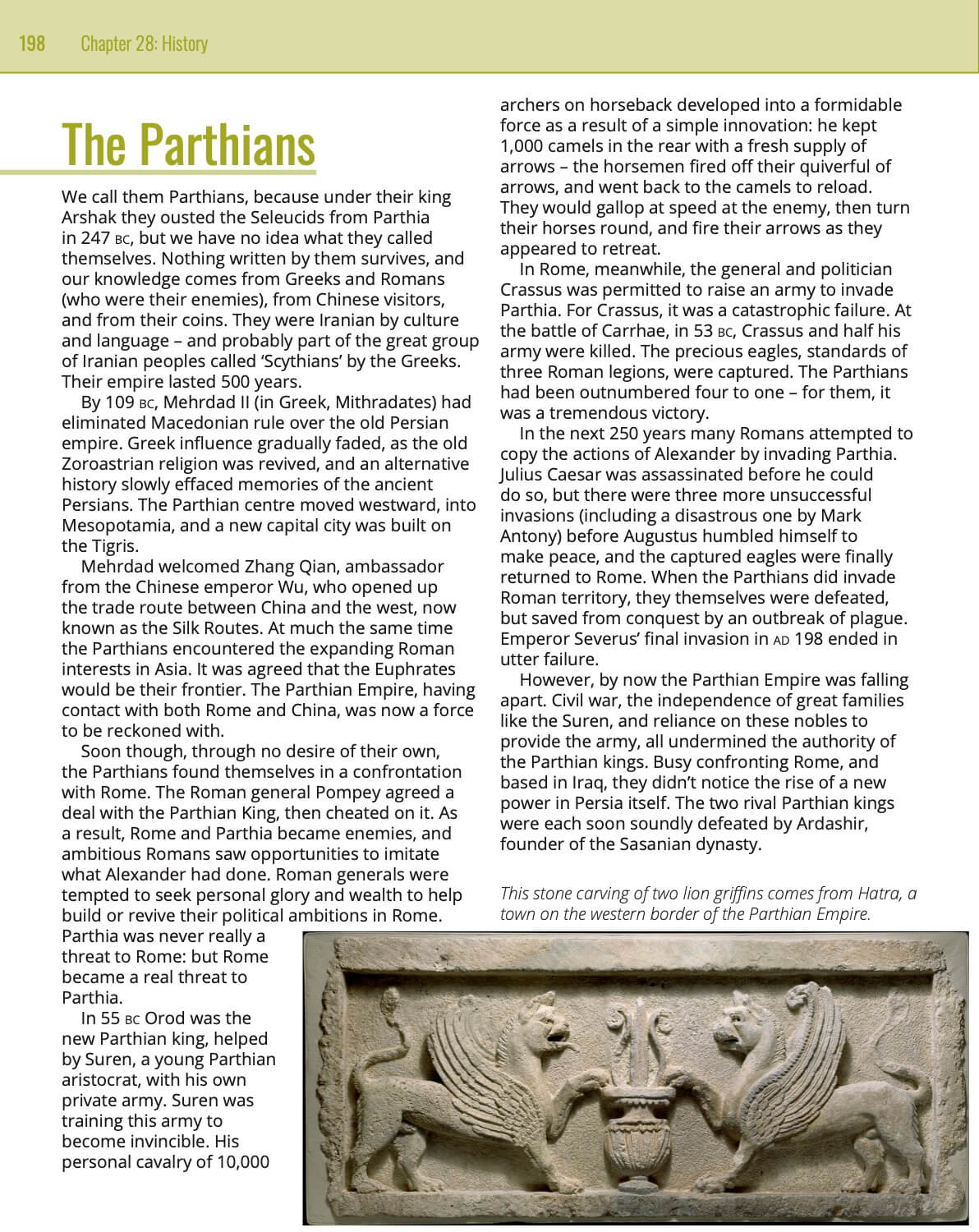
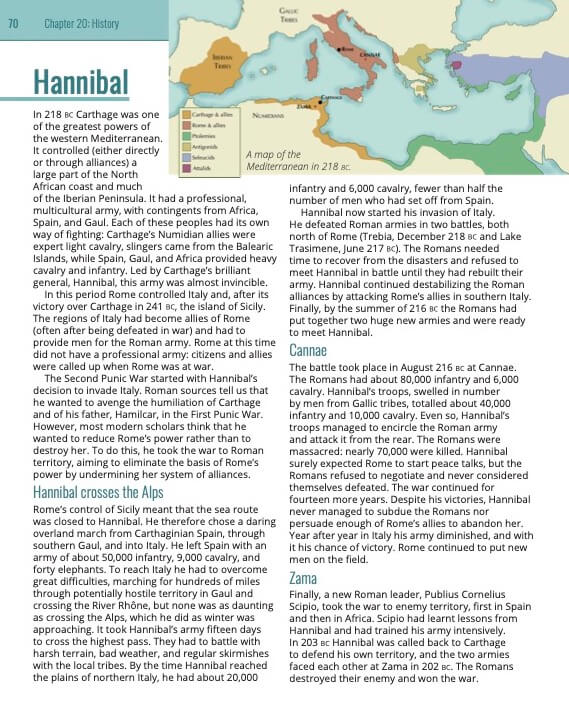
The history pages in the textbook are not organized in chronological order, but aim to cover some important moments in Roman history and to investigate concepts thematically. The topics sometimes pick up themes from the storyline or other cultural content within the chapter, as well as providing a context for students' later reading of Latin literature. The topics span from the first Roman kings to the Byzantine Empire, giving a sense of the 'big picture' of Roman history, while thematic study invites comparisons and discussions.
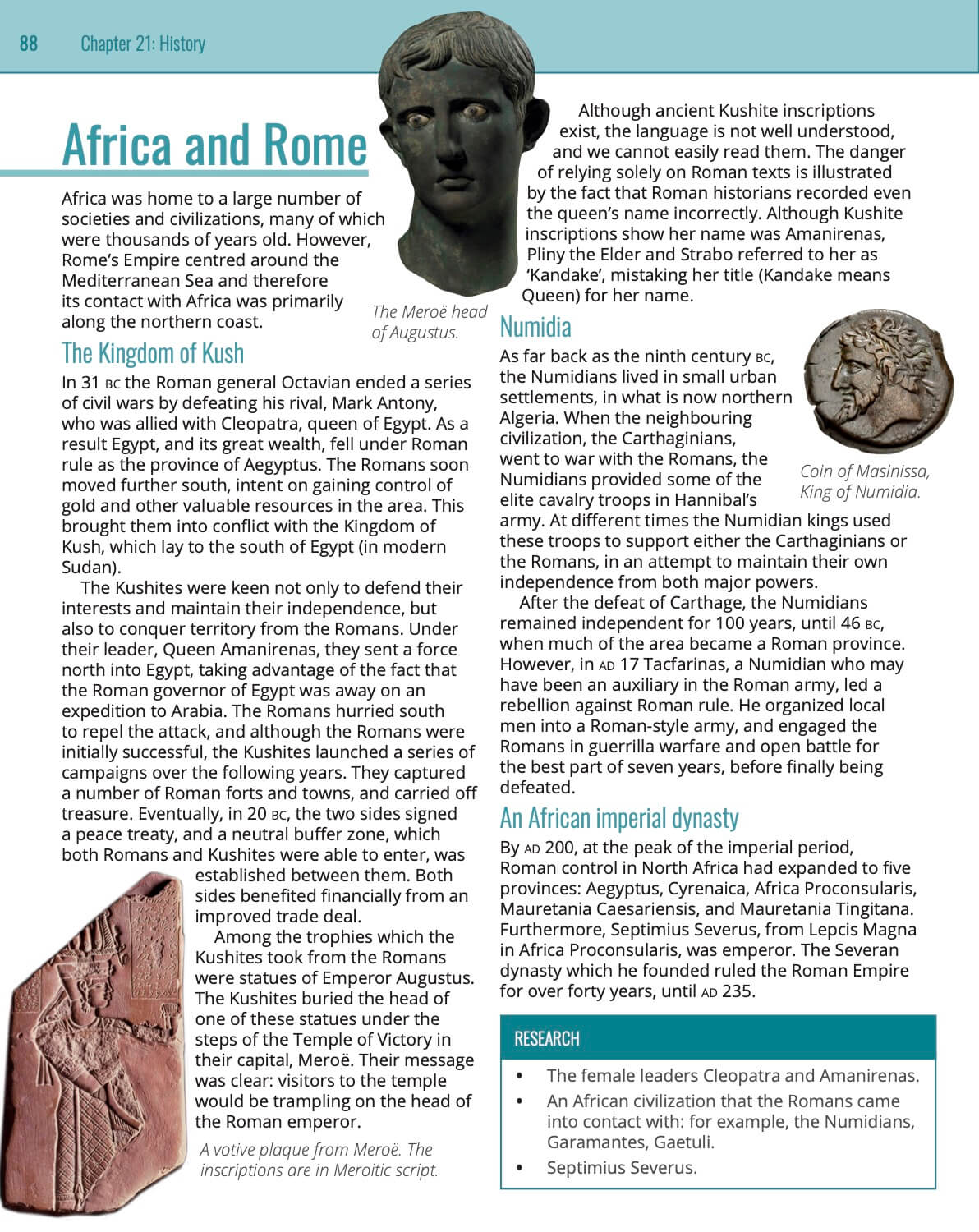
The study of ancient Rome can be highly Eurocentric, with little time given to its neighbouring civilizations. Roman authors themselves liked to present Rome as the most civilized and sophisticated society in the world, and for a long time archaeologists and historians followed the same narrative. In order to challenge that view, some history sections investigate Roman interactions with civilizations outside of the Empire, widening students’ understanding of the ancient world and acting as a springboard for further research.
The study of both mythlogy and history gives an opportunity for student-led work and research projects, as well as extending the study of the Roman world.
If you have any questions, you can schedule a chat with one of the team.
Schedule a chat